
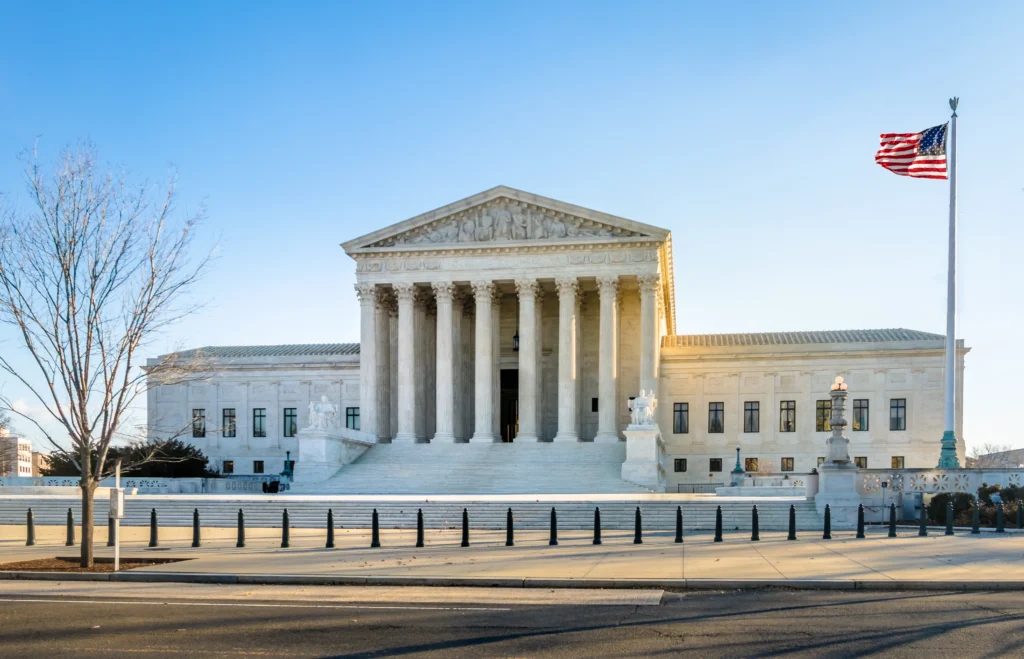
The U.S. Supreme Court has long been viewed as an institution where legal disagreements are settled through carefully reasoned opinions rather than public debate. While the Court’s deliberations remain confidential, its written decisions often reveal the differing constitutional philosophies of the nine justices. As the Court approaches the end of each term—a period when many of its most consequential rulings are released—those philosophical divisions can become increasingly visible.
In recent weeks, observers have noted a rise in sharply worded concurring and dissenting opinions, with justices openly criticizing one another’s legal reasoning. These public disagreements have fueled renewed discussion about the Court’s ideological balance, its internal dynamics, and its role in resolving some of the nation’s most contentious legal questions.
Understanding why these disagreements are attracting so much attention requires examining the events that led to the current moment. A series of high-profile cases, evolving judicial philosophies, changes in the Court’s membership, and heightened public scrutiny have all contributed to an atmosphere in which the justices’ differences are more visible than ever.
The Supreme Court’s Ideological Evolution
The Supreme Court has never been a unanimous institution. Throughout American history, its justices have disagreed over constitutional interpretation, federal authority, civil liberties, and the limits of executive and legislative power. Some of the Court’s most famous decisions have included passionate dissents that later influenced future generations of judges and lawmakers.
However, the Court has undergone significant changes over the past decade. Several retirements and appointments have reshaped its ideological makeup, producing a conservative majority that has altered the direction of constitutional jurisprudence in several key areas.
These changes have coincided with a period of increased political polarization in the United States. As major legal disputes increasingly intersect with national political debates, Supreme Court decisions have become front-page news rather than purely legal events.
This heightened attention means that even disagreements over legal methodology can quickly become subjects of widespread public discussion.
The current Court features justices with distinct approaches to constitutional interpretation. Some favor originalism or textualism, emphasizing the Constitution’s original meaning or the plain text of statutes. Others adopt a more flexible approach that considers evolving legal principles and modern societal conditions.
These competing judicial philosophies naturally produce disagreements when the Court confronts difficult constitutional questions.
High-Profile Cases Have Intensified Internal Divisions
One of the major reasons disagreements have become more visible is the nature of the cases reaching the Supreme Court.
In recent years, the Court has considered disputes involving:
- Executive authority
- Federal regulatory agencies
- Immigration
- Religious liberty
- Free speech
- Firearms regulations
- Environmental policy
- Election law
- Technology and social media
- Administrative law
Each of these issues carries enormous political and legal significance.
When the stakes are high, justices often write lengthy concurring or dissenting opinions explaining why they believe the majority reached the wrong conclusion. These opinions frequently critique the reasoning employed by fellow justices, sometimes in unusually direct language.
Legal scholars note that such disagreements serve an important purpose. Dissents preserve alternative interpretations of the law that may influence future courts, legislators, or constitutional debates.
Some of history’s most influential legal principles first appeared in dissenting opinions before eventually becoming accepted doctrine years later.
Nevertheless, recent exchanges have drawn attention because of their increasingly pointed tone. Rather than simply disagreeing over legal analysis, some opinions accuse colleagues of misunderstanding precedent, misapplying constitutional principles, or exceeding the Court’s proper role.
While these criticisms remain grounded in legal argument, their directness has become a frequent topic of discussion among court observers.
Public Confidence and Institutional Challenges
The Supreme Court has faced growing public scrutiny in recent years.
Several factors have contributed to increased attention, including ethics questions, debates over judicial appointments, politically significant rulings, and concerns about public trust in the judiciary.
Although the Court remains independent from the executive and legislative branches, its decisions often shape national policy on controversial issues.
Because of this influence, Americans increasingly view Supreme Court rulings through both legal and political lenses.
Public disagreements among the justices can reinforce perceptions that the Court is deeply divided. However, many constitutional scholars caution against interpreting every disagreement as evidence of institutional dysfunction.
Disagreement is, in fact, an essential component of appellate judging.
Each justice independently evaluates constitutional questions before participating in the Court’s collective decision-making process. Written dissents and concurrences provide transparency by explaining how individual justices reached their conclusions.
At the same time, critics argue that increasingly sharp rhetoric risks undermining public confidence if disagreements appear personal rather than purely legal.
Supporters counter that honest judicial debate strengthens constitutional interpretation by exposing weaknesses in competing arguments.
The balance between vigorous legal disagreement and preserving institutional legitimacy remains an ongoing challenge for the Court.
Why the Remaining Decisions Matter
As the Supreme Court nears the conclusion of its term, attention naturally shifts to the cases that remain undecided.
Historically, the Court often saves many of its most significant rulings for the final weeks of June. These decisions frequently address constitutional questions with broad implications for federal authority, individual rights, and the relationship between state and national governments.
Because the justices have already revealed visible disagreements in several earlier opinions, legal analysts are carefully examining every concurrence and dissent for clues about how the remaining cases might be resolved.
Even small differences in legal reasoning can signal broader philosophical divides that influence future decisions.
Regardless of the outcomes, the Court’s final rulings will likely shape American law for years to come. Lower courts, lawmakers, government agencies, businesses, and individuals all look to Supreme Court decisions for guidance on interpreting the Constitution and federal statutes.
The public disagreements seen in recent opinions also serve as reminders that constitutional law is rarely straightforward. Complex legal questions often allow for multiple reasonable interpretations, and the Court’s written opinions reflect the justices’ efforts to explain why one interpretation ultimately prevails over another.
As Americans await the Court’s remaining decisions, the visible debates among the justices highlight both the challenges and strengths of the judicial process. While consensus is sometimes possible, meaningful disagreement remains a defining feature of constitutional adjudication.
Whether future rulings are decided by narrow majorities or broader coalitions, they will contribute to an evolving body of constitutional law that continues to shape the nation. The conversations sparked by the justices’ differing opinions will likely continue well beyond the close of the current term, influencing legal scholarship, public debate, and future Supreme Court cases for years to come.
Table of Contents
Disagreements Between Supreme Court Justices Bubble Into Public View as Major Rulings Loom
Venezuela Earthquakes: Death Toll Rises After Quakes – trendsfocus