
Morgan Freeman has spent decades building one of the most recognizable careers in Hollywood, yet the legendary actor appears to have little interest in walking away from the profession that made him famous. At 89 years old, Freeman continues to work, explore new creative projects, and speak openly about the practical realities of maintaining such a long career in the entertainment industry.
For many actors, reaching their late 80s would naturally bring conversations about retirement. Freeman, however, seems to view aging differently. Rather than setting a final date for his career, he has suggested that he will continue accepting roles as long as he remains physically capable and filmmakers continue wanting him on screen.
His recent comments have attracted attention not only because of his age, but also because of his refreshingly straightforward approach to choosing projects. Freeman has acknowledged that artistic quality matters, but he has also spoken candidly about compensation, production realities, and the fact that an imperfect screenplay does not always mean a movie cannot become worthwhile.
At the same time, Freeman is expanding his creative interests beyond acting. His involvement in a major blues music project reflects a personal connection to Mississippi, American musical history, and a cultural tradition that has been part of his life for decades.
Morgan Freeman Has No Plans to Retire
Morgan Freeman has reached a stage in his career that few actors ever experience. He is not simply a successful performer with decades of credits behind him; he has become an instantly recognizable cultural figure whose voice, screen presence, and performances are known around the world.
Despite being 89 years old, Freeman has shown no sign that he intends to quietly disappear from Hollywood.
His position on retirement appears relatively simple: if he can still do the work and filmmakers still want him, he sees little reason to stop.
That attitude places Freeman among a small group of veteran performers who continue working well beyond the age when most professionals would consider retirement. For him, acting does not appear to be only a job. It is also a craft, a routine, and a major part of the life he has built over many decades.
Freeman’s career is especially remarkable because his greatest success did not arrive unusually early. Unlike some stars who become household names in their twenties, Freeman’s rise to international recognition developed gradually. That long journey may help explain why he continues to value opportunities today.
Over the years, audiences have watched him take on dramatic, emotional, authoritative, humorous, and deeply reflective characters. His distinctive voice has also made him one of the most sought-after narrators in film and documentary projects.
Now, rather than talking about how he intends to end his career, Freeman seems more interested in continuing it on his own terms.
Morgan Freeman’s Remarkable Hollywood Career Is Still Going Strong
Morgan Freeman’s filmography includes some of the most respected and widely watched movies of the past several decades.
Among his best-known performances is his role as Ellis “Red” Redding in The Shawshank Redemption. Although the film was not an enormous box-office success when it was first released, it later became one of the most beloved movies in modern cinema.
Freeman’s calm narration and emotionally restrained performance helped give the film its distinctive identity.
He also appeared in Se7en, the dark crime thriller directed by David Fincher, where he portrayed experienced detective William Somerset alongside Brad Pitt.
Another major milestone came with Million Dollar Baby. Freeman’s performance in the Clint Eastwood-directed drama earned him an Academy Award for Best Supporting Actor, confirming his position as one of Hollywood’s most respected performers.
His earlier work in Driving Miss Daisy also became a defining moment in his career and introduced him to an even wider audience.
These roles represent only a portion of Freeman’s work.
Over the years, he has appeared in major studio productions, independent dramas, action films, thrillers, comedies, superhero movies, documentaries, and television programs. His ability to move between genres has contributed significantly to the longevity of his career.
Freeman also possesses something increasingly rare in modern Hollywood: immediate recognition.
Audiences often know who is speaking before they even see his face.
His voice has become almost as famous as his acting career, leading to numerous narration opportunities. The deep, measured delivery associated with Freeman has been used in documentaries, commercials, films, and television programs.
That versatility has allowed him to remain professionally active even as the entertainment industry has changed around him.
Hollywood today is very different from the industry Freeman entered decades ago. Streaming platforms, franchise filmmaking, global distribution, social media, and changing audience habits have transformed how films are produced and consumed.
Yet Freeman has managed to remain relevant through each stage of that transformation.
For many fans, his continued presence on screen provides a sense of familiarity. He represents a generation of actors whose careers were built through long-term performance rather than overnight celebrity.
His Candid Approach to Choosing Movie Roles Is Getting Attention
One of the most interesting aspects of Freeman’s recent comments concerns the way he evaluates potential roles.
Actors often describe choosing projects based entirely on artistic passion, extraordinary scripts, or challenging characters. Freeman has taken a more practical approach.
He has acknowledged that a weaker script does not necessarily mean he will immediately reject a project, particularly if the financial offer is attractive.
At first glance, that may sound unusual coming from an Academy Award-winning actor with such a prestigious career. However, Freeman’s explanation reflects the realities of professional filmmaking.
A screenplay is only one part of the final production.
Directors, editors, performers, cinematographers, producers, and other members of a filmmaking team can significantly affect how a project develops. Scripts may also change during production.
Freeman has suggested that problems in a screenplay can sometimes be improved or adjusted along the way.
His comments also reveal something that celebrities do not always discuss openly: acting is both an art and a profession.
Even highly respected performers are working professionals.
Compensation, scheduling, production conditions, collaborators, and career opportunities can all influence whether an actor accepts a project.
Freeman’s willingness to speak openly about money may actually reflect the confidence that comes from decades of experience. At this stage in his career, he does not need to pretend that every decision is based on artistic idealism.
He understands the business.
After working in Hollywood for decades, Freeman has likely witnessed promising scripts become disappointing films and questionable projects become unexpected successes.
That perspective makes his approach understandable.
It also demonstrates why his career has lasted so long. Freeman seems capable of balancing artistic interests with professional pragmatism.
Rather than waiting only for a supposedly perfect role, he remains open to opportunities.
That openness could be one reason audiences continue seeing him in new productions even as he approaches 90.
Retirement Does Not Appear to Be Part of Morgan Freeman’s Plan
Freeman’s attitude toward retirement may be the most inspiring part of his recent comments.
At 89, he could easily choose to step away from acting and spend the rest of his life enjoying the achievements of an extraordinary career.
Instead, he continues looking ahead.
His approach challenges the traditional idea that everyone must eventually reach a specific age and stop working.
For some people, retirement represents freedom. For others, continuing to work provides purpose, enjoyment, structure, and creative stimulation.
Freeman appears to belong to the second group.
He has indicated that he wants to continue acting for as long as he is physically capable.
The key point is not that everyone should work into their late 80s. Freeman’s situation is obviously unusual. Rather, his career demonstrates that creative ambition does not necessarily disappear with age.
Many professions emphasize youth, and Hollywood has historically been particularly focused on younger performers. Yet Freeman remains valuable because experience is one of his greatest strengths.
His presence communicates authority, wisdom, calmness, and emotional depth.
Those qualities are difficult to manufacture.
They are partly the result of time.
In Freeman’s case, growing older has not automatically reduced his value as a performer. In some ways, it has strengthened the qualities audiences already associate with him.
His continued career may also serve as a reminder that success does not always follow a predictable schedule.
Freeman spent years building his career before reaching the level of fame he enjoys today.
His story has frequently been cited as an example of professional persistence because many of his most famous roles came relatively later in life.
Now he is extending that story even further.
Rather than treating his age as a deadline, he appears to treat it as another chapter.
That mindset has helped make his recent comments resonate beyond Hollywood.
They raise a broader question about work, purpose, and aging.
When someone genuinely enjoys what they do and remains capable of doing it, is there really a reason they must stop simply because they have reached a traditional retirement age?
For Freeman, the answer appears to be no.
Morgan Freeman Is Also Celebrating His Deep Connection to Blues Music
While acting remains central to Morgan Freeman’s public identity, his latest creative activity shows that cinema is not his only passion.
Freeman has also become involved in a project celebrating the blues, one of America’s most historically important musical traditions.
The project, titled Morgan Freeman’s Symphonic Blues Experience, brings together narration, blues performers, and orchestral music.
The 12-track project explores approximately a century of blues history and features respected musicians including Taj Mahal, Keb’ Mo’, and Shemekia Copeland, along with the Chineke! Orchestra.
Freeman serves as both narrator and producer.
His participation has personal significance.
Freeman grew up in Mississippi, a state with deep connections to the development of blues music.
The Mississippi Delta in particular is frequently described as one of the birthplaces of the blues. The music developed from African American musical traditions and later influenced countless genres, including rock and roll, soul, R&B, jazz, and modern popular music.
For Freeman, therefore, the project is not simply another entertainment venture.
It connects him to the cultural history of the place where he grew up.
His involvement with blues music also extends beyond recordings.
Freeman became a co-owner of the Ground Zero Blues Club in Clarksdale, Mississippi, an establishment created to celebrate and preserve authentic blues culture.
Clarksdale occupies an important place in blues history and has long attracted musicians and music enthusiasts from around the world.
Through the club and projects such as Morgan Freeman’s Symphonic Blues Experience, Freeman has helped draw attention to a musical tradition that played an enormous role in shaping American culture.
The combination of acting and music makes his current career particularly interesting.
At an age when many people would focus entirely on the past, Freeman continues developing new projects.
He is not simply celebrating famous movies he made decades ago.
He is still creating.
That distinction matters.
Morgan Freeman’s legacy is already secure. His performances have earned awards, critical recognition, and lasting affection from audiences worldwide.
He has nothing left to prove.
Yet his decision to continue acting and exploring music suggests that proving something may no longer be the point.
The motivation now may simply be the work itself.
As Freeman moves closer to his 90th birthday, fans are likely to continue discussing how long he will remain active in Hollywood.
Judging by his current attitude, the answer may be simple: as long as he can.
And considering the extraordinary career he has already built, audiences probably will not mind seeing — or hearing — Morgan Freeman for many years to come.
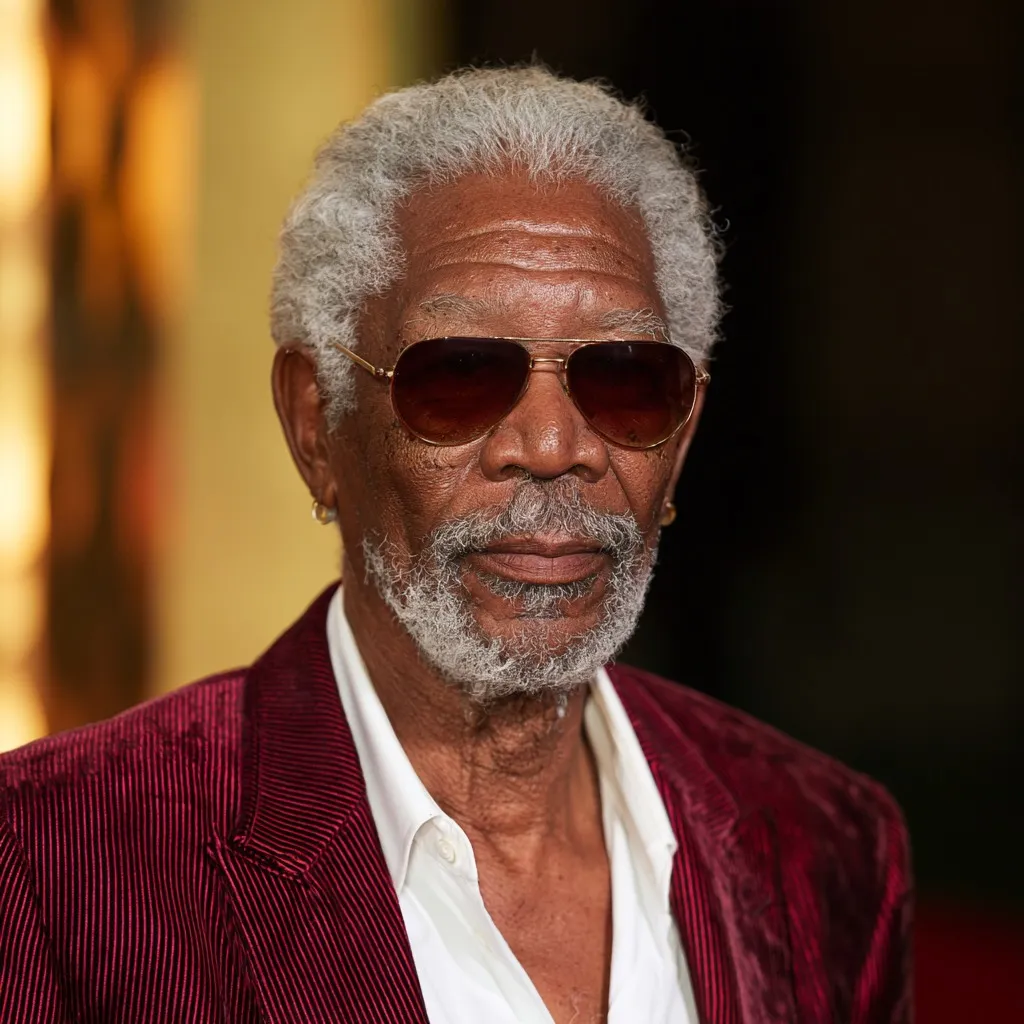
Table of Contents
Morgan Freeman Can ‘Overlook’ a Bad Script for Money
Joe Biden’s Prostate Cancer Spreads Further as Former President Faces Significant Pain – trendsfocus