
Donald Trump’s ambitious plan to reshape the United States Navy is putting American shipbuilding back at the center of the national-security debate. The proposal, often associated with the administration’s broader “Golden Fleet” vision, would dramatically expand naval capabilities while attempting to revive a domestic shipbuilding industry that has struggled with delays, rising costs and workforce shortages.
One of the most eye-catching elements of the plan is the proposed development of a new class of large, nuclear-powered surface warships. Congressional Budget Office estimates have suggested that a fleet of 15 such vessels could cost roughly $275 billion through 2056, highlighting both the scale of the administration’s ambitions and the enormous financial commitment that would be required.
Supporters argue that the United States needs a larger, more technologically advanced Navy to counter China’s rapidly expanding maritime power and protect American interests around the world. Critics, however, question whether enormous surface warships are the right investment at a time when drones, hypersonic missiles, submarines and autonomous systems are transforming naval warfare.
The debate surrounding Trump’s naval shipbuilding proposal is therefore about much more than ships. It touches on military strategy, industrial capacity, American manufacturing, competition with China and the future direction of U.S. defense spending.
Trump’s Naval Shipbuilding Plan
President Donald Trump’s naval strategy reflects a broader effort to restore American military and industrial strength. At the heart of the proposal is a simple argument: the United States cannot remain the world’s dominant maritime power if it is unable to build modern warships quickly enough.
For decades, the U.S. Navy has relied on aircraft carriers, submarines, destroyers and other advanced vessels to maintain a global presence. American warships operate across the Pacific, Atlantic, Middle East and other strategically important regions, protecting trade routes, supporting allies and giving Washington the ability to respond rapidly to international crises.
But concerns about the size and readiness of the fleet have intensified.
China has built ships at an extraordinary pace, benefiting from a massive commercial and military shipbuilding industry. Beijing’s growing naval capabilities have become one of the Pentagon’s most important long-term strategic challenges.
Trump’s answer is a major expansion of American maritime power.
His proposed Golden Fleet would reportedly include a combination of advanced surface combatants, submarines, frigates, support vessels and unmanned platforms. The administration also wants to expand shipyard capacity and strengthen domestic supply chains so that the United States can produce naval vessels more efficiently.
The most dramatic proposal is the idea of a new generation of very large surface combatants, sometimes described as modern battleships.
Unlike the legendary battleships of World War II, these vessels would not depend primarily on enormous naval guns. Instead, they could act as heavily armed missile platforms equipped with advanced sensors, long-range weapons, sophisticated command systems and potentially new defensive technologies.
The first vessel has been associated with the name USS Defiant, although many technical details could still change before construction begins.
The concept represents an attempt to combine the symbolic power of the traditional battleship with the technological requirements of modern naval warfare.
For Trump, the idea also fits into his broader political message about rebuilding American manufacturing. Shipbuilding requires highly skilled workers, complex supply chains and major industrial infrastructure. A sustained naval construction program could therefore generate economic benefits far beyond the military itself.
However, the scale of the proposal means that its success will depend heavily on whether American shipyards can actually deliver what the Navy wants.
A $275 Billion Battleship Program Raises Major Cost Questions
The projected cost of Trump’s naval ambitions is likely to become one of the most controversial parts of the debate.
According to Congressional Budget Office estimates discussed in connection with the proposal, building 15 new nuclear-powered battleships could cost approximately $275 billion through 2056.
The first vessel alone could cost more than $20 billion, while subsequent ships could still carry price tags running into the tens of billions of dollars each.
Those numbers immediately raise difficult questions for Congress and the Pentagon.
The Navy already operates some of the most expensive military platforms ever built. Ford-class aircraft carriers, Virginia-class attack submarines, Columbia-class ballistic missile submarines and Arleigh Burke-class destroyers all require enormous investment.
Adding another extremely costly class of nuclear-powered surface vessels would create additional pressure on the defense budget.
Supporters argue that focusing only on the initial price tag misses the strategic value of these ships.
A large surface combatant carrying huge numbers of missiles could provide extraordinary offensive and defensive capabilities. It could potentially serve as a floating arsenal, command center and air-defense platform capable of supporting other ships across a wide area.
If the vessel can remain operational for decades, supporters say the long-term cost may be justified by the military capability it provides.
Critics are less convinced.
They argue that putting enormous amounts of money and firepower into a small number of very large ships could create highly valuable targets for enemy forces.
Modern anti-ship missiles can travel long distances and increasingly use advanced guidance systems. Drones, submarines and hypersonic weapons also create threats that did not exist when traditional battleships ruled the seas.
From this perspective, spending $20 billion or more on a single surface ship could be risky if an adversary can threaten it with weapons that cost only a fraction of that amount.
Some defense experts therefore favor a more distributed naval strategy.
Instead of concentrating military power on a limited number of enormous vessels, they argue that the Navy should deploy larger numbers of smaller ships, submarines and unmanned systems.
That approach could make American forces harder to target and allow commanders to distribute weapons across a much wider area.
The debate ultimately comes down to how future naval wars are expected to be fought.
If heavily armed surface ships remain survivable, Trump’s battleship concept could provide enormous strategic value.
If naval warfare becomes increasingly dominated by autonomous systems and long-range missiles, critics fear that extremely large warships could become expensive liabilities.
China and the Global Naval Race Are Driving Trump’s Strategy
China is perhaps the most important reason the United States is reconsidering its naval strategy.
Over the past two decades, Beijing has invested heavily in naval modernization and shipbuilding capacity. China now operates a large and increasingly sophisticated fleet that includes destroyers, submarines, amphibious vessels and aircraft carriers.
The numerical growth of China’s navy has attracted particular attention in Washington.
But ship numbers alone do not tell the entire story.
China also possesses an enormous commercial shipbuilding industry, giving Beijing industrial capacity that could be strategically important during a prolonged military competition.
The United States faces a very different situation.
American shipyards are technologically advanced, but they have struggled to produce vessels quickly enough to meet Navy requirements. Many programs have experienced schedule delays, rising costs and workforce challenges.
Trump’s naval shipbuilding proposal is therefore partly an attempt to address that industrial imbalance.
The administration wants the United States to be capable not only of operating a powerful Navy, but also of replacing ships, repairing damaged vessels and expanding production when necessary.
That issue becomes especially important when considering the Indo-Pacific.
The Pacific Ocean covers an enormous area, and any major conflict would require the Navy to operate across vast distances. American forces would need to defend bases, protect supply routes, support allies and maintain access to strategically important waters.
A larger fleet could give commanders more flexibility and reduce pressure on individual ships.
Supporters of the Golden Fleet concept argue that the United States cannot deter China without credible maritime power.
They believe strong naval forces make conflict less likely because potential adversaries understand that the United States has the capability to respond.
The Trump administration also views shipbuilding as part of a broader economic competition with China.
Building warships domestically means investing in American steel, electronics, engineering, manufacturing and skilled labor.
In this sense, the proposal combines national-security strategy with industrial policy.
However, simply spending more money will not automatically solve the problem.
Shipyards require experienced welders, engineers, electricians and other specialized workers. Suppliers must be capable of manufacturing complex components. Nuclear-powered vessels require even more demanding technical expertise.
If the industrial base cannot expand rapidly enough, additional funding could lead to higher prices rather than significantly higher production.
That is why the shipbuilding debate increasingly focuses on factories and workers as much as on warships themselves.
America’s Shipbuilding Industry Faces Serious Capacity Challenges
Perhaps the biggest obstacle to Trump’s naval ambitions is not politics or technology.
It is production capacity.
American naval shipyards are already under pressure from existing military programs.
Submarine production has been especially challenging. The Navy wants to build more Virginia-class attack submarines while simultaneously constructing Columbia-class ballistic missile submarines, which are essential to America’s nuclear deterrent.
Destroyer programs also require substantial shipyard resources.
Adding a new class of extremely large nuclear-powered surface vessels would create even more demand.
This creates a difficult question: even if Congress approves the money, can American industry build everything on schedule?
Supporters of Trump’s strategy argue that this is precisely why a major shipbuilding initiative is necessary.
They believe predictable long-term contracts could encourage companies to invest in new facilities, hire workers and expand production.
Instead of treating shipbuilding as a short-term military expense, they want Washington to view it as a strategic national industry.
That could mean billions of dollars in additional infrastructure investment.
Shipyards may need new dry docks, cranes, fabrication facilities and digital manufacturing systems.
Training programs could also become more important as companies attempt to recruit a new generation of skilled workers.
The economic impact could be significant.
Major shipyards support thousands of direct jobs and many more positions throughout their supplier networks.
A sustained naval buildup could benefit industries producing steel, engines, electronics, weapons systems and advanced materials.
Trump has repeatedly emphasized manufacturing jobs as part of his economic agenda, making shipbuilding an attractive political issue as well as a defense priority.
Still, rebuilding industrial capacity takes time.
New shipyards cannot appear overnight, and experienced workers often require years of training.
Even if the government increases funding immediately, it could take a decade or longer before the full benefits become visible.
That reality could complicate Trump’s desire for rapid fleet expansion.
It also means that the ultimate success of the Golden Fleet may depend on policies that extend far beyond a single presidential term.
The Future of the Golden Fleet Will Depend on Congress and Modern Warfare
Trump’s naval shipbuilding proposal is still likely to face years of political, technological and financial debate.
Congress will play a decisive role because lawmakers control defense funding.
Supporters will argue that America must invest now if it wants to maintain naval superiority in the future.
They will point to China’s rapid fleet expansion, growing geopolitical tensions and the strategic importance of protecting global trade routes.
Critics will focus on cost, production delays and whether the proposed ships match the realities of modern warfare.
The return of the battleship concept is especially controversial.
Traditional battleships disappeared because aircraft carriers, submarines and guided missiles changed naval combat.
Trump’s proposed vessels would therefore need to demonstrate that a massive surface combatant can survive and remain relevant in an environment filled with precision weapons, autonomous drones and advanced submarines.
Technology could ultimately determine the answer.
Future ships may incorporate directed-energy weapons, sophisticated electronic warfare systems, advanced missile defenses and large numbers of long-range weapons.
They could also work alongside unmanned surface vessels and underwater drones.
Rather than operating independently, a modern battleship could become the command hub of a networked fleet.
That possibility is one reason supporters believe the concept deserves serious consideration.
Critics argue that the Navy should experiment carefully before committing hundreds of billions of dollars.
They prefer investing in flexible systems that can adapt quickly as technology changes.
Whatever happens, Trump’s proposal has already revived a fundamental question about the future of American sea power.
Should the United States build a smaller number of extraordinarily powerful ships?
Or should it distribute weapons across a much larger network of smaller and unmanned platforms?
The answer will shape the U.S. Navy for decades.
Trump’s Golden Fleet vision is ultimately about more than reviving battleships. It represents an attempt to rebuild American shipbuilding, strengthen military deterrence, compete with China and redefine how the United States projects power across the world’s oceans.
If Congress supports the plan and the shipbuilding industry can overcome its current limitations, the United States could enter one of its largest naval expansion periods in generations.
If costs continue rising and production delays worsen, however, the Golden Fleet could become an example of how difficult it is to turn ambitious defense strategies into operational reality.
Either way, the debate over Trump’s naval shipbuilding proposal is only beginning — and its outcome could determine the future balance of maritime power between the United States and its rivals.
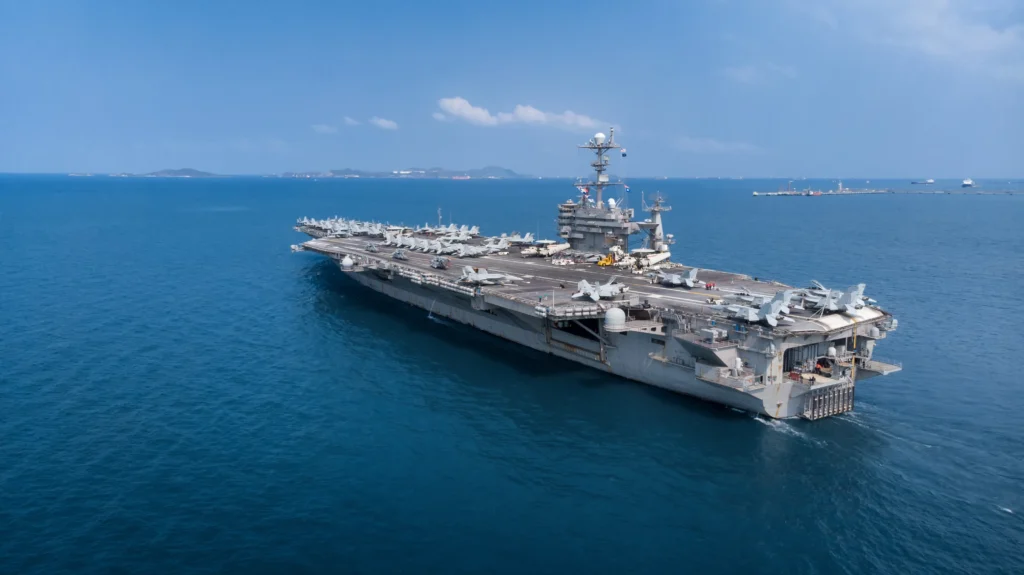
Table of Contents
Trump-class battleships could come with a $275 billion price tag | CNN
Republicans Launch 2026 Midterm Convention Strategy! – trendsfocus