
The Strait of Hormuz has always been more than a narrow stretch of water separating Iran from the Arabian Peninsula. It is a pressure point in the global economy, a military flashpoint and one of the clearest examples of how regional power struggles can rapidly become international problems. Now, after months of confrontation and disruption, diplomatic efforts appear to be producing the outlines of a possible agreement. Yet the arrangement emerging from discussions involving Iran, Oman and the United States may present President Donald Trump with an uncomfortable choice. A deal could restore commercial shipping and reduce pressure on energy markets, but it could also leave Tehran with greater influence over the Strait than Washington has traditionally been prepared to tolerate.
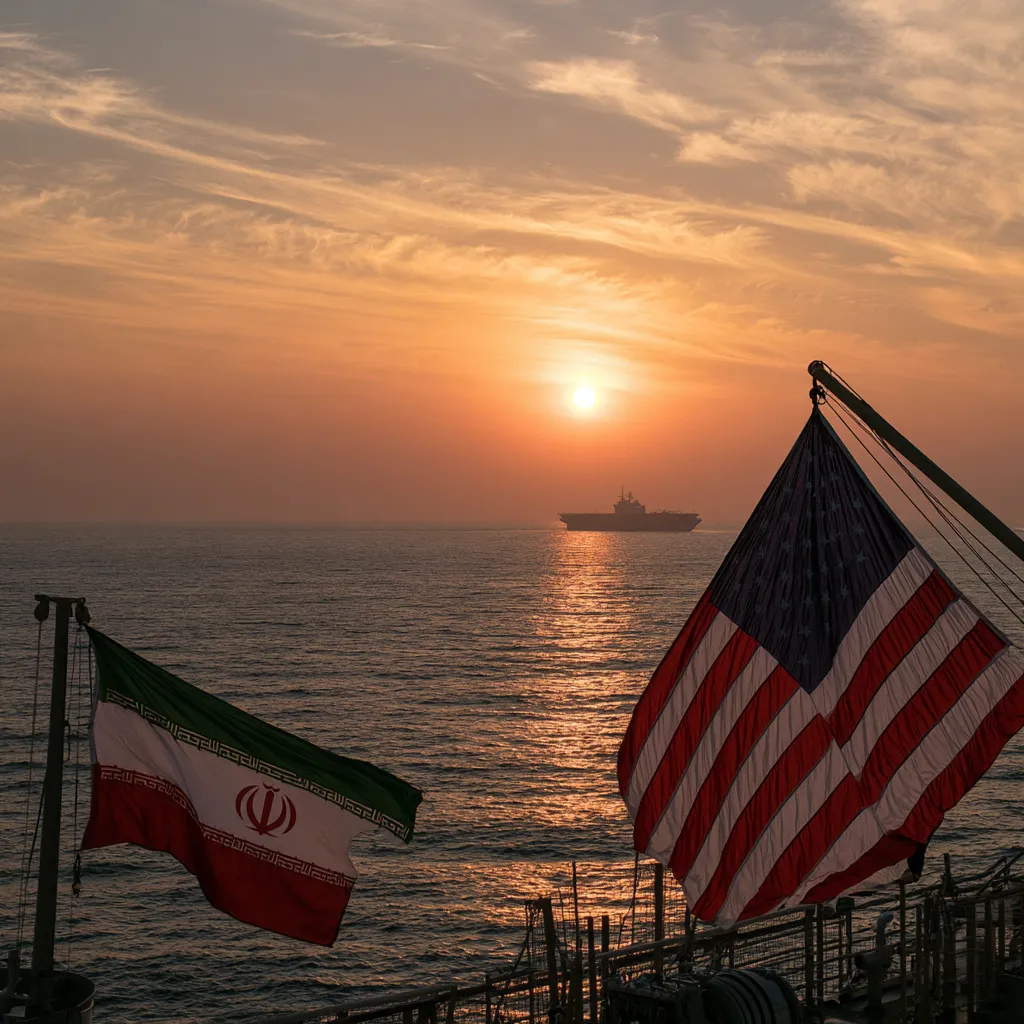
Strait of Hormuz Deal Puts Trump in a Bind
For years, Washington has maintained that the Strait of Hormuz should remain open to international navigation without any country exercising unilateral control over commercial vessels passing through it. Iran, meanwhile, has repeatedly emphasized that its geography and military capabilities give it an unavoidable role in determining what happens in the waterway.
Those competing positions are now colliding with the practical realities of the current crisis.
According to recent reporting, Iran and Oman have been working toward new arrangements that could allow maritime traffic through the Strait of Hormuz to resume under a temporary navigation system. American officials have also signaled that Washington expects progress and could reconsider measures affecting Iranian ports if unrestricted commercial shipping is restored.
At first glance, this appears to be the sort of diplomatic compromise that could benefit almost everyone involved. Shipping companies could regain access to a critical trade corridor. Energy markets could stabilize. Gulf states could reduce the risk of further military escalation. The United States could claim that its pressure helped reopen an essential international route.
But the details matter.
The emerging framework could effectively give Iran a larger operational role in overseeing vessels entering the Persian Gulf, while Oman would participate in coordinating traffic moving in the opposite direction. Such an arrangement would not amount to complete Iranian ownership or sovereignty over the Strait, but it could represent a significant acknowledgment of Tehran’s ability to shape maritime access.
For Trump, that creates a fundamental political problem. The United States could obtain the immediate result it wants — the restoration of commercial navigation — while simultaneously accepting a system that appears to recognize some of the leverage Iran acquired during the conflict.
Why Control of the Strait of Hormuz Matters Far Beyond Iran
The importance of the Strait of Hormuz is difficult to exaggerate.
At its narrowest point, the waterway is only around 21 miles wide. Yet through this relatively small maritime corridor flows a remarkable share of the world’s energy trade. In normal conditions, approximately one-fifth of global oil and liquefied natural gas supplies pass through or depend on access to the Strait.
That makes Hormuz one of the most important economic chokepoints on the planet.
Major energy exporters including Saudi Arabia, Iraq, Kuwait, Qatar and the United Arab Emirates depend heavily on maritime routes connected to the Persian Gulf. Although pipelines and alternative infrastructure can reduce some exposure, there is no simple replacement capable of absorbing all the oil and gas normally transported through the Strait.
The consequences of disruption therefore spread quickly.
When shipping through Hormuz becomes dangerous or uncertain, oil traders immediately begin pricing additional geopolitical risk into global markets. Insurance costs for commercial vessels can rise. Tanker availability can become constrained. Freight rates increase. Import-dependent countries may begin worrying about energy security.
Eventually, those pressures can reach ordinary consumers through higher fuel, transportation and manufacturing costs.
The significance of the Strait also explains why the United States has historically viewed freedom of navigation there as a strategic interest rather than merely a commercial matter. Washington has maintained a substantial military presence in the Gulf partly to ensure that regional disputes do not permanently threaten international shipping.
Iran sees the issue from another perspective.
From Tehran’s point of view, the Strait runs directly alongside Iranian territory. Iranian officials have long argued that Western governments expect unrestricted access to the region’s economic resources while simultaneously imposing sanctions and military pressure on Iran.
The ability to threaten or influence maritime traffic therefore provides Tehran with one of its most powerful forms of strategic leverage.
The current negotiations appear to be testing whether that leverage can now be converted into political influence.
The Emerging Deal Could Give Iran More Influence Than Washington Wants
One of the most sensitive aspects of the discussions concerns the system under which ships would be allowed to enter and leave the Persian Gulf.
Regional proposals reportedly envision temporary shipping routes in which Iran would play an important role in managing vessels entering the Gulf, while Oman would help coordinate outgoing traffic.
Oman is particularly important because it has frequently served as a diplomatic intermediary between Iran and Western governments. Muscat maintains relations with Tehran while also working closely with the United States and other Gulf states. That makes Oman one of the few countries capable of helping build an arrangement acceptable enough to both sides.
However, Washington’s concern is not simply whether ships start moving again.
The larger question is whether Iran would gain a recognized ability to regulate access.
The Trump administration has opposed suggestions that Iran should be able to impose tolls, charges or permanent conditions on international vessels passing through Hormuz. Washington’s position is based on the principle that Tehran should not be rewarded for disrupting navigation by receiving formal authority over the same shipping routes afterward.
Iranian officials, however, appear determined to avoid a simple return to the previous situation.
Tehran has indicated that reopening the Strait is connected to a broader set of political and economic demands. Those demands reportedly include the removal of sanctions, an end to military threats, the lifting of restrictions affecting Iranian ports, the release of frozen assets and other concessions from Washington.
Iran’s Revolutionary Guards have also suggested that navigation cannot be separated from the wider conflict.
That position changes the nature of the negotiations.
Instead of discussing only technical measures for commercial vessels, Iran is attempting to connect maritime access to questions of sanctions, military pressure and the future relationship between Tehran and Washington.
From Iran’s perspective, this strategy makes sense. If control over shipping gives Tehran leverage, surrendering that leverage before receiving concessions would weaken its negotiating position.
For Washington, however, accepting too many Iranian conditions could create the impression that disrupting the Strait successfully forced the United States to negotiate.
That is precisely the political outcome Trump would likely prefer to avoid.
Trump Must Choose Between Economic Stability and Political Optics
The challenge facing the White House is ultimately a conflict between strategic pragmatism and political messaging.
Trump has often presented international negotiations in terms of leverage, strength and visible victories. An agreement in which Iran appears to gain influence after months of confrontation would be difficult to portray as an unconditional American success.
Yet refusing a workable agreement could carry substantial costs.
If shipping disruptions continue, energy prices could remain volatile. Businesses could face higher transportation expenses. Governments dependent on imported oil and gas could intensify diplomatic pressure for a settlement. American allies in Europe and Asia could become increasingly concerned about the broader economic consequences.
There is also the military dimension.
Keeping the Strait open through force would require sustained operational commitments and would carry the constant risk of escalation. Even a relatively small incident involving a commercial vessel, Iranian forces or U.S. military assets could rapidly trigger a larger confrontation.
Diplomacy may therefore offer the least damaging path, even if the final agreement is politically imperfect.
Trump could attempt to present a compromise as evidence that pressure on Iran succeeded in restoring international shipping. The administration could emphasize that Tehran did not obtain complete control over the Strait and that international vessels remain able to transit without formal Iranian tolls.
Iran, however, would almost certainly present the same agreement differently.
Tehran could argue that its resistance forced Washington to acknowledge Iran’s regional power and negotiate new navigation arrangements. Iranian leaders could claim that the conflict demonstrated that the Strait cannot function normally without Iranian cooperation.
Both sides could therefore declare victory from the same agreement.
Such ambiguity is common in diplomacy. Agreements often become possible precisely because every participant can present the outcome to domestic audiences in favorable terms.
The difficulty for Trump is that his political brand leaves less room for ambiguous victories.
Accepting any deal that appears to strengthen Iran’s role could expose the administration to criticism from those who believe Tehran should have been forced to return to the previous maritime order without receiving concessions.
Rejecting the agreement, however, could prolong instability that harms the global economy.
That may explain why the negotiations have become so important.
A Hormuz Agreement Could Redefine the Balance of Power in the Gulf
Whatever happens next, the debate over the Strait of Hormuz is about more than reopening shipping lanes.
It is about who controls the rules governing one of the world’s most strategically valuable waterways.
Before the current crisis, the international expectation was broadly straightforward: commercial vessels would transit the Strait while Iran possessed the military ability to threaten them but did not exercise formal authority over international shipping.
The conflict may have changed that calculation.
By demonstrating that normal commercial navigation cannot easily continue during sustained confrontation with Tehran, Iran has reinforced a basic geopolitical reality: geography provides it with substantial power.
No diplomatic statement can eliminate that fact.
The question is whether future arrangements formalize some of that influence or merely create temporary mechanisms designed to manage the current emergency.
That distinction will matter enormously.
A temporary arrangement involving Iran and Oman could simply provide a bridge toward restoring normal maritime traffic. If so, Washington could tolerate limited Iranian participation without fundamentally changing its long-term position on freedom of navigation.
A more permanent system would be different.
If Iran gained an accepted role in determining which vessels enter the Gulf, under what conditions they travel or whether additional payments are required, it could transform the political structure surrounding the Strait.
Other governments would also be watching closely.
Saudi Arabia, the United Arab Emirates and other Gulf states have major interests in preventing Tehran from acquiring excessive influence over their principal energy export routes. China, India, Japan and European countries have strong reasons to support stability because of their dependence on Gulf energy.
The consequences therefore extend far beyond a bilateral dispute between Iran and the United States.
For the moment, however, there is still no comprehensive final agreement.
Iran has made clear that an arrangement with Oman would not automatically resolve every dispute or guarantee unrestricted reopening of the Strait. Washington, meanwhile, has indicated that any concessions would depend on Iran actually honoring commitments related to maritime traffic.
That means negotiations could still fail.
But the fact that serious discussions are taking place suggests that both sides recognize the limits of continued confrontation.
Iran cannot indefinitely disrupt one of the world’s most important trade corridors without facing enormous political and military pressure. The United States cannot guarantee stability indefinitely through military force without significant cost and risk.
The solution is therefore likely to involve compromise.
And compromise is precisely what makes the emerging Hormuz agreement politically difficult.
If the negotiations succeed, ships may once again move safely through one of the world’s most important energy corridors. Oil markets could stabilize, regional tensions could decline and governments could gain time to address the broader political disputes behind the crisis.
Yet the final arrangement may also reveal something more consequential: military pressure did not remove Iran from the equation.
Instead, it may have reinforced Tehran’s ability to demand a seat at the table.
For Trump, that could become the central contradiction of any eventual Strait of Hormuz deal. The United States may achieve the practical objective of reopening the waterway while accepting a geopolitical outcome that falls short of the decisive victory Washington originally sought.
And in the long term, that may prove more important than the immediate question of when the first tankers begin sailing normally through the Strait again.
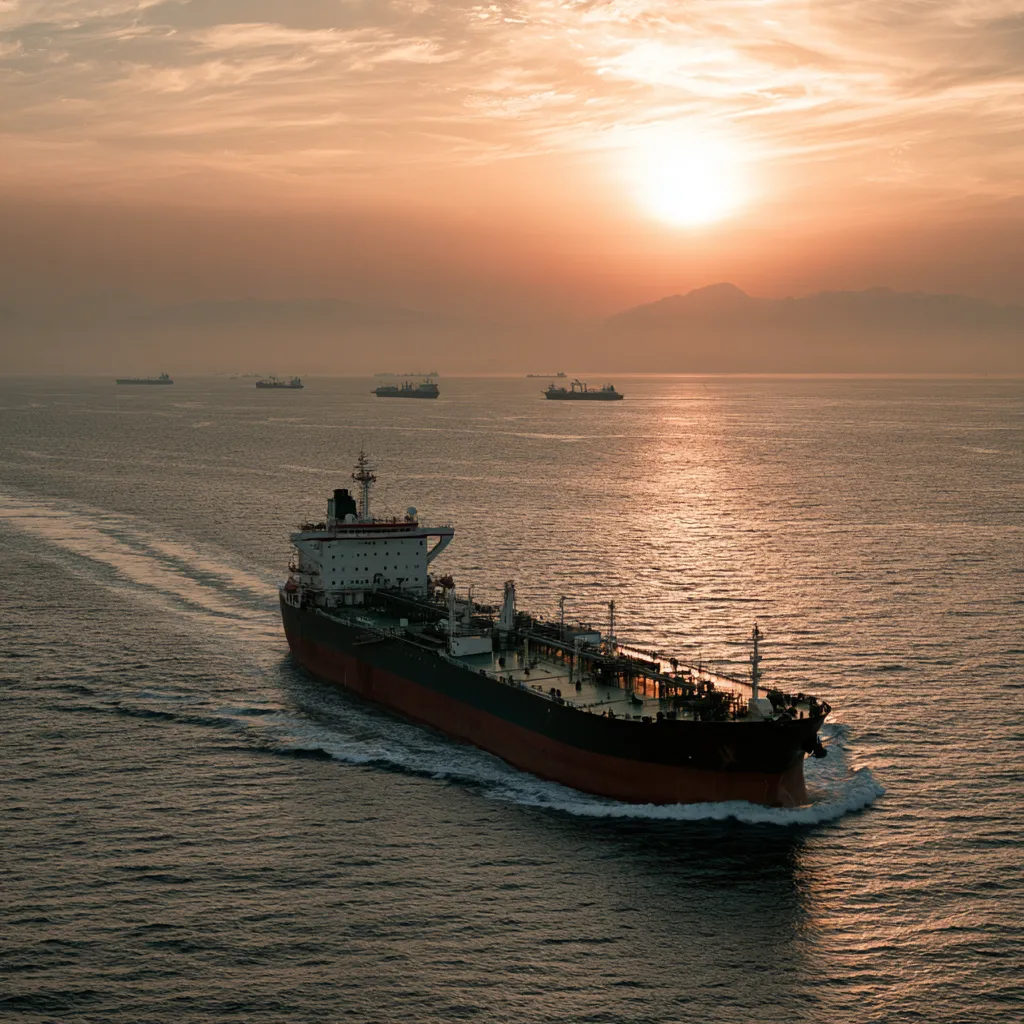
Table of Contents
Tracking traffic in the Strait of Hormuz, in maps and charts | CNN
Trump Admits Iran Can Still Control Strait of Hormuz – trendsfocus