
Mamdani’s Wife
A planned Middle East trip by Rama Duwaji, the wife of New York City Mayor Zohran Mamdani, has unexpectedly developed into a political and public-safety controversy after conflicting statements emerged over whether New York Police Department officers would accompany her overseas.
Duwaji, a Syrian-American artist, is expected to travel to Syria and Lebanon in September for what has been described in news reports as a private family visit. The trip itself might normally have attracted relatively little public attention. Instead, questions about an NYPD security detail have placed it at the center of a much wider debate involving public resources, police safety, private travel by the families of elected officials, and the limits of taxpayer-funded protection.
The controversy began after reports indicated that Duwaji would travel with members of an NYPD security detail. City Hall initially said police protection would accompany her and indicated that the department had recommended it. The NYPD then publicly contradicted that version of events, saying officers would not be sent on discretionary travel to countries carrying the highest U.S. State Department travel-warning level. Mayor Mamdani later described the conflicting statements as a miscommunication and confirmed that his wife would make the trip without an NYPD detail.
What began as a question about one overseas journey has therefore grown into something much bigger: How far should publicly funded security protection extend when the family of a prominent elected official travels privately, particularly to countries the U.S. government advises Americans not to visit?
Why the NYPD Refused Security for Rama Duwaji’s Trip
The most important fact in the dispute is now relatively straightforward: the NYPD will not send officers to accompany Rama Duwaji on her planned trip to Syria and Lebanon.
Getting to that answer, however, was anything but straightforward.
Early reporting indicated that Duwaji was expected to travel with members of the security detail assigned to New York City’s first couple. City Hall subsequently confirmed that account and said the NYPD had strongly recommended that protection accompany her. The police department then pushed back, explaining that it does not send personnel on discretionary, non-investigative travel into countries carrying Level 4 travel advisories.
Mayor Mamdani eventually acknowledged that something had gone wrong in the communication between his administration and the department. He characterized the disagreement as a miscommunication and confirmed that his wife would travel without NYPD protection.
That distinction is important because some early coverage could leave readers with the impression that an approved police protection mission was later abruptly canceled. The available reporting paints a more complicated picture: City Hall described security as planned, while the NYPD said such a deployment was not authorized and would not take place.
The Detectives’ Endowment Association, representing NYPD detectives, also entered the controversy. Association President Scott Munro said officers should not be unnecessarily placed at risk for a private overseas trip, emphasizing that the union viewed the matter as a safety issue rather than a political one.
That concern illustrates an element of protective security that can easily be overlooked. When a public figure receives protection, the safety calculation does not apply only to the person being guarded. Authorities must also consider the lives and well-being of the officers assigned to protect that individual.
Protective work in New York City takes place inside a familiar legal, logistical and intelligence system. Police officers understand local emergency procedures, communications networks, hospitals, transportation systems and law-enforcement partners.
An overseas deployment is very different.
Sending municipal police officers into a foreign country—particularly one facing serious security threats—can introduce questions involving jurisdiction, evacuation options, medical support, communications, local authorities and coordination with other governments.
In other words, police protection designed to reduce one person’s risk can potentially create new risks for the officers providing it.
The calculation becomes even more sensitive when the trip is personal rather than part of an official New York City mission.
Why the Syria and Lebanon “Do Not Travel” Warnings Are So Important
The destinations involved are a major reason this story has become so controversial.
The U.S. State Department places travel destinations into four advisory levels. Level 4 — “Do Not Travel” — is the highest warning category. According to the State Department, the designation is used where potentially life-threatening risks exist and where the U.S. government may have very limited or no ability to assist Americans during an emergency.
Both Syria and Lebanon are currently listed at Level 4 on the State Department’s travel-advisory system.
The warning for Syria is particularly severe. The State Department advises Americans not to travel there because of threats including terrorism, civil unrest, kidnapping, hostage taking, crime and armed conflict.
A Level 4 advisory does not necessarily amount to a general legal prohibition preventing every American citizen from traveling to the country. People may still decide to undertake personal travel despite the warning.
The situation is different, however, when a government agency is considering whether to send its employees into the same environment.
An NYPD officer traveling with a protective detail would not simply be another private traveler. The officer would be there because of his or her public employment and would be expected to perform a security function if a threat emerged.
That creates serious operational questions.
What happens if an officer or the protected individual needs an emergency evacuation? What authority would NYPD personnel have on foreign soil? How would local authorities respond to a security incident? What support could the U.S. government provide if circumstances deteriorated?
Those are very different questions from those facing an ordinary tourist.
Syria and Lebanon should not be treated as though their political and security situations are identical. They are different countries with different governments, conditions and risks. In this particular controversy, however, they share an important characteristic: the State Department currently places both under its highest travel-warning category.
That classification gives the NYPD a clear public-safety argument for declining to send officers on a discretionary private trip.
It also changes the central question.
The debate is not simply whether the wife of New York City’s mayor deserves protection. It is whether a municipal police department should expose officers to overseas risks in locations where the federal government is warning Americans not to travel.
Taxpayer-Funded Security Raises a Bigger Public-versus-Private Question
The issue generating some of the strongest public reaction is the potential use of taxpayer-funded police resources for personal travel.
Government-funded protection for high-profile elected officials is nothing unusual. Mayors, governors, presidents and other prominent officials can become targets because of their public positions, decisions or political visibility.
In certain circumstances, security considerations may also extend to spouses and family members. A threat does not necessarily distinguish between an elected official and the people closest to that official.
That means government-provided security should not automatically be dismissed as a luxury. Sometimes it is a legitimate response to risks created by public life.
Private travel, however, creates a much more complicated boundary.
Reporting about Duwaji’s planned journey describes it as a family visit rather than official New York City business.
Critics therefore argue that city employees should not be required to travel abroad for a personal trip, especially when the destination itself creates elevated risks.
There is another side to the argument.
A spouse connected to one of America’s most visible elected officials does not suddenly become anonymous when traveling privately. Public recognition and potential security threats can follow someone outside official events and beyond city limits.
From that perspective, the key consideration would be the threat assessment rather than whether a trip is labeled “official” or “personal.”
Yet even if protection is considered appropriate in principle, that does not automatically mean officers should be sent everywhere.
Those two responsibilities can collide.
Authorities may conclude that an individual faces a genuine security risk while simultaneously determining that deploying officers to a particular destination creates an unacceptable additional danger.
That appears to be the central tension exposed by the Duwaji controversy.
The episode also raises questions about precedent.
If publicly funded protection were routinely available for international personal travel, policymakers would eventually need to decide where to draw the line. Should the same standard apply to countries at every travel-advisory level? Should the purpose of the journey matter? Should officials or their families reimburse taxpayers for some expenses connected with personal travel? Should an independent security assessment determine when protection is essential?
And who should make the final decision—the elected official, City Hall, the police commissioner or the security professionals who would actually undertake the assignment?
These questions are not unique to Mayor Mamdani or his wife. Governments have long had to balance the security needs of prominent officials against responsible use of public resources.
What makes this case unusual is the combination of personal travel, overseas police protection and destinations subject to Level 4 warnings.
For now, the NYPD’s position effectively establishes a boundary in this particular case: whatever security considerations may exist, its personnel will not accompany Duwaji on the planned private trip to Syria and Lebanon.
What the Security Dispute Means for Mayor Zohran Mamdani and City Hall
The lasting political impact of the episode may ultimately have less to do with Rama Duwaji’s travel plans than with the apparent communication breakdown between City Hall and the NYPD.
Zohran Mamdani was sworn in as New York City’s 112th mayor on January 1, 2026. As mayor, his administration must coordinate closely with agencies whose decisions can carry major public-safety and operational consequences.
That is why a public contradiction between the mayor’s office and the police department attracts attention, even when the original issue concerns a family member’s private trip.
The sequence of events created the problem.
First, City Hall indicated that Duwaji would receive NYPD protection overseas and described the protection as something police had recommended. Then the NYPD said officers would not be going. Finally, Mamdani said the earlier statement resulted from a miscommunication and confirmed that Duwaji would travel without the police detail.
For critics of the administration, that sequence raises a legitimate question about whether City Hall adequately confirmed the arrangement with police leadership before discussing it publicly.
Supporters of Mamdani may view it differently: as a communications mistake that was subsequently clarified, rather than evidence of a deeper policy problem.
Both interpretations are likely to remain part of the political debate.
The situation nevertheless highlights why security decisions require particularly careful coordination. Protective arrangements are not ordinary scheduling matters. They can involve threat assessments, staffing, logistics, jurisdiction, intelligence and potentially significant risks to the officers involved.
The dispute also demonstrates how quickly a private decision involving the family of a powerful public official can become a matter of public interest.
Duwaji’s reported reason for traveling—to visit family—should be distinguished from the institutional question surrounding NYPD protection. Whether someone chooses to make a private family journey is one matter. Whether a municipal government should commit personnel and resources to that journey is another.
Keeping those questions separate allows for a more useful debate.
The strongest policy questions are not about Duwaji’s family background or personal motivations. They concern what risks police officers should be required to accept, how taxpayer resources should be used and what standards government should apply consistently when elected officials or their relatives travel privately.
As things currently stand, Duwaji is expected to make her September trip without an NYPD security detail.
That settles the immediate security question, but probably not the broader discussion.
For New Yorkers, the controversy presents an unusual example of the difficult line between public responsibility and private choice. Families of elected officials can face genuine threats because of their connection to political figures. At the same time, police departments have an obligation to protect their own personnel and make responsible decisions about where taxpayer-funded resources are deployed.
That is why the story has become about much more than a travel itinerary.
It touches on three subjects that regularly matter to voters: public safety, government accountability and the responsible use of taxpayer money.
Rama Duwaji’s trip may be private, but the questions raised by the dispute over her security detail are unmistakably public.
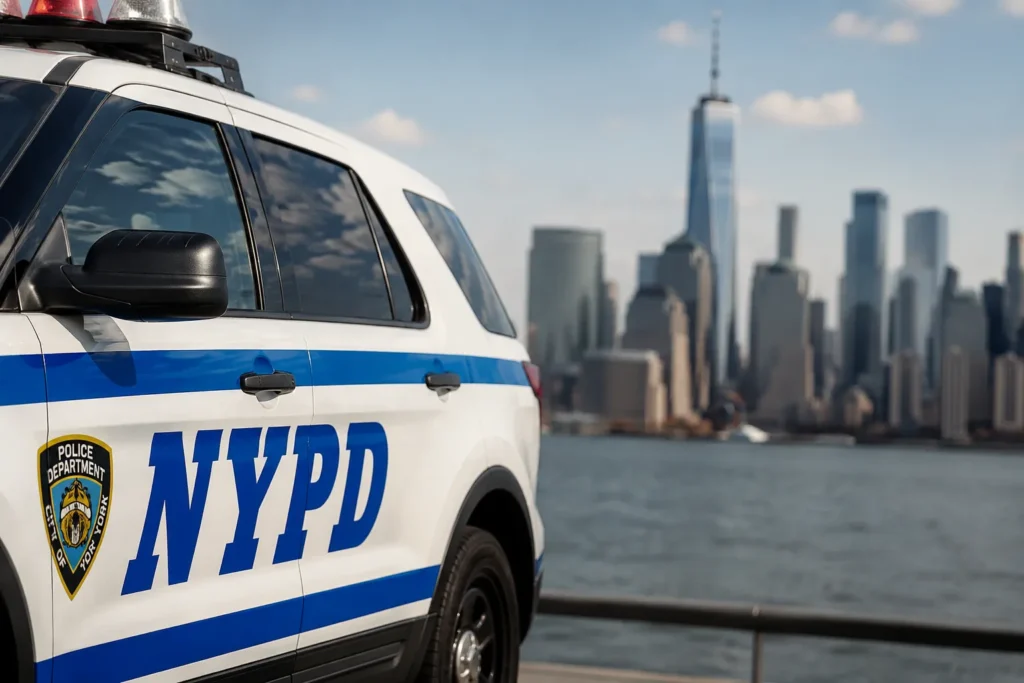
Table of Contents
NYPD refuses to send security detail with Mamdani’s wife to Syria | Fox News
Kennedy Center Must Pay Over $250,000 to Artist Who Opposed Trump Name Change – trendsfocus