
A legal fight involving one of America’s most recognizable cultural institutions has ended, at least for now, with a significant financial consequence for the Kennedy Center. The performing arts organization has been ordered to pay more than $250,000 in legal fees and costs to jazz musician Chuck Redd after losing a lawsuit connected to his decision to withdraw from a scheduled performance.
The dispute began after Redd objected to the addition of President Donald Trump’s name to the Kennedy Center. His decision not to perform eventually led the institution to take legal action against him, alleging that he had violated an agreement. But the case ultimately moved in the opposite direction, with the court dismissing the Kennedy Center’s claims and later ordering it to cover Redd’s legal expenses.
The ruling has attracted attention because it combines several highly sensitive subjects: politics, artistic freedom, contractual obligations, free speech, and the future identity of the Kennedy Center itself.
However, one important detail should be made clear from the beginning. Redd was not simply awarded more than $250,000 because he opposed Trump or disagreed with the Kennedy Center’s naming decision. The money represents attorneys’ fees and other legal costs resulting from his successful defense against the lawsuit.
Kennedy Center Ordered to Pay $250K to Trump Critic
The Kennedy Center has been ordered to pay jazz musician Chuck Redd approximately $252,479.70 in legal fees and costs following the dismissal of a lawsuit brought against him.
The case grew out of Redd’s decision to withdraw from a Christmas Eve performance after Donald Trump’s name was added to the Kennedy Center’s branding and building. Redd, a longtime participant in the institution’s holiday programming, objected to the change and decided not to take part in the event.
That cancellation sparked an aggressive response from Kennedy Center leadership. The institution accused Redd of breaking a contractual commitment and pursued legal action against him. At one stage of the dispute, officials discussed seeking damages that could have reached as high as $1 million.
Instead of producing a victory for the Kennedy Center, however, the lawsuit was dismissed.
The latest court order now leaves the institution responsible for a substantial portion of the costs Redd accumulated while defending himself.
The case has become particularly significant because it raises questions that go well beyond one canceled musical performance. Can an artist withdraw from an event because of political or ethical objections? When does an artistic decision become protected expression? And how far should an institution be allowed to go in attempting to enforce an alleged performance agreement?
Those questions have placed the Kennedy Center controversy at the intersection of culture and politics at a time when both have become increasingly difficult to separate.
How the Dispute Between Chuck Redd and the Kennedy Center Began
Chuck Redd is an established jazz musician who had performed in connection with Kennedy Center holiday events for years. His relationship with the institution changed dramatically after Trump’s name was incorporated into Kennedy Center branding.
The naming controversy itself had already generated significant debate.
The Kennedy Center was created as a national cultural institution and memorial connected to President John F. Kennedy. When Trump allies moved to add the president’s name to the organization, critics argued that the change represented a politicization of an institution traditionally meant to serve artists and audiences across political lines.
Supporters of Trump’s influence over the Kennedy Center, meanwhile, argued that the institution needed new leadership and a different cultural direction.
Redd made his position clear through his actions. Rather than continue with his scheduled Christmas Eve appearance, he canceled.
For him, the decision became a statement of opposition to the change taking place at the institution.
Kennedy Center leadership saw the matter differently.
Officials argued that Redd had committed to performing and should not have been able to withdraw simply because he objected to a political decision. The disagreement quickly escalated from a programming dispute into a legal battle.
Then-Kennedy Center president Richard Grenell publicly criticized Redd’s cancellation and suggested that the musician’s decision amounted to political behavior that caused harm to the institution.
The Kennedy Center later filed suit, alleging breach of contract.
That lawsuit placed Redd in a difficult position. Even when a defendant ultimately wins a case, legal representation can be extremely expensive, particularly in litigation involving a high-profile national institution.
Redd fought the allegations and challenged whether the Kennedy Center actually had an enforceable contract requiring him to perform.
The court eventually sided with him.
The result transformed what initially looked like a potentially costly legal threat against the musician into a financial liability for the Kennedy Center itself.
Why the Court Ordered More Than $250,000 in Legal Fees
One of the most important aspects of this story is understanding what the court actually awarded.
Headlines saying that the Kennedy Center must pay an artist who opposed Trump can easily create the impression that Chuck Redd received more than $250,000 in damages because of his political views.
That is not what happened.
The roughly $252,479.70 award covers attorneys’ fees and related legal costs connected to Redd’s defense of the Kennedy Center lawsuit.
The lawsuit itself was dismissed after the court found problems with the Kennedy Center’s effort to establish that Redd had entered into a binding contract requiring him to perform.
Redd also successfully relied on protections associated with Washington, D.C.’s anti-SLAPP law.
Anti-SLAPP laws are designed to protect individuals from lawsuits that may be intended to intimidate, punish or silence them for exercising protected speech or participating in matters of public concern.
“SLAPP” stands for Strategic Lawsuit Against Public Participation.
These laws are important because defending against a lawsuit can be financially damaging even when the person being sued ultimately wins. Without the possibility of recovering legal fees, someone could theoretically be punished simply by being forced to spend enormous amounts of money defending constitutionally or legally protected conduct.
In Redd’s case, his lawyers argued that the Kennedy Center lawsuit was connected to his public opposition to the Trump-related name change.
After the underlying case was dismissed, Redd sought reimbursement for his legal expenses.
The Kennedy Center challenged the size of the requested fees, arguing that they were excessive. The court nevertheless approved an award exceeding a quarter of a million dollars.
That decision significantly changes the financial outcome of the dispute.
Rather than collecting money from Redd, the Kennedy Center now faces an obligation to pay the costs associated with his defense.
The ruling could also serve as a warning to other institutions considering litigation against artists, employees or contractors whose decisions are closely connected to political expression.
At the same time, the Kennedy Center has indicated that the legal battle may not be completely over. The institution is expected to challenge the ruling through the appeals process.
That means the final financial outcome could still change.
Trump’s Kennedy Center Name Change Has Created a Larger Legal Battle
The Chuck Redd case is only one part of a much broader controversy surrounding the Kennedy Center.
After Donald Trump gained influence over the institution’s leadership, major changes followed both at the board level and in the Kennedy Center’s public identity.
One of the most controversial steps involved adding Trump’s name to the institution alongside that of John F. Kennedy.
The change immediately generated legal, political and cultural opposition.
Critics argued that the Kennedy Center’s official identity was established through federal law and could not simply be changed through a decision by the organization’s board.
That argument eventually reached the courts.
In a separate case, a federal judge concluded that the Kennedy Center board did not have the authority to officially rename the institution without congressional action.
That ruling added another layer of uncertainty to the Kennedy Center’s attempts to incorporate Trump’s name into its public identity.
The institution has challenged that decision as well.
As a result, several legal questions are moving forward at the same time.
One concerns whether the Kennedy Center had the right to sue Redd over his canceled performance. Another concerns whether its governing leadership had the legal authority to alter the institution’s name in the first place.
The overlapping disputes have turned the Kennedy Center into an unexpected focal point in the broader political debate over American cultural institutions.
For decades, the Kennedy Center has hosted performances ranging from theater and ballet to jazz, orchestral music and major national cultural events.
Its symbolic importance extends beyond its individual performances.
That is why changes in its leadership, programming and identity have generated such strong reactions.
For supporters of Trump’s approach, the changes represent an effort to reform an institution they believe had become politically or culturally disconnected from much of the country.
For critics, the changes represent political interference in an institution that should remain broadly independent and focused primarily on the arts.
Artists such as Chuck Redd have found themselves directly caught in the middle of that conflict.
What the Chuck Redd Ruling Could Mean for Artists and Cultural Institutions
The financial award in Chuck Redd’s case could have implications beyond the Kennedy Center.
Artists regularly work through a combination of formal contracts, informal commitments, booking agreements and professional relationships. When political or ethical disagreements arise, determining whether an artist can withdraw from a performance can become complicated.
Institutions have legitimate interests as well.
Canceling a scheduled performance can create financial losses, disrupt programming, disappoint ticket holders and require organizers to find replacements. Organizations therefore have strong reasons to expect performers to honor valid contractual commitments.
But the Redd dispute demonstrates why the existence and terms of an actual contract matter.
An organization cannot simply assume that a professional relationship automatically gives it the ability to compel a performance or collect damages.
The case also illustrates how legal action can intersect with freedom of expression.
Artists have historically used their work—and sometimes their refusal to participate—as a form of political and social expression.
Musicians have canceled performances, actors have withdrawn from productions and creators have boycotted institutions over issues ranging from civil rights and wars to labor disputes and government policies.
Whether those actions are legally protected always depends on the specific circumstances.
That is what makes the Kennedy Center case particularly interesting.
The court did not create a universal rule saying artists can cancel any performance whenever they disagree politically with an institution.
Instead, the dispute involved specific questions about whether a binding contract existed and whether the lawsuit improperly targeted protected activity.
The distinction matters.
For cultural organizations, the case could encourage greater attention to clearly written agreements with performers.
For artists, it highlights the importance of understanding contractual responsibilities before withdrawing from scheduled appearances.
And for the public, the dispute raises a much larger question about the relationship between art and politics.
Should national cultural institutions attempt to remain politically neutral? Is neutrality even possible when government-appointed boards control major organizations? And should artists be expected to separate their personal beliefs from the institutions where they perform?
There are unlikely to be simple answers.
What is clear is that the Kennedy Center’s effort to hold Chuck Redd financially responsible for his canceled performance has, so far, produced the opposite result.
The musician successfully defended himself, and the institution that sued him has now been ordered to cover more than $250,000 in legal expenses.
Whether that ruling survives an appeal remains to be seen.
But the controversy has already become much larger than one jazz concert.
It now represents a broader debate over artistic independence, political power, free expression and the role of one of America’s most prestigious cultural institutions.
As the Kennedy Center continues fighting several legal battles connected to its leadership and identity, the Chuck Redd case may ultimately be remembered as an important example of what can happen when cultural disagreements move from the stage to the courtroom.
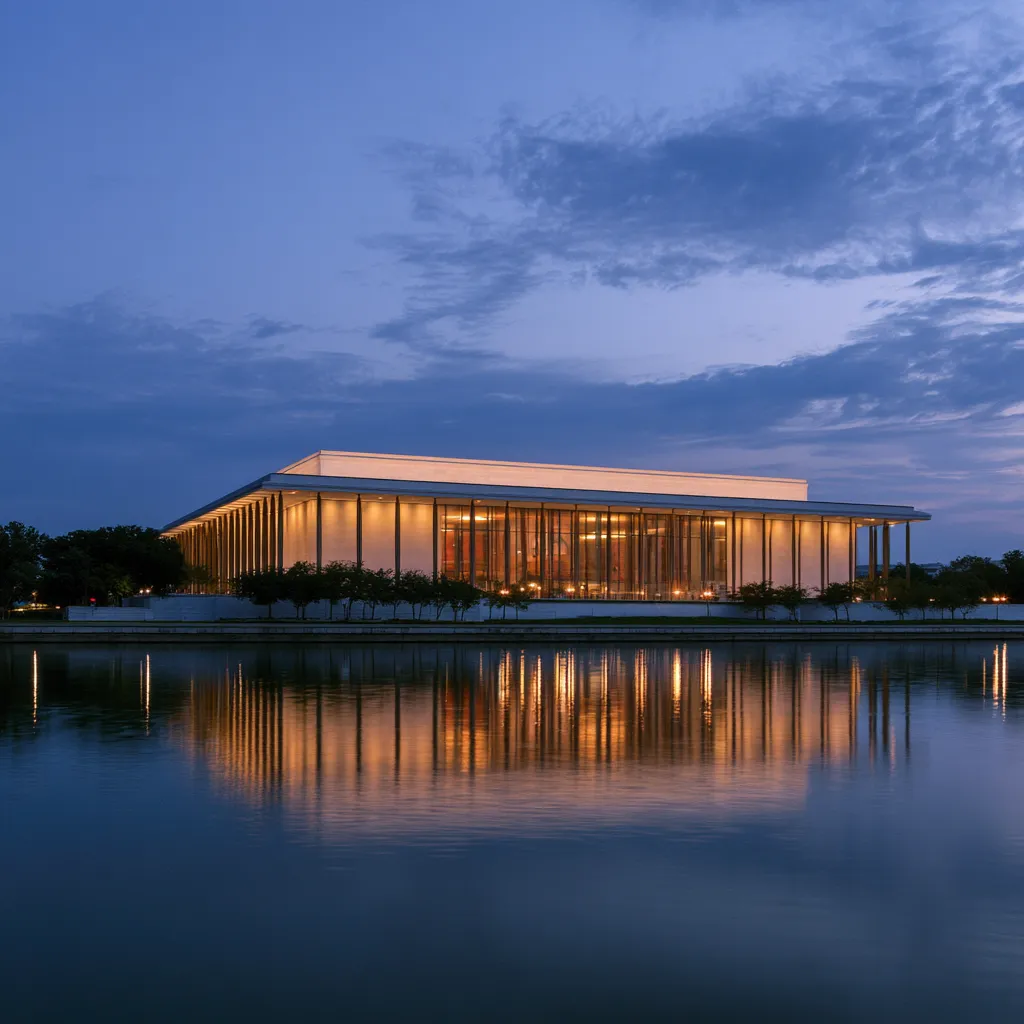
Table of Contents
Kennedy Center Must Pay Over $250,000 To Musician Who Canceled Gig In Protest Of Trump Name
Kennedy Center Court Orders Trump Name Removal Now – trendsfocus
1 thought on “Kennedy Center Must Pay Over $250,000 to Artist Who Opposed Trump Name Change”
Comments are closed.