
The arrest of an active-duty U.S. Air Force major on the steps of the U.S. Capitol has reignited a long-running debate over the balance between free speech and military neutrality in the United States. The incident unfolded during a demonstration calling for the impeachment of President Donald Trump and Vice President JD Vance, drawing national attention because the officer appeared in uniform while making a political statement.
Although Americans enjoy broad constitutional protections for freedom of expression, members of the U.S. military are subject to additional regulations designed to preserve the armed forces’ political neutrality and public trust. As a result, the arrest has become more than just another political protest—it has evolved into a case study of how military service, constitutional rights, and political activism intersect.
This article examines the events leading up to the arrest, the military rules governing political activity, the legal implications of the demonstration, and what the controversy could mean for the future.
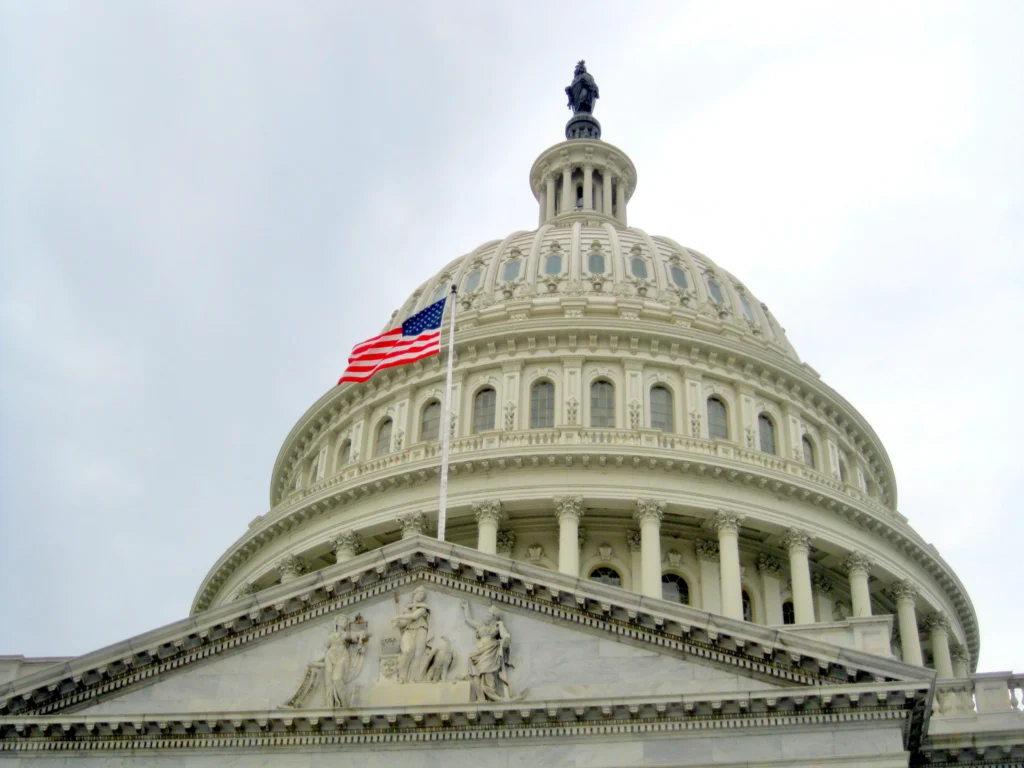
Air Force Major Arrested on Capitol Steps During Impeachment Protest: Understanding the Full Story
The Protest That Led to the Arrest
The demonstration took place outside the U.S. Capitol as activists gathered to demand the impeachment of President Donald Trump. Organized by the Removal Coalition, the event brought together protesters who argued that the administration had violated constitutional principles and should be removed from office.
One participant immediately stood out from the crowd.
Major Jason Watson, an active-duty officer in the U.S. Air Force, attended the protest wearing his military uniform. During the demonstration, he addressed supporters and publicly criticized the Trump administration. Holding a sign reading “Impeach, Convict, Remove,” Watson argued that public officials have a constitutional obligation to defend democratic institutions and that citizens—including military personnel—have a responsibility to speak out when they believe those institutions are threatened.
According to reports, Watson initially had lawful access to the Capitol steps because he was accompanying Representative Al Green of Texas. Congressional members are permitted to host guests in certain areas of the Capitol complex.
However, once Representative Green departed, Capitol Police informed Watson that he could no longer continue his political demonstration in that restricted location. Officers instructed him either to relocate to a designated protest area or discontinue the demonstration altogether.
Watson declined to comply.
Capitol Police subsequently arrested him on charges related to unlawful demonstration within a restricted area of the Capitol grounds.
The arrest itself was reportedly peaceful, with no allegations of violence or resistance beyond Watson’s refusal to leave.
Nevertheless, the incident quickly spread across social media and national news outlets because it involved an active-duty military officer engaging in overt political advocacy while wearing the uniform of the United States Air Force.
Why Active-Duty Military Personnel Face Strict Political Restrictions
Many Americans assume that service members possess exactly the same political rights as civilians. While they retain many constitutional protections, active-duty military personnel operate under a unique legal framework that places additional limits on political activity.
The purpose of these rules is to ensure that the U.S. military remains politically neutral regardless of which party controls the White House or Congress.
Public confidence in the armed forces depends on the belief that military leaders serve the Constitution rather than individual political figures or parties.
For this reason, Department of Defense regulations prohibit active-duty personnel from participating in partisan political activities while in uniform.
Examples include:
- Speaking at partisan political events while wearing military attire.
- Appearing in campaign advertisements.
- Using military rank to endorse political candidates.
- Participating in demonstrations that create the appearance of official military support for a political movement.
Service members remain free to vote, privately express opinions, make campaign donations, and engage in certain political activities during personal time, provided they do not imply military endorsement.
The distinction becomes particularly important when uniforms are involved.
Military uniforms symbolize the authority and professionalism of the armed forces. When an officer publicly advocates for or against political leaders while wearing the uniform, observers may interpret those remarks as representing the military rather than the individual’s personal views.
That perception is exactly what military regulations seek to avoid.
Watson’s decision to appear in uniform therefore became one of the central issues in the controversy.
The Legal Questions Surrounding the Arrest
The legal issues surrounding the case extend beyond military regulations.
Capitol Police stated that Watson’s arrest resulted from his refusal to stop demonstrating in a restricted area after being instructed to move.
Security restrictions around the Capitol have become significantly stricter in recent years, particularly following the January 6, 2021 attack on Congress.
Today, demonstrations are permitted only in designated public areas.
Individuals who ignore lawful police instructions inside restricted zones may face arrest regardless of the political message they are expressing.
This means that Watson’s arrest was not officially based on his criticism of President Trump.
Instead, authorities indicated that enforcement centered on location and compliance with Capitol security rules.
Separate from any criminal proceedings, however, Watson may also face administrative or disciplinary review within the Air Force.
Military investigators will likely evaluate questions including:
- Whether he violated Department of Defense political activity regulations.
- Whether appearing in uniform created the appearance of official military endorsement.
- Whether his conduct affected good order and discipline.
- Whether additional administrative action is warranted.
Possible outcomes could range from counseling or reprimands to more significant disciplinary measures, depending on the findings of military authorities.
The Broader Debate Over Free Speech and Military Neutrality
The arrest has sparked strong reactions across the political spectrum.
Supporters argue that Watson demonstrated courage by speaking publicly about what he believes are constitutional concerns. They contend that military officers swear an oath to defend the Constitution rather than any individual president and therefore have a moral obligation to voice concerns when they perceive threats to democratic institutions.
Some also argue that limiting public political expression by service members risks discouraging important conversations about government accountability.
Critics take a different view.
They maintain that active-duty officers voluntarily accept restrictions on political conduct as part of military service.
Those restrictions, they argue, are essential to preserving civilian control of the military and preventing the armed forces from becoming politically divided.
Throughout American history, one of the military’s defining characteristics has been its commitment to remaining above partisan politics.
Military leaders traditionally avoid endorsing political candidates or participating in demonstrations because doing so could undermine public confidence in the institution’s impartiality.
Legal scholars note that this balance has existed for decades.
The Supreme Court has repeatedly recognized that constitutional rights within the military may be subject to greater limitations than in civilian life when those restrictions serve legitimate military objectives such as discipline, readiness, and unit cohesion.
As a result, Watson’s case may become another example frequently discussed in military ethics courses and constitutional law classrooms.
What Happens Next?
The immediate legal process will likely involve the misdemeanor charge stemming from the Capitol demonstration.
Separately, the Air Force is expected to determine whether Watson’s actions violated military regulations governing political conduct.
That review could take weeks or months depending on the complexity of the investigation.
The case also arrives during an intensely polarized political climate in which debates over executive authority, constitutional interpretation, and civic responsibility remain highly contentious.
For some Americans, Watson’s actions represent an exercise of conscience.
For others, they illustrate why military officers must avoid public political demonstrations while serving on active duty.
Regardless of individual political views, the incident serves as a reminder that members of the armed forces operate under a unique set of responsibilities that extend beyond those of ordinary citizens.
Military professionalism depends not only on operational excellence but also on maintaining public confidence that the armed forces remain loyal to the Constitution rather than political parties or elected officials.
As legal proceedings continue and the Air Force evaluates the matter internally, the case will likely remain a focal point in discussions about constitutional rights, military ethics, and the proper role of service members in political life.
Conclusion
The arrest of Air Force Major Jason Watson on the Capitol steps has become one of the most closely watched stories involving military political activity in recent years. While the immediate arrest centered on demonstrating in a restricted area after refusing police instructions, the broader controversy concerns the unique responsibilities placed on active-duty service members.
The case highlights the ongoing tension between individual freedom of expression and the military’s obligation to remain politically neutral. It also underscores how public actions taken in uniform can carry consequences beyond those faced by private citizens.
As both the legal system and the U.S. Air Force review the incident, the outcome may help clarify how constitutional rights and military regulations coexist in an era of heightened political polarization. Whatever the final resolution, the case is likely to remain an important reference point in future discussions about civil-military relations, public protest, and the responsibilities that accompany military service.
Table of Contents
US service member arrested at Capitol after calling for Trump’s impeachment | CNN Politics