
The U.S. Navy is facing a growing debate over the future name of one of its newest aircraft carriers after officials began discussing whether the ship should be renamed in honor of President Donald Trump instead of continuing with its planned name, USS Doris Miller. The discussions have raised questions about military traditions, historical recognition, and how the nation chooses to honor those who have served.
The aircraft carrier, currently under construction and identified by its hull number CVN-81, was originally named after Doris “Dorie” Miller, a Black Navy sailor whose extraordinary bravery during the attack on Pearl Harbor made him one of the most respected figures in American military history. Miller’s actions on December 7, 1941, earned him the Navy Cross and recognition as a symbol of courage and sacrifice.
According to multiple U.S. officials, discussions about changing the ship’s name have been underway for several months. While no official decision has been announced, sources say Navy leadership has considered renaming the carrier after Trump, which would represent a significant departure from recent ship-naming practices.
The debate comes as the Navy prepares for a major milestone in the ship’s construction. The carrier’s keel-laying ceremony is expected later this year, creating pressure for officials to finalize the vessel’s official name before the public event.
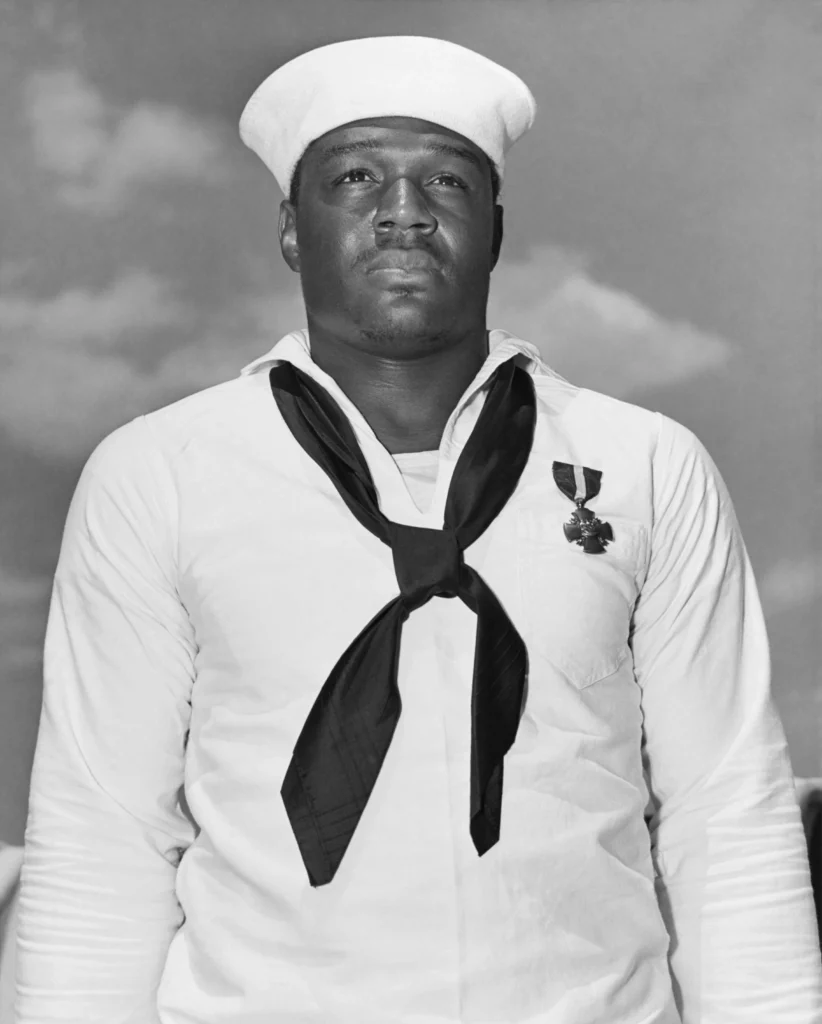
Navy Considers Renaming USS Doris Miller
The possible renaming of CVN-81 has created a major discussion within naval circles because of the historic significance attached to the USS Doris Miller name. When the Navy announced the name in January 2020 during a Martin Luther King Jr. Day ceremony at Pearl Harbor, it represented a groundbreaking moment in military history.
The carrier was set to become the first U.S. aircraft carrier named after an enlisted sailor and the first aircraft carrier named in honor of a Black American. The decision was announced during President Donald Trump’s first administration by former Acting Secretary of the Navy Thomas Modly.
At the ceremony, Modly highlighted Miller’s remarkable story and emphasized that his legacy represented the values of service, courage, and equality within the Navy.
“Dorie Miller was the son of a sharecropper,” Modly said during the announcement, according to a Navy release. “And, he was an American sailor – so designated by the uniform that he wore — the same uniform all sailors wore, and still wear, regardless of race, ethnic background, or political persuasion.”
The original decision to name the carrier after Miller came after recommendations from retired Black Navy admirals who believed one of the nation’s most powerful warships should honor a sailor whose story represented determination and bravery.
Thomas Modly later explained that naming the carrier after Miller was about recognizing the contributions of all sailors, not just military leaders.
“Ultimately, these names are meant to be symbolic and unifying for the Navy, and the nation it serves,” Modly said. “When they are named for people like Doris Miller, they raise broader awareness of the heroism, patriotism and sacrifices of all American sailors — not merely their commanders.”
The possibility of removing Miller’s name has therefore sparked concerns among historians, veterans, and supporters who believe the carrier’s original name carried deep symbolic importance.
The Heroic Story of Doris Miller
Doris “Dorie” Miller’s story began in Waco, Texas, where he enlisted in the U.S. Navy in 1939. At the time, opportunities for Black sailors were severely limited because of segregation within the armed forces. Miller served as a Mess Attendant Third Class, one of the few positions available to Black men in the Navy during that era.
His life changed forever on December 7, 1941, when Japan launched its surprise attack on Pearl Harbor. Miller was aboard the USS West Virginia when bombs began falling on the U.S. fleet.
During the attack, Miller was performing routine duties when the ship came under fire. Because damage prevented him from reaching his assigned position, he instead rushed to help his fellow sailors.
Miller assisted his wounded commanding officer before taking control of a .50-caliber anti-aircraft machine gun. Despite having no formal training on the weapon, he fired at attacking Japanese aircraft and continued fighting until he ran out of ammunition.
According to the Department of Veterans Affairs, Miller “laid down effective fire” despite being untrained on the weapon. After the ammunition was exhausted and the ship began sinking, Miller continued helping injured sailors reach safety.
His actions became one of the most famous examples of heroism during Pearl Harbor. In 1942, Admiral Chester Nimitz personally presented Miller with the Navy Cross, the Navy’s second-highest military award at the time.
Miller also became the first Black sailor featured on a national War Bond tour alongside white service members, helping highlight the contributions of African American troops during World War II.
Tragically, Miller’s military career ended in 1943 when he was killed during the Battle of Makin after his ship was struck by a Japanese submarine torpedo.
Decades later, his story continued inspiring new generations. Miller was portrayed by actor Cuba Gooding Jr. in the 2001 film “Pearl Harbor,” further increasing public awareness of his bravery.
For many Americans, Miller represents more than a single act of courage. His story reflects the struggle for equality within the military and the contributions of countless Black service members who served despite discrimination.
Ship Naming Traditions and the Trump Debate
The discussion over renaming the aircraft carrier highlights a broader debate about how the Navy chooses names for its most important vessels.
Historically, many U.S. aircraft carriers have been named after presidents, including the USS Abraham Lincoln, USS George H.W. Bush, USS Ronald Reagan, and USS George Washington. However, aircraft carriers have also honored military leaders and other influential Americans.
The USS Nimitz, for example, honors Admiral Chester Nimitz, who commanded U.S. forces in the Pacific during World War II. The USS Carl Vinson was named after the Georgia congressman who played a major role in naval affairs.
Supporters of naming the carrier after Trump argue that presidents have traditionally been recognized through major Navy vessels and that commanders in chief have played a significant role in national defense.
However, critics argue that changing the name from Doris Miller would remove recognition from a figure whose legacy carries unique historical importance. They point out that Miller’s selection was a milestone because it broke barriers by honoring an enlisted sailor rather than a president, admiral, or political leader.
The Navy’s current leadership is also reviewing possible changes to ship-naming guidance. Officials are reportedly examining how future vessels should be named and whether presidents should receive greater consideration in the process.
The controversy follows other recent debates over military naming decisions. Defense Secretary Pete Hegseth previously directed changes involving military assets named after controversial historical figures and ordered the renaming of the USNS Harvey Milk, a ship named after the Navy veteran and LGBTQ rights activist.
Renaming ships after they have already been announced is extremely uncommon, making the situation involving CVN-81 particularly notable.
The Future of CVN-81 and Doris Miller’s Legacy
While discussions continue, the Navy has not officially announced a final decision regarding the carrier’s name. Officials have reportedly stopped referring to the ship internally as USS Doris Miller and are instead using its hull designation, CVN-81.
One possible outcome being considered is naming another Navy vessel after Miller while moving forward with a different name for the aircraft carrier. Officials have also discussed recommending Miller for the Medal of Honor, the nation’s highest military award for valor.
Miller’s great-nephew, Thomas Bledsoe, said the family had not been informed about the possible name change but welcomed the renewed effort to recognize Miller with the Medal of Honor. The family has reportedly worked for years to secure that honor.
The Medal of Honor recommendation would still require approval through the proper process, including authorization from Congress and approval from the president.
The Navy faces a deadline as the ship moves closer to construction milestones. The fourth Gerald R. Ford-class aircraft carrier is not expected to be delivered until 2034 due to shipbuilding constraints, but officials must determine its official name before major public events begin.
Regardless of the final decision, the debate has renewed attention on Doris Miller’s extraordinary contribution to American history. His courage during Pearl Harbor transformed him from an overlooked enlisted sailor into one of the Navy’s most respected heroes.
The controversy surrounding CVN-81 demonstrates that ship names are not simply labels. They represent values, history, and the stories a nation chooses to remember.
Whether the future aircraft carrier carries the name USS Doris Miller or receives a different designation, Miller’s legacy remains deeply connected to the history of the U.S. Navy and the ideals of courage, sacrifice, and service.