
Donald Trump has never approached politics like a conventional American leader. From his campaign rallies and media strategy to the way he communicates with supporters, Trump has consistently built his political identity around disruption. Now, new reporting about his fundraising network suggests that the same unconventional approach is being applied to raising money.
At the center of the controversy is a phrase reportedly used while approaching wealthy donors and corporate leaders: “The boss wants this money.” The statement offers a striking glimpse into a fundraising operation that appears to be highly organized, personally driven and closely connected to Trump himself.
Political fundraising is not new in the United States. Presidents, candidates, parties and advocacy groups have always depended on donors to finance campaigns, events and long-term political projects. However, Trump’s current operation is attracting attention because of its reported scale, the size of the requested contributions and the president’s direct interest in which companies and executives are providing financial support.
Reports indicate that hundreds of millions of dollars have been raised through a network involving corporate donations, wealthy individuals, political committees and exclusive fundraising events. The money is reportedly being directed toward several initiatives linked to Trump’s political movement and presidential legacy.
Supporters view the operation as evidence of Trump’s ability to attract enormous financial backing. Critics see it as a troubling example of how money, political access and corporate influence can become closely connected.
The larger issue is not simply how much money is being raised. It is what donors may expect in return, how much access large contributions provide and whether political fundraising of this scale changes the relationship between private corporations and the federal government.
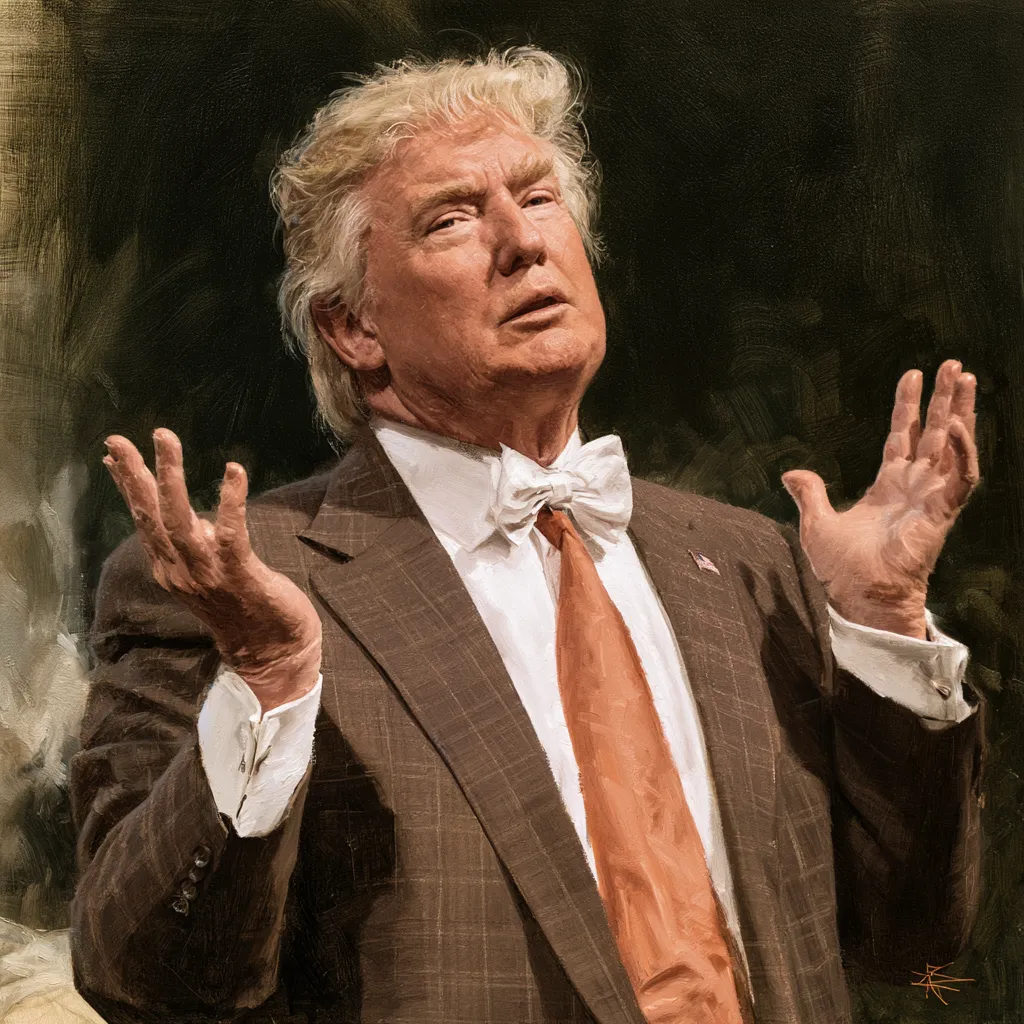
A Fundraising Network Built Around Trump’s Personal Influence
Donald Trump’s fundraising power has always been closely tied to his personal brand. Unlike traditional politicians who rely heavily on party structures, policy organizations and established donor networks, Trump has built a movement centered on loyalty to him as an individual.
That personal connection has helped him generate donations from ordinary supporters as well as some of the wealthiest people and largest companies in the world. Small-dollar donors have played an important role in Trump’s political campaigns, but the latest reports focus on a different side of the operation: direct requests for major contributions from corporate executives and billionaire supporters.
Longtime fundraiser Meredith O’Rourke has reportedly played a leading role in this effort. She is said to have approached business leaders with requests that sometimes reached millions or even tens of millions of dollars.
In certain conversations, O’Rourke allegedly referred to Trump as “the boss,” explaining that he wanted the money being requested. That language suggests a fundraising strategy in which potential donors are not simply being asked to support a political cause. They are being told that the request has the attention of the president himself.
Trump reportedly receives regular information about the fundraising operation, including which companies have contributed, which have not donated and how much has been collected. This level of personal involvement would distinguish the operation from more conventional fundraising efforts in which presidents maintain some distance from the details of donor solicitation.
The approach may be effective because of Trump’s influence over the Republican Party and the federal government. Corporate executives understand that the administration can make decisions involving taxes, tariffs, regulations, government contracts and industry policies. Even without an explicit promise of favorable treatment, a direct fundraising request connected to the president can carry significant pressure.
Some donors may contribute because they genuinely support Trump’s political agenda. Others may see donations as a way to build a relationship with the administration, repair previous tensions or demonstrate that their companies are willing to cooperate with the White House.
This creates a complicated environment in which political support, business interests and strategic access may overlap.
Corporate Donations and the Question of Political Access
Major corporations regularly participate in American politics. They support political action committees, hire lobbyists, sponsor inaugural events and contribute to organizations associated with both major parties.
However, the reported scale of Trump’s fundraising campaign has renewed concerns about the influence corporations can gain through large financial contributions.
Companies including some of the biggest names in technology, finance and international business have reportedly provided millions of dollars to Trump-related projects and committees. These contributions may support political organizations, ceremonial events, presidential initiatives or long-term legacy projects.
For corporations, donating to a presidential operation can serve several purposes. It may help executives gain access to decision-makers, communicate their policy concerns or improve their standing with an administration that has significant control over their industries.
A technology company, for example, may be concerned about artificial intelligence rules, antitrust investigations, trade restrictions or government contracts. A financial institution may be focused on banking regulations and tax policy. An international company may want to avoid tariffs or maintain favorable access to the American market.
These business interests do not prove that donations are being exchanged for official decisions. Nevertheless, the combination of massive contributions and direct access naturally creates questions.
High-dollar fundraising events reportedly offer wealthy donors opportunities to meet Trump and members of his inner circle. Some private dinners have allegedly required contributions of up to $1 million per guest.
For an ordinary American, that level of access is almost impossible to obtain. Most citizens communicate with government officials through elections, petitions, public meetings or letters. Wealthy donors, by contrast, may be able to sit in the same room as the president and discuss their concerns directly.
Supporters of the system argue that fundraising events have always allowed donors to meet political leaders. They also point out that making a donation does not guarantee a particular policy outcome.
Critics respond that access itself is valuable. Even when no explicit agreement exists, the ability to speak privately with a president can influence which issues receive attention and how political leaders understand an industry’s priorities.
The concern becomes even greater when administration officials know exactly which companies donated and which refused. Businesses may fear that declining a request could damage their relationship with the White House, especially when the president is known for publicly criticizing corporations and executives who oppose him.
From Anti-Establishment Politics to a Corporate Fundraising Powerhouse
Trump originally entered national politics as a wealthy outsider who claimed he could not be controlled by traditional donors. During his first presidential campaign, he frequently emphasized his personal wealth and criticized politicians who depended on lobbyists, corporations and wealthy contributors.
His promise to “drain the swamp” became one of the defining messages of his political rise. The phrase represented his claim that Washington was controlled by insiders who exchanged money and influence behind closed doors.
The latest description of Trump’s fundraising operation appears very different from that early anti-establishment image.
Instead of distancing himself from corporate donations, Trump is now reportedly leading an operation capable of collecting hundreds of millions of dollars from powerful business interests. Rather than condemning elite fundraising events, his political network is reportedly organizing exclusive gatherings where access can cost enormous sums.
This transformation does not necessarily surprise Trump’s supporters. Many view his relationships with corporations as practical rather than ideological. They believe he is using his influence to strengthen his political movement and fund projects that will preserve his legacy.
Trump’s supporters may also argue that Democratic presidents and candidates have long received major donations from Wall Street, Silicon Valley, Hollywood and wealthy political organizations. From this perspective, Trump is simply competing within a system that already depends heavily on private money.
However, critics say the issue is not only that corporations are donating. They are concerned about the reported directness of the requests and the possibility that companies may feel pressured to contribute.
The phrase “the boss wants this money” is important because it suggests that the request comes with the president’s personal authority. A company receiving such a message may believe that its response will be remembered.
Trump’s political style may intensify that concern. He has frequently praised companies and executives who support him while attacking individuals and businesses he considers disloyal. This public emphasis on loyalty can make fundraising requests appear more powerful than standard invitations to contribute.
The result is a fundraising system that reflects Trump’s broader leadership model. It is personal, centralized, loyalty-focused and built around direct relationships with the president.
What Trump’s Fundraising Operation Means for American Democracy
The controversy surrounding Trump’s fundraising network is part of a much larger debate about the role of money in American politics.
Running a national campaign is extremely expensive. Political organizations must pay for advertising, staff, travel, legal services, data systems, events and voter outreach. After elections, political movements continue raising money to maintain influence and prepare for future campaigns.
Presidential libraries and major legacy projects also require substantial financial support. Supporters of private fundraising argue that donors should be free to contribute to political and historical projects they believe in.
The democratic concern begins when financial power appears to produce political access unavailable to ordinary citizens.
If a corporation can secure a private dinner with the president by contributing $1 million, while an average voter struggles to have a letter answered, the political system may appear more responsive to wealth than to citizenship.
This perception can damage public trust even when no laws are broken. Americans may begin to assume that government decisions are influenced by donor relationships rather than public interest.
Transparency is therefore essential. The public needs to know who is donating, how much money is being contributed, where the funds are going and whether donors later benefit from government decisions.
Clear disclosure does not automatically eliminate conflicts of interest, but it allows journalists, watchdog organizations and citizens to identify patterns. For example, the public can examine whether a company made a major contribution shortly before receiving a government contract, regulatory exemption or favorable policy decision.
Another important question is whether existing campaign finance and ethics rules are strong enough to address new forms of presidential fundraising. Money may flow through political committees, nonprofit groups, inaugural funds, legacy organizations and other entities governed by different disclosure requirements.
When fundraising is spread across several organizations, understanding the full financial picture can become difficult.
Trump’s supporters will likely continue to defend the operation as legal, effective and necessary for advancing his agenda. They may also argue that the criticism reflects a double standard because other political leaders have benefited from corporate money.
Opponents, however, will continue asking whether companies are donating voluntarily or because they fear being excluded, criticized or punished. They will also question whether wealthy contributors are purchasing access that gives them a greater voice in government.
Ultimately, Trump’s fundraising operation represents more than a story about one president or one group of donors. It highlights a central weakness in modern American democracy: political influence is formally distributed through votes, but practical influence is often shaped by money, relationships and access.
The phrase “the boss wants this money” captures that tension. To supporters, it demonstrates Trump’s command over a powerful fundraising network. To critics, it sounds like pressure coming from the highest office in the country.
As more details emerge, the most important question will not simply be how much money Trump’s team collects. The real issue will be whether those contributions affect government decisions, presidential priorities and the treatment of companies that choose not to participate.
The operation may strengthen Trump’s political movement and help finance projects connected to his presidency. At the same time, it is likely to intensify public debate about corporate influence, political loyalty and the price of access to power in the United States.
Table of Contents
CBS Poll: Iran Conflict More Complex Than Expected – trendsfocus