
Venezuela has been struck by one of the most destructive natural disasters in its modern history after two powerful earthquakes rocked the country’s northern coast within less than a minute of each other. The twin earthquakes, which occurred on the evening of June 24, 2026, caused widespread destruction across Caracas and several coastal states, leaving hundreds dead, more than a thousand injured, and countless families searching for missing loved ones.
According to the latest reports from emergency authorities, rescue operations remain underway as teams continue searching collapsed buildings in the hardest-hit neighborhoods. The disaster has prompted the Venezuelan government to declare a nationwide state of emergency while several countries and international organizations prepare humanitarian assistance.
The earthquakes are among the strongest to strike Venezuela in more than a century and have exposed the vulnerability of critical infrastructure already weakened by years of economic hardship. As aftershocks continue to shake the region, officials warn that the death toll could continue rising in the coming days.
The 2026 Venezuela Earthquakes: A Nation Shaken
At 6:04 p.m. local time (22:04 GMT) on June 24, residents across northern Venezuela suddenly felt an intense earthquake. The United States Geological Survey (USGS) reported that the first tremor registered a magnitude of 7.2.
Just 39 seconds later, before emergency services or residents had time to react, a second and even stronger earthquake measuring magnitude 7.5 struck the same region. Seismologists described the event as one of the most powerful seismic sequences ever recorded in Venezuela since modern instrumental observations began.
Epicenter and Location
According to the USGS, the epicenter was located near Morón, in Carabobo State, approximately 160 kilometers (100 miles) west of Caracas, close to Venezuela’s Caribbean coastline.
Because of its relatively shallow depth and proximity to densely populated areas, the earthquakes generated extremely violent ground shaking across much of northern Venezuela.
The tremors were felt not only throughout Venezuela but also in neighboring Colombia, several Caribbean islands, and parts of northern Brazil.
Timeline of the Disaster
- 6:04 p.m. – First earthquake (Magnitude 7.2)
- 39 seconds later – Second earthquake (Magnitude 7.5)
- More than 30 aftershocks recorded during the following hours.
- Government declares a nationwide State of Emergency.
- Search-and-rescue operations begin overnight across multiple regions.
Areas Most Affected
Authorities report that the most severe destruction occurred in northern Venezuela, particularly:
- Caracas
- La Guaira
- Catia La Mar
- Morón
- Chacao
- Baruta
- Altamira
- Los Palos Grandes
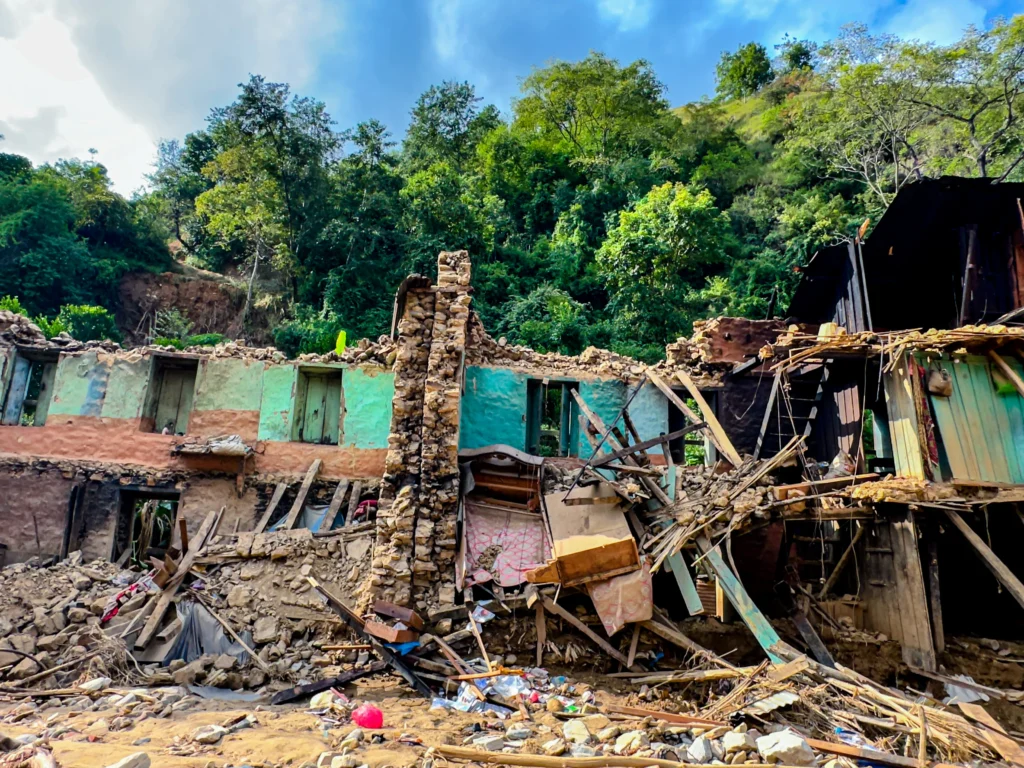
Entire apartment buildings collapsed in several districts of Caracas, while roads, bridges, schools, hospitals, and public buildings suffered extensive structural damage. The Simón Bolívar International Airport, the country’s busiest airport, also sustained damage and temporarily suspended operations. Metro and rail services were halted as engineers assessed infrastructure safety.
Human Impact: Lives Lost and Communities Devastated
The human toll continues to rise as rescue teams search through mountains of concrete and twisted steel.
Latest Casualty Figures
According to the latest official updates:
| Category | Latest Report |
|---|---|
| Confirmed deaths | 188 |
| Injured | More than 1,520 |
| People trapped | About 200 |
| Buildings damaged or destroyed | More than 250 |
| Missing persons | Thousands still unaccounted for in ongoing searches |
Authorities stress that these numbers remain provisional because many neighborhoods remain inaccessible and emergency crews continue to uncover victims beneath collapsed structures.
Search and Rescue Operations
Thousands of firefighters, police officers, military personnel, medical teams, and volunteers have been deployed throughout northern Venezuela.
Heavy machinery has been brought into Caracas and La Guaira to remove debris while specially trained rescue dogs assist teams searching for survivors trapped beneath collapsed apartment buildings.
Emergency responders describe the first 72 hours following the earthquakes as critical for locating people still alive beneath the rubble.
The Venezuelan Armed Forces have also been mobilized to distribute food, drinking water, emergency shelters, and medical supplies to affected communities.
Hospitals Under Pressure
Hospitals in Caracas and neighboring states have received more than a thousand injured patients.
Doctors have been treating:
- Crush injuries
- Fractures
- Head trauma
- Burns
- Severe dehydration
Acting President Delcy Rodríguez called on all available healthcare professionals to report immediately to hospitals as emergency wards exceeded normal capacity.
Economic and Social Consequences
Beyond the tragic loss of life, the earthquakes have severely disrupted everyday life.
Electricity outages affected large sections of northern Venezuela, while interruptions to water supplies and telecommunications complicated rescue operations. Thousands of residents spent the night sleeping outdoors because of fears that damaged buildings could collapse during powerful aftershocks.
Schools have been closed indefinitely in the affected regions, and many businesses remain shut as engineers inspect buildings for structural safety. Experts warn that the disaster could significantly impact Venezuela’s already fragile economy, with reconstruction expected to take months or even years.
Rescue and Emergency Response Efforts
Within minutes of the earthquakes, Venezuelan authorities launched one of the largest emergency operations in the country’s recent history. Firefighters, civil protection teams, police officers, military personnel, paramedics, and thousands of volunteers were deployed to search for survivors trapped beneath collapsed buildings.
The government declared a nationwide State of Emergency, allowing emergency agencies to mobilize additional resources and coordinate rescue efforts across the most affected regions.
International Rescue Teams Arrive
As the scale of the disaster became clearer, several countries and international organizations announced immediate humanitarian assistance.
Search-and-rescue teams from the United States, Mexico, Spain, Qatar, and the United Nations began traveling to Venezuela with specialized equipment capable of detecting survivors beneath collapsed concrete structures.
Medical supplies, portable hospitals, generators, water purification systems, and emergency shelters were also dispatched as part of the first wave of international aid.
Interim President Delcy Rodríguez thanked the international community for its rapid response, emphasizing that Venezuela would require significant assistance during both the rescue and reconstruction phases.
Difficult Rescue Conditions
Emergency crews are facing enormous challenges.
Many roads connecting Caracas to coastal communities were blocked by landslides and collapsed bridges, slowing the arrival of heavy machinery.
Electricity failures and telecommunications outages complicated coordination between rescue teams.
In some neighborhoods of La Guaira, residents began digging through the rubble with their bare hands before professional rescuers arrived.
Rescue dogs, thermal imaging cameras, drones, and specialized listening devices are being used to locate survivors.
Authorities continue to warn residents not to enter damaged buildings because dozens of aftershocks have already been recorded since the initial earthquakes.
Hospitals Overwhelmed
Hospitals across Caracas, La Guaira, and neighboring states remain under tremendous pressure.
Emergency departments have treated more than 1,520 injured people, many suffering from:
- Crush syndrome
- Multiple fractures
- Severe head injuries
- Internal bleeding
- Burns
- Psychological trauma
Healthcare workers have been called back from leave, while retired doctors and volunteer medical professionals have joined emergency operations.
Several temporary field hospitals have also been established near the most heavily damaged districts to relieve pressure on major medical centers.
Infrastructure Damage
Beyond the human tragedy, the earthquakes severely damaged Venezuela’s infrastructure.
Officials report:
- More than 250 buildings have been damaged or destroyed.
- Hundreds of homes have collapsed completely.
- Several hospitals suffered structural damage.
- Numerous schools remain closed indefinitely.
- Sections of highways connecting Caracas to coastal communities are unusable.
- Water distribution networks have been interrupted.
- Electricity outages continue across several states.
The Simón Bolívar International Airport, Venezuela’s busiest airport located near Caracas, temporarily suspended operations after parts of its infrastructure sustained damage.
Metro services in Caracas were also halted while engineers inspect tunnels, bridges, and stations for structural safety.
Humanitarian Challenges
Thousands of families spent the first night sleeping outdoors, fearing additional building collapses caused by aftershocks.
Emergency shelters have been established in schools, sports complexes, churches, and public buildings.
Volunteers continue distributing:
- Drinking water
- Food
- Blankets
- Medicines
- Hygiene kits
- Baby supplies
However, humanitarian organizations warn that much more assistance will be needed if displaced populations remain unable to return home for an extended period.
What Comes Next for Venezuela?
Although rescue operations remain the immediate priority, attention is gradually turning toward what may become one of the largest reconstruction efforts in Venezuela’s modern history.
Experts believe rebuilding affected communities could require several years.
Rebuilding Homes and Public Infrastructure
Thousands of families have lost their homes.
Government engineers are currently inspecting residential buildings to determine which structures can be repaired and which must be demolished.
Reconstruction priorities include:
- Residential housing
- Hospitals
- Schools
- Roads and bridges
- Water systems
- Electricity networks
- Telecommunications infrastructure
The government has announced emergency funding for reconstruction while seeking additional financial assistance from international partners.
Economic Consequences
The earthquakes struck a country already facing significant economic challenges.
The destruction is expected to affect several key sectors:
- Oil and petrochemical operations near the epicenter experienced temporary disruptions.
- Commercial activity in Caracas slowed dramatically following widespread structural damage.
- Tourism is expected to decline as airports and hotels recover.
- Thousands of small businesses have temporarily closed.
Economists warn that reconstruction costs could amount to billions of dollars, placing additional pressure on public finances.
Why Was the Earthquake So Destructive?
According to geologists, the disaster resulted from a rare earthquake doublet—two major earthquakes occurring on the same fault system within less than one minute.
The first earthquake measured Magnitude 7.2, followed just 39 seconds later by a stronger Magnitude 7.5 event.
The epicenter was located near Morón, in Carabobo State, approximately 160 kilometers west of Caracas.
The earthquakes occurred along the boundary between the Caribbean Plate and the South American Plate, one of northern South America’s most active seismic zones.
Because the earthquakes were relatively shallow and occurred close to densely populated urban areas, the ground shaking caused catastrophic structural damage.
The U.S. Geological Survey classified the event among the strongest earthquakes recorded in Venezuela since 1900.
The Risk of Aftershocks
Scientists warn that powerful aftershocks remain possible over the coming days and weeks.
More than 30 aftershocks have already been recorded, several of them strong enough to be felt across northern Venezuela.
Emergency authorities continue advising residents to:
- Avoid damaged buildings.
- Prepare emergency supplies.
- Follow official evacuation instructions.
- Remain alert for additional seismic activity.
International Solidarity
Messages of support have arrived from governments around the world.
International organizations, neighboring countries, and humanitarian agencies have pledged rescue personnel, medical teams, financial assistance, and emergency supplies.
The United Nations has described the situation as requiring a major international humanitarian response, while relief organizations continue coordinating food distribution, emergency shelter, and medical assistance for affected communities.
Conclusion
The twin earthquakes that struck Venezuela on June 24, 2026, represent one of the deadliest natural disasters in the country’s recent history.
With magnitudes of 7.2 and 7.5, the seismic events devastated communities across northern Venezuela, particularly La Guaira, Caracas, Catia La Mar, and Morón.
As of the latest official reports, at least 188 people have lost their lives, more than 1,520 have been injured, and approximately 200 people remain trapped beneath collapsed structures. Rescue teams continue working around the clock, while authorities caution that the toll may continue to rise as access improves to the hardest-hit areas.
The disaster has highlighted both the vulnerability of Venezuela’s infrastructure and the resilience of its people. Neighbors, volunteers, emergency responders, and international rescue teams have joined forces in a massive effort to save lives and provide relief to survivors.
In the months ahead, Venezuela will face the immense challenge of rebuilding homes, restoring essential services, and helping thousands of families recover from this unprecedented catastrophe. The coming weeks will be critical, not only for the ongoing rescue operations but also for laying the foundations of a long-term recovery that will shape the country’s future for years to come.
Table of Contents
What to know about earthquake early warning systems
6.1 Earthquake Near Cuba Shakes Florida Region – trendsfocus