
The case involving former Milwaukee County Judge Hannah Dugan and allegations tied to U.S. Immigration and Customs Enforcement (ICE) has become one of the most closely watched judicial controversies in recent years. Beyond the courtroom outcome, the story has drawn national attention because it sits at the intersection of immigration enforcement, judicial ethics, and constitutional boundaries.
To understand the recent decision in which a federal judge denied Dugan’s bid to overturn her jury verdict, it is essential to examine what led up to this moment. The events did not unfold overnight. They are the result of a sequence of legal decisions, courtroom arguments, political debate, and procedural disputes that gradually escalated into a full federal case.
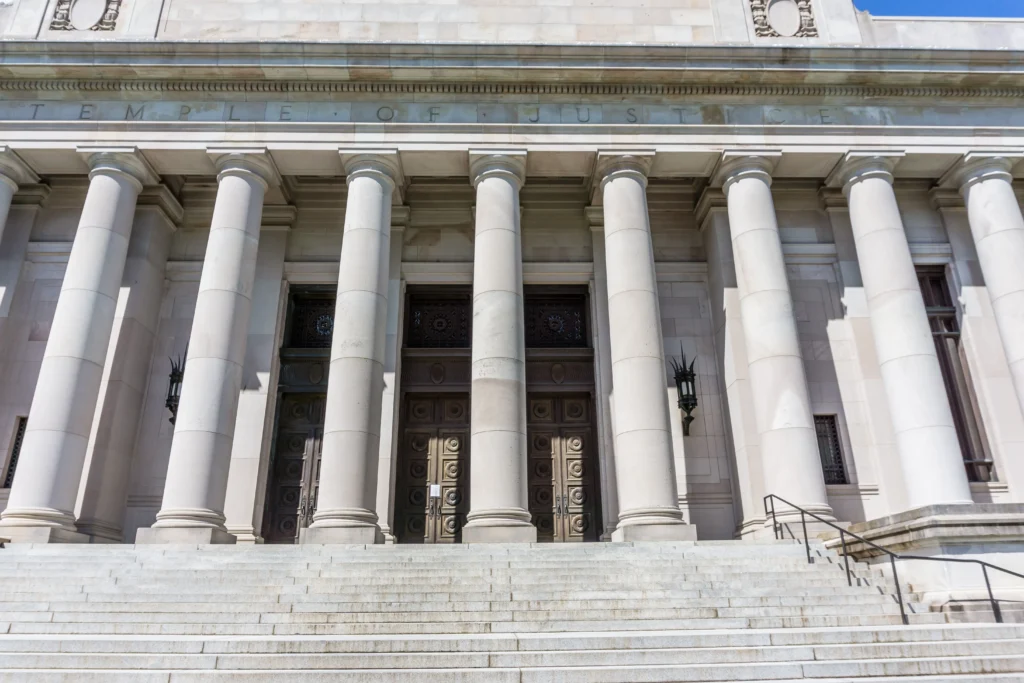
The Courthouse Incident That Sparked the Investigation
The origins of the case trace back to a controversial incident inside a Milwaukee courthouse involving ICE agents and an undocumented immigrant who was scheduled to appear before Judge Hannah Dugan. According to federal prosecutors, ICE officers were present in the building to carry out an administrative arrest tied to immigration enforcement procedures.
At the center of the controversy is what happened when Dugan allegedly became aware of ICE’s presence. Prosecutors claim that instead of allowing the standard enforcement process to proceed, she intervened in a way that obstructed federal agents. Specifically, she is accused of directing the individual at the center of the case through a non-public exit within the courthouse, allowing them to avoid immediate detention.
This moment became the foundation of the entire legal case. Supporters of Dugan argue that she was acting within her discretion as a judge, possibly attempting to ensure due process or prevent disruption in her courtroom. Critics, including federal authorities, argue that her actions crossed a legal boundary by interfering with a federal enforcement operation.
The incident quickly moved from an internal courthouse matter to a federal investigation, setting the stage for a broader conflict between state-level judicial authority and federal immigration enforcement.
Federal Investigation and the Decision to Charge
After the incident, federal authorities initiated an investigation to determine whether Judge Dugan’s actions constituted obstruction of justice or interference with ICE operations. The investigation included reviewing courthouse security footage, interviewing court staff, and examining communication records related to the day of the incident.
Prosecutors ultimately concluded that there was sufficient evidence to bring charges, arguing that Dugan’s conduct went beyond judicial discretion. The central legal question became whether a sitting judge can take actions that materially affect federal enforcement operations occurring inside a courthouse.
The decision to prosecute a judge is relatively rare and immediately elevated the case into a politically sensitive and legally complex matter. It also sparked debate among legal scholars, some of whom questioned whether the prosecution could have a chilling effect on judicial independence, while others emphasized the importance of accountability regardless of position.
Once charges were filed, Dugan became a defendant in a federal criminal case, marking a major turning point in her career and reputation.
The Trial: Arguments From Both Sides
The trial itself became a focal point for national attention, not only because of the individuals involved but also because of the broader implications for immigration enforcement in court settings.
Prosecution’s case
The prosecution argued that Judge Dugan knowingly interfered with ICE officers performing their lawful duties. They presented evidence that suggested she was aware of the agents’ presence and took deliberate steps to prevent the immediate detention of the individual in question.
Key elements of their argument included:
- Testimony regarding courthouse procedures and ICE coordination
- Evidence suggesting awareness of federal agents in the building
- The use of a restricted courthouse exit
- The timing of actions taken immediately before ICE attempted the arrest
The prosecution maintained that judicial authority does not extend to obstructing federal law enforcement activities.
Defense’s case
Dugan’s defense team strongly rejected the idea that she obstructed justice. They argued that her actions were part of normal courtroom management and judicial discretion. According to the defense, there was no intent to interfere with ICE operations, and any decisions made were within the scope of maintaining order and fairness in the courtroom.
The defense also raised broader constitutional concerns, arguing that prosecuting a judge for actions taken in the courthouse could threaten judicial independence. They suggested that the case set a dangerous precedent if judges could be criminally charged for discretionary decisions made during proceedings.
After hearing both sides, the jury ultimately returned a guilty verdict in 2025.
Post-Trial Motions and the Bid to Overturn the Verdict
Following the conviction, Dugan’s legal team immediately began pursuing post-trial relief. Their main objective was to overturn the jury’s verdict or secure a new trial.
The defense filed motions arguing that:
- The evidence presented was insufficient to support a conviction
- The jury instructions may have been flawed or misleading
- Legal interpretations in similar immigration-related cases had evolved
- The prosecution overstepped in applying federal obstruction statutes
These arguments are common in post-conviction proceedings, especially in high-profile federal cases. The defense hoped to convince the judge that the legal standards applied during the trial were inconsistent with recent judicial interpretations.
However, the court was not persuaded. The judge ruled that the jury had been properly instructed and that the evidence presented at trial was legally sufficient to support the conviction. As a result, the motion to overturn the verdict was denied.
This decision effectively upheld the original jury outcome and cleared the way for the sentencing phase of the case.
The Broader Legal and Political Impact of the Case
Beyond the courtroom, the Hannah Dugan case has become a flashpoint in the ongoing national debate over immigration enforcement and judicial authority.
Judicial independence concerns
Some legal experts argue that the prosecution of a sitting judge raises concerns about judicial independence. They warn that if judges fear criminal liability for decisions made in court, it could influence how they manage cases involving federal agencies or sensitive legal matters.
Immigration enforcement perspective
On the other hand, immigration enforcement advocates argue that no individual, regardless of position, should be allowed to interfere with federal operations. From this perspective, the case reinforces the principle that ICE and other federal agencies must be able to execute lawful duties without obstruction.
Political implications
The case has also taken on political significance, becoming part of broader discussions about immigration policy in the United States. It has been referenced in debates about sanctuary policies, courthouse enforcement practices, and the limits of local authority in federal matters.
Conclusion
The denial of Hannah Dugan’s motion to overturn her jury verdict is not an isolated legal ruling—it is the culmination of a long and complex chain of events. From the initial courthouse incident to federal investigation, trial proceedings, and post-trial motions, each stage has intensified the scrutiny surrounding the case.
With the verdict now upheld, the focus shifts to sentencing and potential appeals. However, the broader questions raised by the case—about judicial authority, immigration enforcement, and the balance of power between local and federal systems—are likely to remain at the center of public debate long after the legal process concludes.
Table of Contents
Trump &the habeas corpus controversy explained – trendsfocus