
The RS-28 Sarmat, widely known in Western media as “Satan II,” is one of the most controversial and strategically significant intercontinental ballistic missiles (ICBMs) in the modern era. Developed by Russia as a next-generation replacement for the aging Soviet R-36M “Voevoda” system, the Sarmat is designed to maintain and strengthen Russia’s nuclear deterrence capability in an increasingly complex global security environment.
In recent years, the missile has become a recurring topic in international defense discussions due to repeated test announcements, modernization claims, and its symbolic role in geopolitical tensions between Russia, NATO, and other nuclear powers. While much of its technical data remains classified, available information and official statements suggest that the RS-28 Sarmat represents a major leap in payload capacity, range, and strategic flexibility compared to previous generations of ICBMs.
This article explores the RS-28 Sarmat in depth: its design, capabilities, strategic purpose, geopolitical consequences, and the broader implications for global nuclear stability in the 21st century.
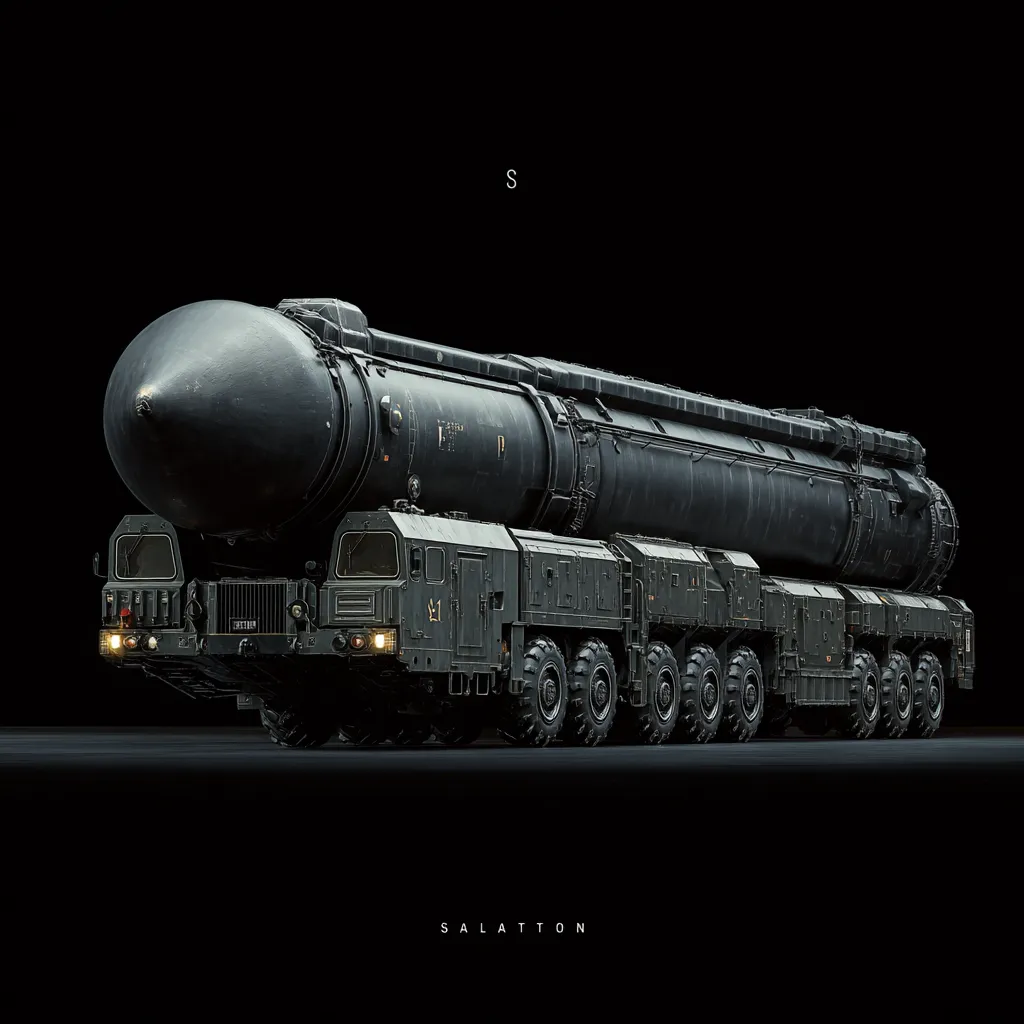
RS-28 Sarmat: Russia’s Strategic Nuclear Super-Weapon in the Modern Era
1. Origins and Development of the RS-28 Sarmat
The development of the RS-28 Sarmat began in the early 2010s as part of Russia’s long-term plan to modernize its nuclear triad. The primary goal was to replace the R-36M2 “Voevoda,” a Cold War-era missile that had been in service since the Soviet period.
The R-36M system, although highly powerful, was based on older technology and increasingly vulnerable to modern missile defense systems. Russia needed a new platform capable of ensuring credible deterrence against evolving global threats. This led to the creation of the Sarmat project, developed by the Makeyev Rocket Design Bureau, one of Russia’s most experienced missile engineering organizations.
The RS-28 Sarmat was designed with several key objectives:
- Increase payload capacity significantly compared to previous systems
- Improve survivability against missile defense interception
- Extend operational range to cover any target on Earth
- Incorporate modern MIRV (Multiple Independently Targetable Reentry Vehicle) technology
- Ensure compatibility with modern Russian strategic doctrine
The missile has undergone multiple test phases, with official Russian statements claiming successful launches and progress toward full operational deployment. However, Western analysts have noted that the program has experienced delays and technical challenges, which is common for such complex strategic weapons.
Despite this, the Sarmat remains central to Russia’s nuclear modernization strategy and is expected to become a core pillar of its strategic missile forces.
2. Technical Characteristics and Engineering Design
The RS-28 Sarmat is classified as a heavy intercontinental ballistic missile, meaning it is significantly larger and more powerful than standard ICBMs.
Size and Structure
Public estimates suggest the missile weighs over 100 tons and measures more than 30 meters in length. Its massive size allows it to carry a substantially larger payload than most modern ballistic missiles.
Unlike lighter ICBMs, the Sarmat is designed to launch from hardened underground silos, providing protection against preemptive strikes. These silos are reinforced structures intended to survive attacks and ensure second-strike capability.
Range and Global Reach
One of the most frequently highlighted features of the Sarmat is its extremely long range. Russian officials have claimed that the missile is capable of striking targets anywhere in the world, including across both hemispheres.
This global reach is strategically significant because it removes geographic limitations. Traditional missile trajectories often rely on polar routes, but the Sarmat is rumored to be capable of unconventional flight paths, including trajectories over the South Pole. While this capability is debated among analysts, it reflects the design philosophy of bypassing traditional missile defense systems.
MIRV Technology
A defining feature of the RS-28 Sarmat is its ability to carry multiple independently targetable warheads. This MIRV configuration allows a single missile to deploy several nuclear warheads, each aimed at a different target.
In addition to warheads, the missile is believed to carry decoys and penetration aids designed to confuse missile defense systems. These countermeasures are critical in modern nuclear strategy, where interception technologies are continuously improving.
Propulsion System
The Sarmat uses a liquid-fuel rocket engine, which provides high thrust and allows for heavy payload delivery. While liquid-fuel systems require more complex maintenance compared to solid-fuel missiles, they offer greater flexibility in terms of performance and payload capacity.
3. Strategic Role in Russia’s Nuclear Doctrine
The RS-28 Sarmat plays a central role in Russia’s nuclear deterrence strategy, which is based on the principle of mutually assured destruction (MAD). This doctrine assumes that any nuclear attack would result in a devastating counterstrike, discouraging all parties from initiating conflict.
Second-Strike Capability
One of the key strategic roles of the Sarmat is to ensure second-strike capability. This means that even if Russia were to suffer a first strike, it would still retain the ability to retaliate with overwhelming force.
The missile’s silo-based deployment, combined with its survivability features, ensures that it remains a credible deterrent even in high-intensity conflict scenarios.
Deterrence Through Complexity
Modern deterrence is not just about firepower—it is also about uncertainty. The RS-28 Sarmat contributes to deterrence by complicating enemy defense planning.
Its combination of:
- Multiple warheads
- Potential flight path variability
- Decoys and penetration aids
- Long-range capability
makes interception extremely difficult and costly. This increases the perceived risk of escalation for any potential adversary.
Psychological and Political Messaging
Beyond its technical function, the Sarmat also serves a political purpose. Announcements about successful tests or deployment timelines are often used to demonstrate military strength both domestically and internationally.
This messaging reinforces national security narratives and signals strategic resilience in the face of external pressure.
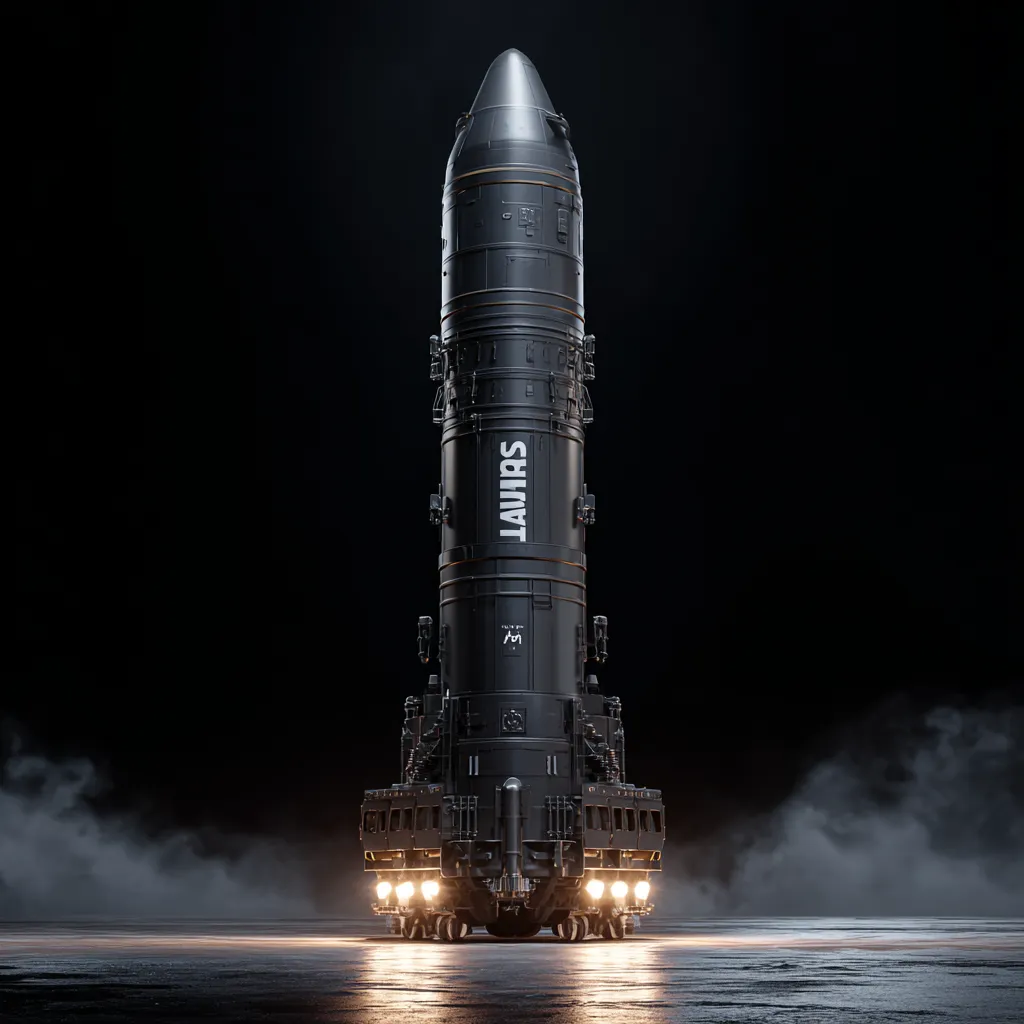
4. Global Reactions and Geopolitical Consequences
The RS-28 Sarmat has drawn significant attention from defense analysts, governments, and international organizations due to its potential impact on global stability.
NATO and Western Concerns
Western military experts view the Sarmat as part of a broader modernization trend in Russia’s nuclear forces. Concerns include:
- Increased difficulty in missile defense interception
- Reduced reaction times during crises
- Greater complexity in strategic planning
- Potential escalation risks during geopolitical tensions
Although missile defense systems exist, no current system guarantees full interception of advanced MIRV-equipped ICBMs like the Sarmat.
Arms Race Dynamics
The Sarmat is also viewed in the context of a new global arms competition. While the Cold War featured two dominant nuclear powers, today’s environment includes multiple actors modernizing their arsenals simultaneously.
Countries such as the United States, China, and Russia are all developing:
- Hypersonic weapons
- Advanced ballistic missiles
- Improved submarine-launched systems
- Next-generation missile defense systems
This parallel modernization increases strategic uncertainty and reduces predictability in global security relations.
Russia’s Strategic Position
For Russia, the Sarmat is a key element of maintaining strategic parity with other nuclear powers. It ensures that Russia retains a credible deterrent regardless of advances in foreign missile defense technology.
It also strengthens Russia’s bargaining position in international negotiations related to arms control and security agreements.
5. The Future of Nuclear Deterrence in the Age of Advanced Missiles
The emergence of systems like the RS-28 Sarmat raises important questions about the future of nuclear deterrence.
Increased Speed and Reduced Decision Time
Modern missile systems reduce the time available for decision-making during a crisis. Faster delivery systems mean that leaders may have only minutes to respond to potential threats, increasing pressure and the risk of miscalculation.
The Challenge of Missile Defense
While missile defense systems continue to evolve, fully intercepting advanced ICBMs equipped with MIRVs and decoys remains extremely challenging. This maintains the strategic balance based on deterrence rather than defense.
Arms Control Challenges
International arms control agreements have historically played a key role in limiting nuclear escalation. However, many existing treaties have weakened or expired in recent years.
The introduction of advanced systems like the Sarmat complicates future negotiations, as new technologies do not always fit into older treaty frameworks.
Stability vs. Escalation
The paradox of nuclear deterrence is that while these weapons prevent large-scale wars, they also create constant strategic tension. The RS-28 Sarmat embodies this paradox: it enhances stability through deterrence, but also increases the stakes of geopolitical rivalry.
Conclusion
The RS-28 Sarmat is more than a missile system—it is a symbol of modern nuclear strategy, technological ambition, and geopolitical competition. As one of the most powerful intercontinental ballistic missiles ever developed, it represents a significant evolution in strategic weapon design and deterrence theory.
While its exact capabilities remain partially classified and debated, its existence alone has a profound impact on global security dynamics. It influences military planning, international diplomacy, and the ongoing debate over nuclear arms control.
In a world where technological advancement continues to reshape warfare, the Sarmat stands as a reminder of the enduring importance—and danger—of nuclear weapons in international relations.
Table of Contents
Russia Slates Sarmat ICBM Deployment for Late 2026 – The Moscow Times
https://www.trendsfocus.com/u-s-navy-destroyer-incident-report-full-analys/