
Language is one of the most powerful tools humans have ever created. It allows us to share ideas, express emotions, build societies, and pass knowledge from one generation to the next. Yet, despite this shared human ability, we don’t all speak the same language. In fact, there are more than 7,000 languages spoken across the world today, each with its own structure, sounds, and cultural meaning.
This raises an important question: why did humanity develop so many different languages instead of just one universal language?
The answer is not simple, because language is deeply connected to history, geography, culture, and human evolution itself. To understand it, we need to look at how humans spread across the planet, how communities formed, and how communication naturally changes over time.
Below is a clear breakdown of the main reasons why the world is so linguistically diverse.
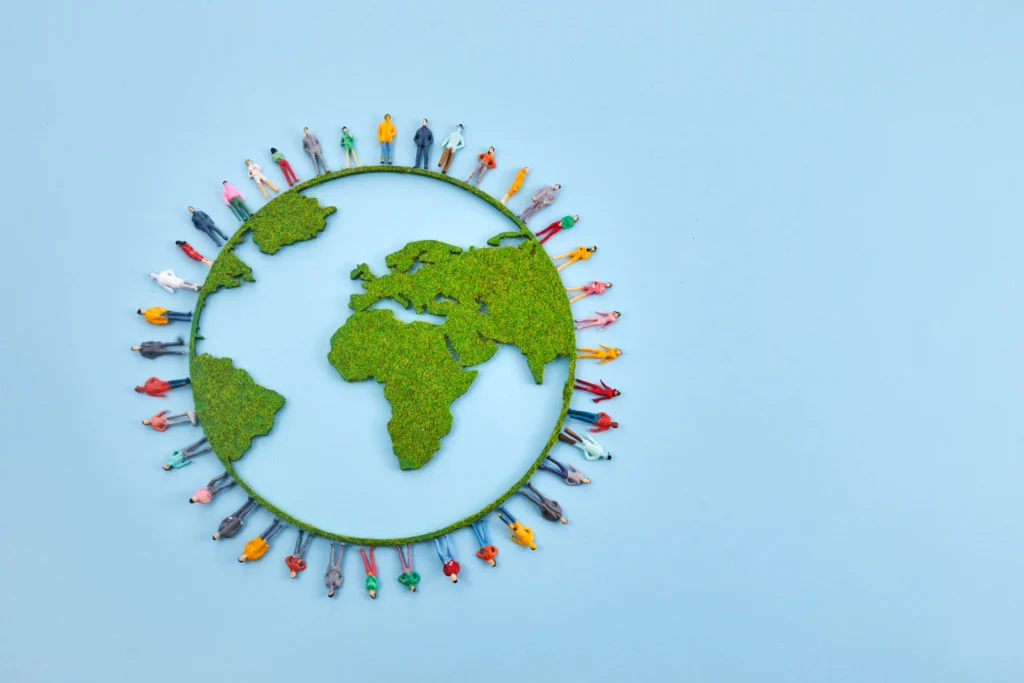
Human Migration and the Spread Across the World
The origin of language diversity begins with one of the most important events in human history: migration.
Early humans did not stay in one place. Over thousands of years, groups of people gradually moved out of Africa and spread across continents. As these groups traveled, they became separated from one another by vast distances. Some moved into Europe, others into Asia, and later into the Americas and Pacific islands.
Once these groups were physically separated, their communication stopped being shared on a daily basis. Without constant interaction, their language naturally began to change.
Language is not static. It evolves every day through usage. Small changes in pronunciation, vocabulary, and grammar accumulate over time. After hundreds or thousands of years of separation, these small differences become major ones.
For example:
- A group living in one region might simplify certain sounds.
- Another group might develop new words for local animals, plants, or weather conditions.
- Grammar structures might shift depending on how people commonly speak.
Eventually, what started as one common language splits into completely different languages that are no longer mutually understandable.
This is how Latin, for example, eventually evolved into French, Spanish, Italian, Portuguese, and Romanian.
In short, migration and isolation are the foundation of language diversity.
Geography and Natural Barriers That Separated Communities
While migration explains how humans spread, geography explains why they stayed separated.
The Earth is full of natural barriers that limit communication between groups. These include:
- Mountains
- Oceans
- Rivers
- Deserts
- Dense forests
In ancient times, crossing these barriers was extremely difficult. There were no planes, modern boats, or roads. As a result, many communities lived in isolation for long periods of time.
This isolation had a major impact on language development.
When two groups rarely or never interact, their languages evolve independently. Even if they originally spoke the same language, over time they begin to sound completely different.
For example:
- Island communities often develop unique languages because they are cut off from the mainland.
- Mountain regions can host multiple languages within a small area due to difficult terrain limiting interaction.
- Desert communities may develop distinct dialects due to scattered populations.
Even today, we can see this pattern clearly in places like Papua New Guinea, which has hundreds of languages in a relatively small area due to its rugged geography.
Geography essentially acts like a “language divider,” encouraging separation and uniqueness in communication systems.

Culture, Identity, and the Evolution of Meaning
Language is not only a tool for communication—it is also a reflection of culture.
Every society develops its own way of living, thinking, and understanding the world. These cultural differences shape language in powerful ways.
As communities evolve, they create:
- New words for local traditions and customs
- Expressions that reflect their values and beliefs
- Unique ways of describing emotions, relationships, and nature
For example, some languages have multiple words for different types of snow, while others have very detailed vocabulary for family relationships or social respect.
Culture also influences how people structure sentences, express politeness, or show emotion. In some societies, language is very direct. In others, it is more formal or indirect depending on social hierarchy.
Over time, language becomes deeply connected to identity. People don’t just speak a language—they feel it represents who they are.
This is why languages do not easily disappear or merge. They carry emotional and cultural meaning that goes beyond simple communication.
When a language evolves separately from others, it begins to reflect a completely different worldview. That is how linguistic diversity becomes cultural diversity.
Language Change Over Time and Natural Evolution
Even if humans stayed in one place and had constant contact, languages would still change naturally over time.
Language is alive. It evolves continuously through:
- Pronunciation changes
- Simplification of grammar
- Creation of new words
- Influence from other languages
- Generational differences
For example, the way young people speak today is different from how their grandparents spoke. Over decades, these small changes accumulate.
One important factor is that humans tend to simplify communication for efficiency. Words become shorter, pronunciation becomes easier, and grammar rules may loosen over time.
Another major influence is contact between languages. When different groups interact, they borrow words from each other. English, for example, has absorbed vocabulary from Latin, French, German, Arabic, and many other languages.
However, even with borrowing and influence, languages rarely become identical. Instead, they evolve in unique directions based on local usage and social context.
Over centuries, these gradual changes lead to completely new languages emerging from older ones.
This process is called language evolution, and it explains why ancient languages like Sanskrit or Latin transformed into many modern languages today.

Conclusion: A World of Voices, A Shared Human Story
The existence of thousands of languages around the world is not a coincidence—it is the result of human history, geography, culture, and natural change over time.
From early migration out of Africa, to isolation caused by mountains and oceans, to the deep connection between language and identity, every factor has contributed to shaping the linguistic diversity we see today.
While languages may differ, they all serve the same purpose: helping humans connect, share ideas, and build communities.
In a way, the diversity of language is a reflection of human creativity itself. It shows how adaptable and innovative people are, even in something as fundamental as communication.
And in today’s globalized world, where we can learn, translate, and communicate across borders more easily than ever, this diversity is not a barrier—it is a cultural treasure.
FAQs About Why There Are Different Languages in the World
1. Why don’t all humans speak the same language?
Humans do not speak the same language because early human groups spread across the world and became isolated from each other. Over time, each group developed its own way of speaking, which gradually evolved into different languages.
2. How many languages are there in the world?
There are more than 7,000 languages spoken around the world today. However, many of them are spoken by small communities, and some are at risk of disappearing as speakers shift to more dominant global languages.
3. Did all languages come from one original language?
Linguists believe that early humans likely shared very simple forms of communication, but there is no single confirmed “original language.” Instead, languages evolved gradually and independently in different regions over thousands of years.
4. Why do languages change over time?
Languages change naturally because people simplify pronunciation, create new words, and adapt communication to modern life. Cultural contact between different groups also introduces new vocabulary and influences grammar over time.
5. Can different languages become one language in the future?
It is very unlikely that all languages will become one. Even though globalization increases communication, languages are closely tied to culture and identity, so they continue to evolve and remain diverse.
6. Why are some languages more widely spoken than others?
Some languages became dominant due to history, colonization, trade, technology, and global influence. As a result, languages like English, Spanish, Mandarin, and Arabic are spoken by large populations worldwide.
7. Are languages disappearing today?
Yes, many small languages are disappearing because younger generations often adopt more widely spoken languages for education, work, and media. Linguists estimate that a large percentage of languages could vanish within this century.
8. Is learning multiple languages useful?
Yes. Learning multiple languages improves communication skills, cultural understanding, and even cognitive abilities like memory and problem-solving. It also helps people connect with different cultures around the world.
Table of Contents
Why are so many languages spoken in the world? (word-connection.com)
Trump Expands Denaturalization Campaign in U.S. – trendsfocus