
The sinking of the USS Juneau (LPD-10) during the Valiant Shield 2026 military exercise has become one of the most significant defense stories of the year. While the image of a retired U.S. Navy warship disappearing beneath the Pacific Ocean may seem dramatic, the event was far more than a symbolic farewell to a vessel that served for decades. Instead, it represented a carefully planned military exercise designed to evaluate modern weapons, strengthen allied cooperation, and prepare participating forces for the challenges of future maritime conflicts.
Known as a SINKEX, or sinking exercise, the operation brought together U.S. and allied naval, air, and submarine forces in a realistic combat scenario. The exercise demonstrated how multiple military branches can coordinate attacks against a large naval target while testing advanced weapon systems under operational conditions.
The event also highlighted the growing military partnership between the United States and its Indo-Pacific allies, particularly Japan, whose submarine delivered the final torpedo that sent the USS Juneau to the ocean floor. Alongside this milestone, the U.S. Air Force publicly confirmed that the B-2 Spirit stealth bomber employed the AGM-158C Long Range Anti-Ship Missile (LRASM) during the exercise, showcasing an increasingly sophisticated approach to maritime warfare.
As geopolitical tensions continue to shape security strategies throughout the Indo-Pacific, the sinking of the USS Juneau offers valuable insight into how today’s militaries are preparing for tomorrow’s conflicts.
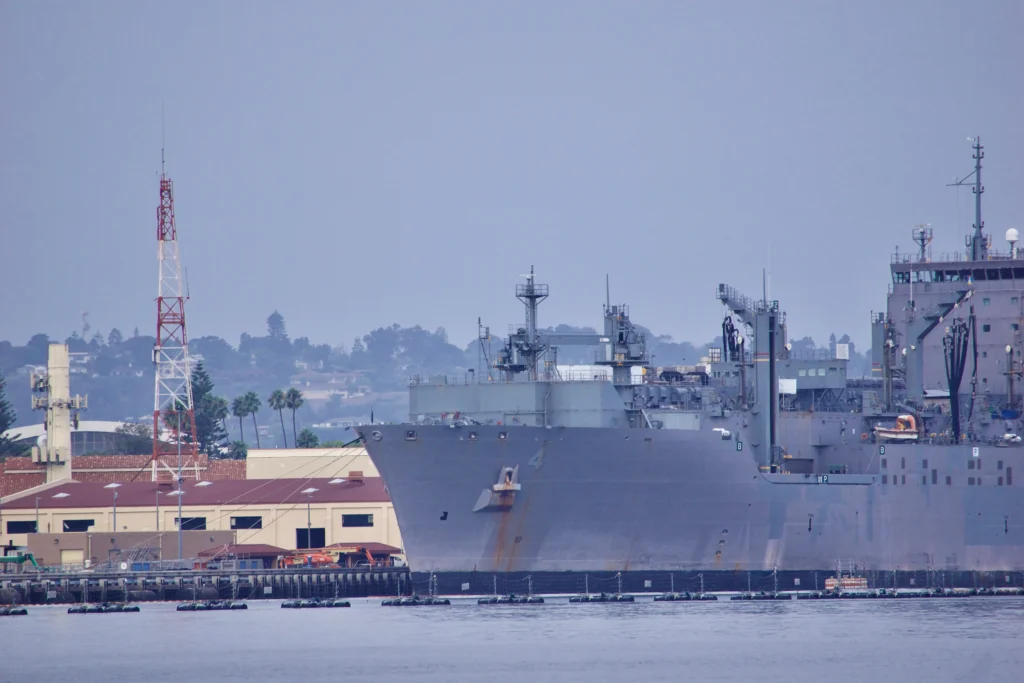
USS Juneau Sunk During Valiant Shield 2026: A Historic Military Exercise
The USS Juneau officially met its final mission during Valiant Shield 2026, one of the U.S. military’s largest joint exercises in the Pacific.
Unlike an unexpected naval loss, this sinking was intentional and meticulously planned. The retired amphibious transport dock was selected as a realistic target that would allow participating forces to practice coordinated strikes using modern weapons systems under operational conditions.
The exercise occurred more than 200 nautical miles west of the Mariana Islands in international waters, providing a safe environment for live-fire operations while minimizing environmental risks. Before the sinking, the ship underwent extensive preparation to remove hazardous materials and pollutants in accordance with U.S. environmental regulations.
Military planners use SINKEX events because computer simulations cannot fully replicate the challenges of striking a full-sized naval vessel. Real-world exercises provide valuable information about weapon effectiveness, targeting precision, battle damage assessment, and coordination among multiple forces.
Valiant Shield itself has evolved into one of the Indo-Pacific’s premier military exercises. Held regularly, it brings together thousands of personnel from multiple services and allied nations to strengthen readiness and demonstrate collective defense capabilities.
The sinking of the USS Juneau therefore served not only as the conclusion of one ship’s long career but also as a major training opportunity that could influence future operational planning.
The USS Juneau’s Distinguished Service Before Its Final Mission
Long before becoming the centerpiece of a multinational military exercise, the USS Juneau had already established an impressive operational history.
Commissioned in 1969, the vessel belonged to the Austin-class amphibious transport docks. Designed to transport Marines, landing craft, helicopters, vehicles, and supplies, ships like the USS Juneau played essential roles in amphibious operations and humanitarian missions.
Throughout nearly four decades of active service, the ship participated in numerous deployments across the globe.
Among its most notable assignments were:
- Support operations during the Vietnam War.
- Participation in Operation Desert Storm during the Gulf War.
- Numerous peacekeeping missions.
- Humanitarian assistance and disaster relief operations.
- Training exercises with allied naval forces.
Rather than serving as a front-line combat destroyer or cruiser, the USS Juneau specialized in transporting troops and equipment necessary for expeditionary operations. This made it an important logistical asset whenever rapid deployment of Marine forces was required.
The ship was officially decommissioned in 2008 after decades of faithful service.
Although retired from active duty, vessels like the USS Juneau continue contributing to national defense by serving as realistic targets in SINKEX exercises. Instead of being scrapped immediately, they provide invaluable opportunities to evaluate weapons against actual warships—something impossible to recreate through computer modeling alone.
Its final mission therefore represented one last contribution to military readiness.
How the Valiant Shield 2026 SINKEX Demonstrated Allied Military Power
One of the most remarkable aspects of Valiant Shield 2026 was the level of international cooperation displayed throughout the exercise.
Modern naval warfare depends heavily on interoperability—the ability of forces from different nations to communicate, coordinate, and fight together effectively.
The USS Juneau sinking showcased exactly that.
Aircraft, surface combatants, submarines, and command centers from multiple countries participated in the operation, executing carefully coordinated attacks against the retired vessel.
Perhaps the biggest headline came when military officials confirmed that a Japan Maritime Self-Defense Force submarine fired the torpedo responsible for the ship’s final sinking.
This marked an important demonstration of trust and operational integration between the United States and Japan.
Beyond the submarine strike, additional forces participated throughout the exercise, including:
- U.S. Navy destroyers
- Japanese naval helicopters
- Maritime patrol aircraft
- Fighter aircraft
- Surface strike platforms
- Undersea warfare assets
Each participant practiced different phases of maritime targeting, surveillance, communications, and coordinated engagement.
Such exercises become increasingly important as military planners prepare for highly contested maritime environments where naval forces must respond quickly to emerging threats.
Rather than relying on individual platforms, modern military strategy emphasizes networked operations where every aircraft, ship, and submarine contributes to a shared operational picture.
Valiant Shield 2026 demonstrated that capability in a highly visible manner.
Why the USS Juneau Sinking Matters for the Future of Naval Warfare
Although many headlines focused on the dramatic images of the USS Juneau sinking beneath the Pacific Ocean, defense analysts view the broader implications as even more important.
Modern naval warfare is changing rapidly.
Advanced missiles, artificial intelligence, satellite surveillance, stealth aircraft, and increasingly capable submarines are transforming how future conflicts may unfold.
One particularly significant announcement during Valiant Shield 2026 involved the B-2 Spirit stealth bomber.
For the first time publicly, the U.S. Air Force confirmed that the aircraft employed the AGM-158C Long Range Anti-Ship Missile (LRASM) during the exercise.
The LRASM is specifically designed to engage heavily defended naval targets at long distances while reducing dependence on external guidance. Combined with the stealth characteristics of the B-2, this capability significantly expands the options available to military commanders during maritime operations.
The exercise also reinforced several broader strategic themes:
Joint Operations Are Essential
Future conflicts will require seamless cooperation between air, naval, submarine, cyber, and space forces rather than isolated military branches.
Allied Partnerships Continue to Grow
Valiant Shield highlighted the increasing military cooperation among the United States, Japan, Australia, and other Indo-Pacific partners committed to maintaining regional security.
Realistic Training Improves Readiness
Although advanced simulators continue to improve, live-fire exercises remain irreplaceable for evaluating weapon performance and preparing personnel for real-world conditions.
Deterrence Through Preparedness
Large multinational exercises demonstrate military readiness without constituting offensive operations. Their purpose is to ensure participating forces remain capable of responding effectively should future crises emerge.
For defense planners, every SINKEX provides critical data that can improve tactics, weapons integration, targeting procedures, and command decision-making.
Conclusion
The intentional sinking of the USS Juneau during Valiant Shield 2026 marked the end of an honorable naval career while opening a new chapter in multinational military cooperation and modern maritime strategy.
What might appear to casual observers as the destruction of an aging ship was, in reality, one of the year’s most important joint military training events. The exercise demonstrated how allied nations can integrate submarines, aircraft, surface ships, and advanced missile systems into a coordinated operational force capable of responding to complex maritime challenges.
The event also underscored the rapid evolution of naval warfare. From Japan’s successful submarine torpedo strike to the U.S. Air Force’s confirmation of the B-2 Spirit’s use of the LRASM anti-ship missile, Valiant Shield 2026 showcased capabilities likely to shape future military planning throughout the Indo-Pacific.
As regional security dynamics continue to evolve, exercises like Valiant Shield will remain essential for improving readiness, strengthening alliances, and refining the technologies and tactics that define 21st-century naval operations. While the USS Juneau now rests on the ocean floor, its final mission will continue to influence military training and strategic planning for years to come.
Table of Contents
The Most Advanced Nuclear Submarines in the World Will Shock You: Inside the Ocean’s Deadliest Machines – militaryglob
The Evolution of U.S. Border Security and Military Involvement – trendsfocus