
The USS Abraham Lincoln has become the focus of growing attention as its deployment in the Middle East reaches an extraordinary length. The U.S. aircraft carrier, carrying roughly 5,000 sailors and Marines, has spent more than 250 days deployed at sea as part of U.S. military operations connected to the conflict with Iran.
The unusually long mission has raised questions about crew fatigue, living conditions aboard the carrier, and the ability of the U.S. Navy to maintain such an intense operational tempo for an extended period.
In recent weeks, families of service members and several U.S. lawmakers have expressed concerns about the morale and mental health of some members of the crew. Reports have also raised questions about supplies, plumbing, water, communications and access to basic necessities. The Navy, however, says support systems are available aboard the ship and has disputed claims that conditions have broadly deteriorated.
Meanwhile, the arrival of the USS George Washington is expected to provide relief for the Abraham Lincoln and eventually allow its crew to return home.
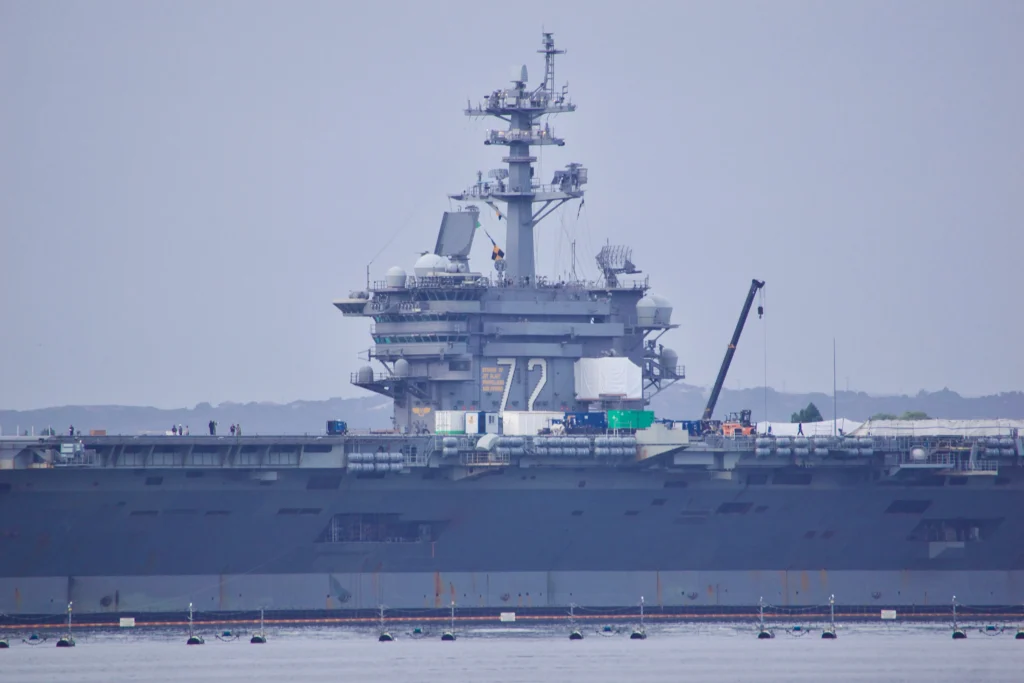
USS Abraham Lincoln: Long Deployment, Crew Concerns & Relief
The USS Abraham Lincoln (CVN-72) is one of the U.S. Navy’s most important aircraft carriers. Based in San Diego, the nuclear-powered carrier serves as a major platform for American air and naval operations.
In 2026, however, its mission has taken an unexpected turn.
The carrier left the United States in November 2025 and was initially expected to operate in the Indo-Pacific. As tensions between Washington and Tehran escalated, the Lincoln was redirected toward the Middle East, significantly extending its deployment.
By mid-August 2026, the carrier had spent more than 250 days deployed and more than 200 days without a port visit, according to recent reports.
Such a long deployment can create significant physical and psychological pressure. Aircraft carriers operate around the clock, with sailors working demanding schedules in a confined environment. Without regular port visits, opportunities for rest, recreation and contact with family can become increasingly limited.
The situation is even more demanding because the Lincoln is operating in a region experiencing serious military tensions. This is not simply a routine deployment: the carrier is part of a major U.S. military presence in the Middle East.
The combination of extended operations, limited time ashore and uncertainty over the end of the mission has made the Abraham Lincoln a major subject of discussion in the United States.
Concerns Grow Over Conditions Aboard the Carrier
One of the biggest concerns involves the living conditions of the approximately 5,000 people aboard the carrier.
Families of crew members have described difficult circumstances, raising concerns about supplies, plumbing, water, essential goods and mail. Some reports have also described difficulties involving sanitation and access to certain resources aboard the ship.
However, these accounts should be distinguished from the official position of the U.S. military.
Defense Secretary Pete Hegseth has rejected claims that conditions aboard the Lincoln have deteriorated as severely as some reports suggest. He has argued that some descriptions of the situation have been significantly misrepresented.
The Navy has also emphasized that sailors have access to chaplains, counselors and medical professionals who can provide psychological and emotional support.
Despite those assurances, concerns have continued.
Reports published in recent days have described incidents involving sailors going overboard. One incident on August 3 involved a sailor who was recovered safely after ending up in the water.
The reports have attracted attention from members of Congress, with some lawmakers calling for greater transparency about the crew’s living conditions, mental health and overall well-being.
The issue is particularly serious because prolonged fatigue can affect more than a sailor’s personal health. It can also influence alertness, concentration and operational readiness.
As a result, the debate surrounding the USS Abraham Lincoln has evolved into both a military readiness issue and a personnel welfare issue.
Trump and Hegseth Defend the Extended Mission
While concerns have increased, the Trump administration has defended the continued deployment of the aircraft carrier.
Defense Secretary Pete Hegseth has rejected claims that the conditions aboard the ship are unacceptable. The Pentagon has maintained that the Navy is providing the necessary resources and support to the crew.
President Donald Trump has also played down concerns about the length of the Lincoln’s deployment.
When asked on August 14 about the carrier’s extended mission, Trump reportedly said that its presence in the region had not lasted long enough.
The comment came as families and some lawmakers were calling for greater attention to the physical and psychological strain facing sailors after months at sea.
This difference in perspective is at the center of the current debate.
For the administration, maintaining the USS Abraham Lincoln in the Middle East serves important strategic and military objectives. An aircraft carrier provides the United States with a powerful mobile airbase capable of supporting operations far from American territory.
For families and some lawmakers, however, military necessity does not eliminate the need to protect service members from excessive fatigue and prolonged separation from their families.
The issue has also attracted attention in Congress, where lawmakers have requested additional information from defense officials.
The debate highlights a broader strategic challenge for the U.S. Navy: how can the United States maintain military operations across multiple regions without placing excessive pressure on individual ships and crews?
That question could become increasingly important if U.S. military operations in the Middle East continue for an extended period.
USS George Washington Expected to Relieve the Abraham Lincoln
The most important development for the crew of the Abraham Lincoln is the expected arrival of another American aircraft carrier.
The USS George Washington is heading toward the Middle East and is expected to relieve the Abraham Lincoln, allowing the Navy to maintain a significant carrier presence in the region while eventually giving the Lincoln’s crew the opportunity to return home.
The relief mission could solve two problems at the same time.
First, the United States can maintain its military presence in a strategically important region. Second, the Abraham Lincoln can finally begin the process of ending its unusually long deployment.
The arrival of another carrier also demonstrates the enormous logistical demands involved in maintaining U.S. naval power around the world.
The Navy must balance its requirements in the Middle East with commitments elsewhere, particularly in the Indo-Pacific, where tensions involving China remain a major strategic concern.
For the sailors aboard the Abraham Lincoln, however, the immediate priority is much more personal: getting home after months at sea.
After more than eight months of deployment, the eventual return of the carrier will represent an important moment for an exhausted crew that has spent an extraordinary amount of time away from family and normal life.
The Navy will also have an opportunity to evaluate the lessons learned from the deployment.
Those lessons could include improvements in logistics, maintenance, communications with families, mental-health support and planning for future extended missions.
A Deployment That Could Have Long-Term Consequences
The USS Abraham Lincoln has become an example of the challenges a modern military can face when an initially planned deployment is dramatically extended by changing geopolitical circumstances.
The carrier’s mission changed significantly after its departure from the United States. What began as an Indo-Pacific deployment eventually became a major Middle East operation amid escalating tensions involving Iran.
Today, the debate is about more than the carrier’s military mission. It is increasingly about the human cost of maintaining that mission for such a long period.
Reports concerning conditions aboard the ship remain disputed. Families and some lawmakers are asking for answers, while Navy and Pentagon officials insist that appropriate support is available to the crew.
What is clear is that the USS Abraham Lincoln has experienced an exceptionally long deployment, with a relief carrier now being prepared to take over its mission.
The arrival of the USS George Washington should allow the United States to preserve its naval presence in the Middle East while eventually giving the Lincoln’s crew a chance to return home.
For the U.S. Navy, the challenge going forward will be finding the right balance between military readiness, operational demands and the well-being of its sailors and Marines.
Even after the Abraham Lincoln returns home, questions about deployment lengths, crew mental health, military logistics and America’s ability to sustain operations across multiple regions are likely to remain part of the national debate.
The USS Abraham Lincoln’s current mission is therefore about more than one aircraft carrier. It reflects the broader challenges facing the U.S. military as it attempts to respond rapidly to global crises while ensuring that the people carrying out those missions are not pushed beyond reasonable limits.
This article reflects information available as of August 15, 2026. Some reports concerning conditions aboard the carrier and the mental health of crew members remain disputed by military officials.
Table of Contents
BBC Wants Trump’s Family to Testify in $10 Billion Defamation Case – trendsfocus