
The appearance of a U.S. Air Force C-17 Globemaster III in Moscow has become one of the most unusual aviation and geopolitical developments of the week. On August 25, 2026, the American military transport aircraft flew from Riga, Latvia, to Moscow’s Vnukovo Airport, an extraordinary route given the current tensions between Washington and Moscow.
At first, the purpose of the flight was unknown. The aircraft’s movements were identified through publicly available flight-tracking information, while U.S. officials declined to explain why the military transport had traveled into Russia. The mystery quickly attracted international attention because American military aircraft rarely operate inside Russian territory under the current geopolitical climate.
Later reports provided a major piece of the puzzle. CIA Director John Ratcliffe was reportedly in Moscow for undisclosed meetings with Russian officials and had traveled aboard the C-17. The CIA, Pentagon and U.S. Air Force declined to comment publicly on the reported visit or its purpose.
The development is particularly significant because Ratcliffe’s reported trip would represent the first known visit to Moscow by a sitting U.S. intelligence chief since former CIA Director William Burns traveled to Russia in 2021. Yet despite the significance of the trip, many questions remain unanswered.
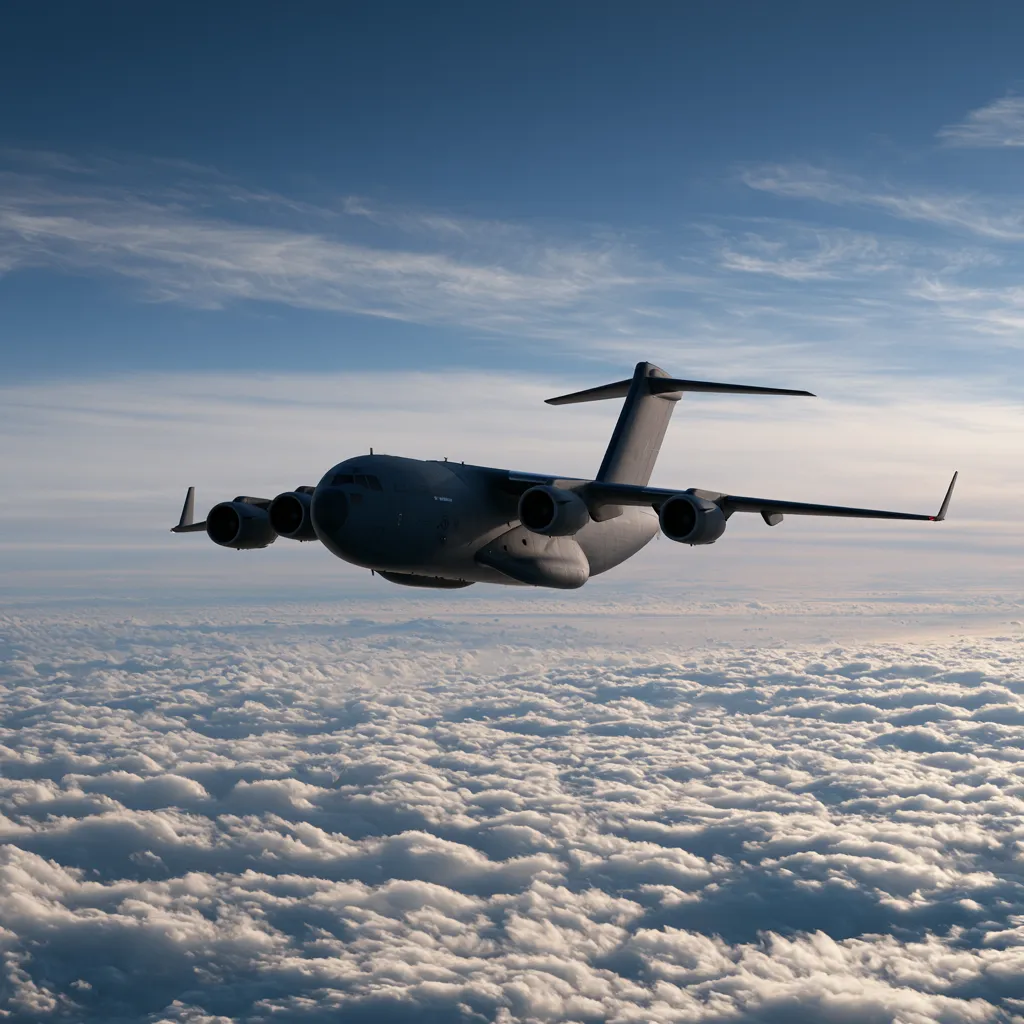
The Unusual C-17 Flight From Latvia to Moscow
The C-17 Globemaster III is one of the U.S. Air Force’s primary strategic transport aircraft. Designed to move troops, equipment and other cargo over long distances, it is normally associated with military logistics rather than routine diplomatic travel.
This makes its appearance in Moscow particularly noteworthy.
According to flight-tracking information, the aircraft had traveled from the United States to Riga, Latvia, before continuing toward Moscow. It landed at Vnukovo Airport on August 25 and remained there for several hours before departing again. Reports identified the aircraft as a U.S. Air Force Boeing C-17.
The route immediately raised questions because Latvia is a NATO member located on Russia’s border, while Moscow remains at the center of the geopolitical confrontation surrounding the war in Ukraine.
At the time of the aircraft’s arrival, there was no official announcement explaining the mission. The Kremlin initially said it had no information about the American military aircraft. Later, Kremlin spokesman Dmitry Peskov characterized the reported purpose of Ratcliffe’s trip as involving contacts between security services but did not provide further details.
The secrecy surrounding the flight is not necessarily surprising. CIA-related travel and sensitive intelligence meetings are often conducted without public announcements. Nevertheless, the use of a U.S. military transport aircraft to enter Moscow made the operation much more visible than an ordinary diplomatic trip.
CIA Director John Ratcliffe Reportedly Traveled to Moscow
The biggest development came when multiple U.S. media outlets reported that CIA Director John Ratcliffe was in Moscow for meetings.
Reuters reported that Ratcliffe visited Moscow on August 25 for undisclosed meetings with Russian officials. The CIA did not comment, while the Kremlin did not publicly confirm the details of the reported meetings.
ABC News similarly reported that sources said Ratcliffe was in Moscow for meetings, while the CIA, Department of Defense and Air Force declined to comment.
The reported visit is significant because intelligence chiefs do not normally make unexplained trips to adversarial capitals. When such meetings take place, they can involve issues ranging from national security and intelligence cooperation to prisoner matters, military risks or broader diplomatic communication.
However, there is currently no confirmed public information establishing exactly what Ratcliffe discussed in Moscow.
The Kremlin has also indicated that Ratcliffe did not meet with Russian President Vladimir Putin, according to reporting from The Washington Post. Peskov described the visit as involving contacts between security services but declined to elaborate.
That distinction is important. While the presence of the CIA director in Moscow is significant, it should not automatically be interpreted as evidence of a presidential summit or a breakthrough in U.S.-Russia relations.
Instead, the available information points toward a highly sensitive intelligence-level engagement whose precise objectives remain undisclosed.
Why the Moscow Mission Matters for Russia and Ukraine
The timing of Ratcliffe’s reported Moscow visit adds another layer of importance.
The United States and Russia remain deeply divided over the war in Ukraine, while diplomatic efforts to find a path toward ending the conflict continue. Military activity has also intensified, with both Russia and Ukraine carrying out long-range strikes.
Against that backdrop, direct communication between senior American and Russian officials can carry considerable strategic importance.
Reports indicated that the United States asked Ukraine to avoid strikes against Moscow and St. Petersburg during the period of the American delegation’s visit. According to people familiar with the situation cited by the Kyiv Independent, Ukraine agreed to pause strikes against those locations between August 24 and August 26.
If accurate, such a request would demonstrate how seriously Washington treated the security of the visit.
It would also illustrate the complicated balance facing the Trump administration. Washington is attempting to maintain pressure on Russia while keeping channels of communication open. A discreet meeting in Moscow could provide an opportunity to discuss sensitive subjects away from the public spotlight.
Still, there is no confirmation that Ratcliffe’s visit was directly connected to Ukraine peace negotiations.
The Washington Post reported that it was unclear whether the trip would influence broader diplomacy. The newspaper also noted that it was not immediately known whether other senior U.S. officials were part of the delegation.
This uncertainty is critical when evaluating the story. The unusual flight is confirmed through tracking information, and multiple outlets have reported Ratcliffe’s presence in Moscow, but the substance of the meetings remains private.
What Could the C-17 Mission Mean?
The unusual flight has generated speculation about several possible explanations, but none should be treated as confirmed without official evidence.
One possibility is that the trip involved intelligence and national-security discussions. The CIA maintains relationships and communication channels with foreign intelligence organizations even when governments are geopolitical rivals. Such contacts can sometimes be used to prevent misunderstandings or manage urgent security concerns.
Another possibility is that the discussions involved the war in Ukraine. The United States and Russia have continued to communicate despite major disagreements over the conflict, and intelligence officials can sometimes serve as intermediaries for particularly sensitive conversations.
There has also been speculation about other security matters, including prisoner-related issues and wider regional conflicts. However, there is currently no reliable public confirmation that the C-17 was carrying out a prisoner-exchange mission or that such an exchange took place.
It is therefore important to separate confirmed facts from speculation.
What is known is that a U.S. Air Force C-17 traveled from Riga to Moscow, landed at Vnukovo Airport and later departed. Multiple reports say CIA Director John Ratcliffe was in Moscow for meetings with Russian officials. The exact agenda, participants and outcomes have not been publicly disclosed.
The flight itself is unusual, but its significance ultimately depends on what happened behind closed doors.
For now, the C-17 journey remains a rare example of direct U.S.-Russia contact taking place at a very sensitive moment. The combination of a U.S. military aircraft, an unannounced Moscow visit by the CIA director and continuing tensions over Ukraine has naturally attracted global attention.
Yet the most important details remain classified or undisclosed.
Until Washington or Moscow provides additional information, the safest conclusion is that the flight was connected to a highly sensitive U.S. mission involving senior-level contacts in Moscow. Whether those discussions were focused on Ukraine, intelligence matters, regional security or another issue remains unclear.
The unusual journey from Latvia to Moscow may ultimately prove to have been a routine logistical operation for a sensitive meeting—or it could become an important chapter in the evolving relationship between Washington and Moscow.
For now, the mystery surrounding the C-17 remains, but one thing is clear: a U.S. military aircraft landing in Moscow during a period of heightened tensions is an event worth watching closely.
Table of Contents
Joseph Olmo Leaves NBC4 Washington After Nearly 10 Years in Broadcast Journalism – trendsfocus
CIA’s John Ratcliffe Reportedly Visits Moscow After Russia Denies Knowledge – Newsweek