
When you think about space exploration during the Cold War, names like Sputnik, Apollo, and the first moon landing likely come to mind. But did you know that the Soviet Union’s Venera 3 mission, launched in 1965, was a pivotal moment in the quest to understand Venus? Although it’s often overshadowed by more famous space missions, the Venera 3 played a critical role in expanding our understanding of Venus, and in many ways, it was the spark that ignited future exploration of the planet.
The Cold War rivalry between the United States and the Soviet Union led to some of the most extraordinary achievements in human history, including the space race. The Venera 3 mission, which was the first successful attempt to reach Venus, stands as a testament to how technological advancements, curiosity, and geopolitical competition pushed humanity toward new frontiers. In this article, you will discover how the Venera 3 mission paved the way for Venus exploration, its impact on space exploration technology, and how its lessons continue to guide missions to this day.
Introduction: Why Venus? The Context of the Cold War
The Cold War and Space Race Context
Space exploration was a central theme of the Cold War, a period of intense rivalry between the Soviet Union and the United States that spanned several decades. The competition was not only about political dominance but also technological supremacy, with both nations aiming to prove their power and innovation. For both superpowers, space was the ultimate frontier.
The Soviet Union made significant strides in space exploration, from launching the first artificial satellite, Sputnik, to sending the first human, Yuri Gagarin, into space. The United States, determined not to fall behind, responded with its own ambitious space programs. Amidst this rivalry, Venus, the second planet from the Sun, became a prime target for exploration. Its proximity to Earth, combined with its mysterious nature, made it a tantalizing subject for scientific investigation.
Why Explore Venus?
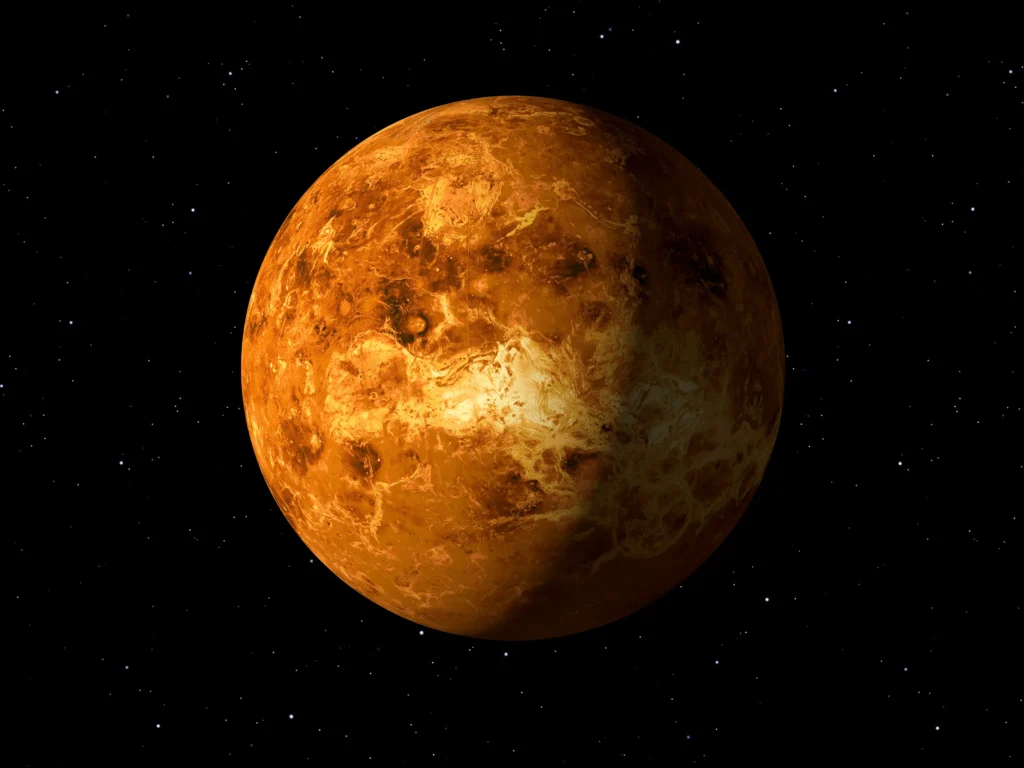
Venus shares many similarities with Earth, including size and composition, which led scientists to wonder if it could harbor life or even offer insights into our own planet’s future. However, Venus’s thick atmosphere and scorching temperatures made it an incredibly difficult target for exploration. At the time of the Venera 3 mission, little was known about Venus’s harsh surface conditions—extreme heat, crushing pressure, and clouds of sulfuric acid. But these unknowns only fueled the desire to learn more.
The Cold War rivalry between the USSR and the US also played a role in pushing space exploration to its limits. For the Soviets, sending a spacecraft to Venus was not just about science; it was about proving that they could outpace the United States in yet another domain.
The Venera 3 Mission: The First Attempt to Reach Venus
Mission Overview
The Venera 3 mission was launched by the Soviet Union on November 16, 1965, and it marked the first successful attempt by humanity to reach Venus. The spacecraft was part of the Soviet Venera program, which aimed to explore Venus by sending spacecraft that would land on or pass through its atmosphere. Venera 3’s objective was to enter Venus’s atmosphere and transmit data back to Earth, though it was designed to crash-land on the planet’s surface.
Despite its relatively short-lived mission, Venera 3 made history as the first spacecraft to reach Venus, albeit unsuccessfully in transmitting any data. The Venera 3 spacecraft was an uncrewed probe equipped with a variety of instruments to collect atmospheric and surface data, although it was doomed to fail in its original goal of transmitting information.
Why was it significant?
Though the Venera 3 did not succeed in transmitting data, it achieved a monumental milestone in space exploration. The mission demonstrated that it was possible to send a spacecraft to Venus and reach its atmosphere. This breakthrough laid the foundation for future missions to Venus, including Venera 7, which would be the first to successfully transmit data from Venus’s surface.
Technological Challenges and Innovations in the Venera 3 Mission
Endurance Against Harsh Conditions
The Venera 3 mission faced immense technological challenges. Venus’s surface is known for its extreme heat—temperatures reaching up to 470°C (878°F)—and its high atmospheric pressure, which is about 90 times that of Earth’s. Additionally, the planet’s atmosphere is composed of thick clouds of sulfuric acid, which posed serious challenges for the probe’s protection and data transmission systems.
The Venera 3 mission had to overcome these challenges, and though it ultimately failed to transmit data, it provided valuable lessons for future Venus missions. The spacecraft was equipped with a reinforced metal body and heat-resistant materials that helped it withstand Venus’s extreme conditions for a short time. These innovations in shielding, insulation, and thermal protection were essential for the success of later missions, such as Venera 7, which successfully transmitted data back to Earth.
Technological Breakthroughs for Future Missions
Venera 3’s technology wasn’t perfect, but it provided key breakthroughs that directly contributed to the success of future Venus exploration missions. The design of the probe, especially the heat shields and the ability to endure Venus’s high-pressure environment, set the standard for subsequent probes. The information gathered from the mission was vital for understanding the technological requirements for sending probes to planets with extreme conditions.
The lessons learned from Venera 3 also influenced spacecraft design in subsequent missions to other planets, such as Mars and Jupiter. The mission marked the beginning of a new era in planetary exploration, setting the stage for advancements in probe technology and atmospheric studies.
The Legacy of the Venera 3 Mission: Impact on Future Exploration
A Stepping Stone for Future Missions
While the Venera 3 mission didn’t achieve all of its goals, it served as a significant stepping stone for future exploration of Venus. Following Venera 3, the Soviet Union continued its efforts with subsequent Venera missions. The most notable of these was Venera 7, which successfully transmitted data from the surface of Venus in 1970, providing the first detailed insights into the planet’s atmosphere and surface.
The success of Venera 7 was made possible by the lessons learned from Venera 3, particularly in terms of spacecraft design, thermal protection, and the need to shield instruments from the planet’s harsh conditions. The advancements made during the Venera 3 mission allowed future probes to endure long enough to collect valuable data, providing the first glimpse of Venus’s mysterious surface.
Venera 3’s Contribution to Modern Space Exploration
The legacy of Venera 3 doesn’t end with Venus. The mission’s innovative technologies and the scientific data it helped gather have contributed to modern space exploration in many ways. Today, Venus remains a target for ongoing research and exploration by space agencies like NASA and the European Space Agency (ESA). The insights gleaned from early missions like Venera 3 continue to inform current studies of Venus and its suitability for exploration and potential habitability.
The Venera missions also played a role in the development of modern spacecraft that are capable of withstanding extreme conditions, such as NASA’s Mars rovers and probes sent to Jupiter and Saturn. The technological advancements from the Venera 3 mission have had a lasting impact on planetary science and exploration.
Frequently Asked Questions (FAQ)
Q1: What was the main goal of the Venera 3 mission?
The main goal of the Venera 3 mission was to be the first spacecraft to reach Venus, enter its atmosphere, and send back scientific data. Though it did not succeed in transmitting data, it was a key milestone in space exploration.
Q2: Did the Venera 3 spacecraft send back data from Venus?
No, the Venera 3 spacecraft failed to transmit data. However, it successfully reached Venus and crash-landed on its surface, contributing valuable data for future missions.
Q3: What were the main challenges faced by the Venera 3 mission?
The Venera 3 mission faced extreme conditions on Venus, including high temperatures, atmospheric pressure, and corrosive clouds. These challenges made it difficult for the spacecraft to survive long enough to transmit data.
Q4: How did the Venera 3 mission contribute to future space exploration?
The Venera 3 mission provided valuable lessons in spacecraft design, thermal protection, and how to withstand harsh planetary environments, which influenced the success of later Venus missions like Venera 7.
Q5: Why was Venus chosen as a target for exploration during the Cold War?
Venus was seen as a close neighbor to Earth, and its mysterious environment intrigued scientists. The Cold War rivalry also played a role, with both the US and the Soviet Union racing to demonstrate technological superiority in space.
Conclusion: The Enduring Legacy of the Venera 3 Mission
The Venera 3 mission may not have achieved all of its goals, but it remains an important chapter in the story of space exploration. Its role in the Soviet Union’s Venus program and its contributions to the technology used in future space missions cannot be overstated. The mission laid the groundwork for the scientific breakthroughs that followed, opening up new frontiers for human understanding of Venus and other planets.
As you reflect on the incredible journey of the Venera 3, remember that every space mission, whether a success or a failure, pushes us closer to the unknown. The Venera 3 mission, with all its trials and triumphs, was a critical step toward the Venus exploration we continue to pursue today.
If you’re inspired by the legacy of the Venera 3 and want to learn more about space exploration, the technology behind it, or upcoming missions to Venus, keep exploring. The universe is vast, and there’s always more to discover.
Table of Contents
NASA and SpaceX set Crew-11 return date Earth Up – trendsfocus