
Have you ever stared at your closet—packed tight with shirts you forgot you owned—and still felt like you had nothing to wear? If so, you’re not alone. Many people experience this strange mix of clutter and scarcity, especially when fast fashion pushes new trends at a dizzying pace. What often gets overlooked is the emotional weight of those impulse purchases and the environmental costs hidden behind low price tags.
Creating an eco-friendly wardrobe gives you something fast fashion never will: a sense of alignment between your values and the clothes you put on every day. When you choose sustainability, you’re not just changing your closet—you’re changing your relationship with consumption, creativity, and the planet itself.
This guide walks you through every step of building a wardrobe you feel proud of. No pressure. No unrealistic standards. Just practical, meaningful change that builds over time.
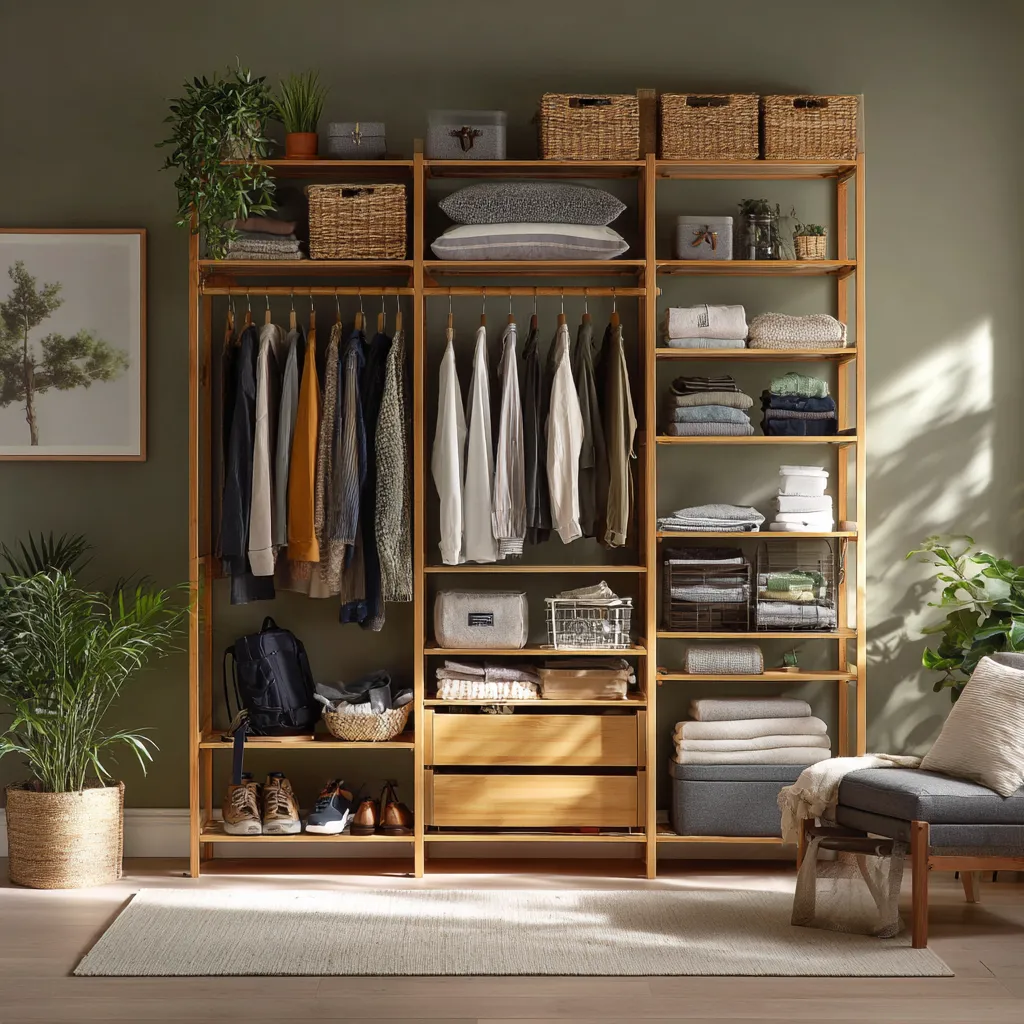
Understanding Sustainable Fashion and Why an Eco-Friendly Wardrobe Matters
Before you start sorting through your closet or browsing new brands, it helps to understand what sustainable fashion actually means. At its core, sustainable fashion focuses on reducing environmental harm and improving the well-being of the people who create your clothing.
Fast fashion, on the other hand, is built on speed and volume. That model leads to:
- Massive water consumption
- Chemical pollution in waterways
- Millions of tons of textile waste
- Poor working conditions for garment workers
When you build an eco-friendly wardrobe, you’re choosing pieces that last longer, come from responsible sources, and have a smaller footprint. The goal isn’t perfection. It’s progress—step by step, garment by garment.
Assessing Your Current Closet: The First Step to an Eco-Friendly Wardrobe
Before you buy anything sustainable, take a good look at what you already own. You might be surprised by how much potential your current closet has.
Conducting a Sustainable Closet Audit
Start by pulling everything out—yes, everything. Then sort your items into four simple groups:
- Keep — Items you wear regularly, feel good in, and want to keep long-term.
- Repair — Clothing that’s high quality but needs small fixes: loose threads, missing buttons, tiny holes.
- Donate — Good-condition pieces that you no longer wear but someone else might love.
- Upcycle — Items with sentimental value or high-quality fabric that can be transformed.
A closet audit keeps you grounded. Instead of chasing trends, you start building an eco-friendly wardrobe based on what you actually need rather than what marketing tells you to want.
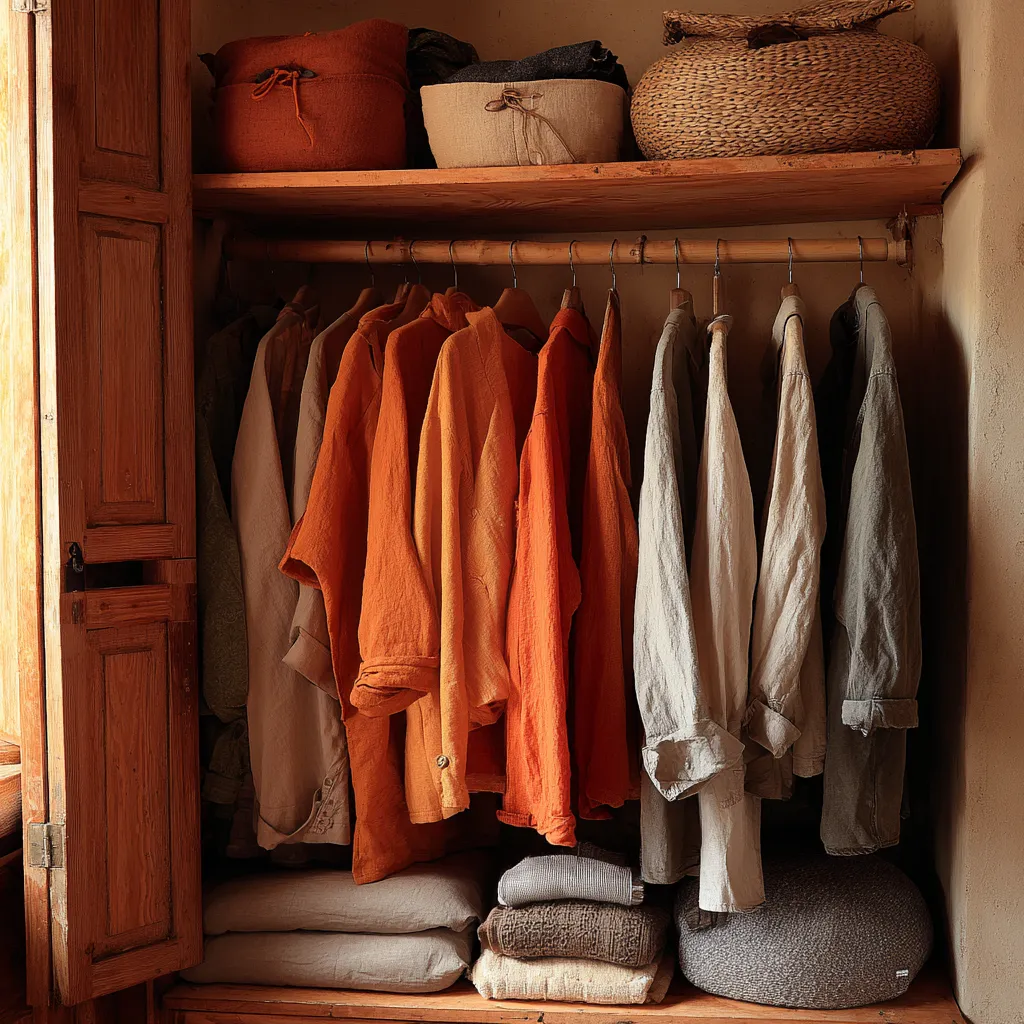
Choosing Eco-Friendly Fabrics and Materials
Once you know what you have, you can decide what to invest in next. The material of your clothes has a huge impact on sustainability.
Best Sustainable Fabrics to Look For
When shopping, keep an eye out for fabrics like:
- Organic cotton – grown without harmful pesticides
- Linen – durable, breathable, made from the flax plant
- Hemp – requires minimal water and grows quickly
- Tencel/Lyocell – created from sustainably sourced wood pulp
- Recycled polyester – reduces plastic waste
Why These Fabrics Matter
These materials generally consume less water, use fewer chemicals, and produce less pollution. They also tend to last longer, which means fewer replacements over time—one of the most underrated aspects of an eco-friendly wardrobe.
You don’t have to buy only sustainable fabrics, but choosing them when possible significantly reduces your clothing-related carbon footprint.
Buying Mindfully: How to Shop for a Truly Eco-Friendly Wardrobe
Mindful shopping helps you avoid impulse purchases and choose pieces that actually fit your lifestyle.
Smart Shopping Strategies
Here are habits to adopt each time you shop:
- Buy fewer, better pieces instead of frequent replacements.
- Focus on versatility—items you can wear across seasons.
- Choose timeless styles rather than fast-moving trends.
- Research brand transparency before hitting “add to cart.”
Tools to Verify Brand Sustainability
When you’re unsure whether a brand is ethical or just greenwashing, use tools like:
- Good On You (app that rates brands)
- Fashion Revolution’s Transparency Index
These resources help you compare brands based on environmental impact, labor conditions, and material choices.
Mindful shopping doesn’t drain your budget. It shifts your mindset away from quick buys and toward purposeful purchases.
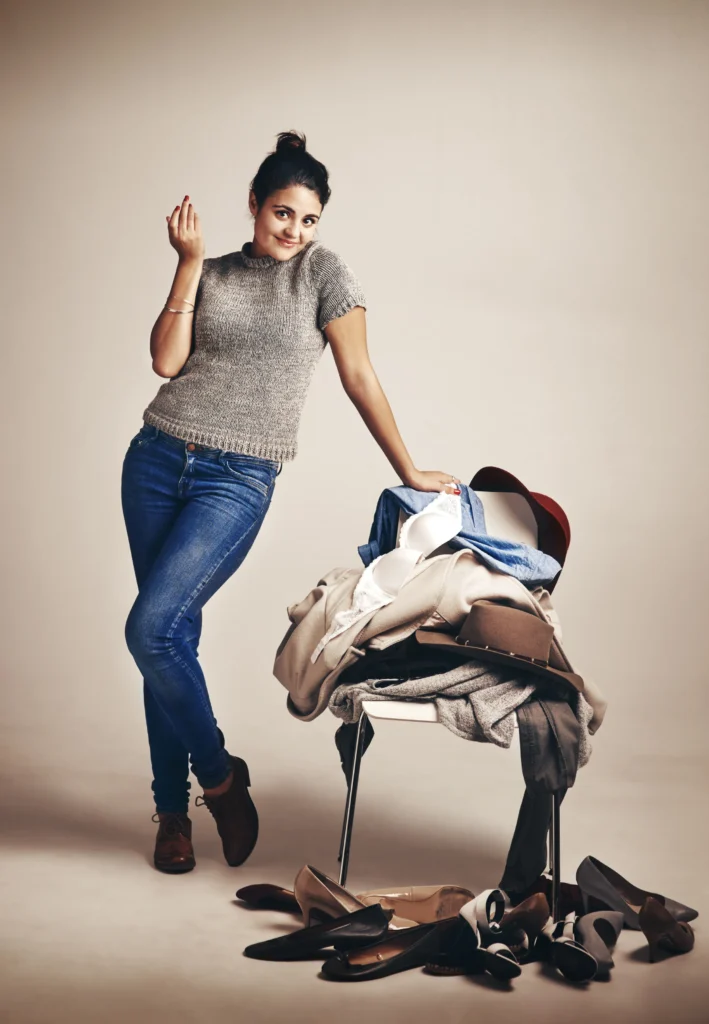
The Power of Secondhand Fashion
If you want to lower your environmental footprint in a dramatic way, secondhand shopping is your best friend.
Why Thrifting and Resale Matter
When you shop secondhand, you:
- Reduce textile waste
- Use fewer natural resources
- Save money
- Extend the lifespan of clothes already in circulation
In many cases, secondhand clothes are higher quality than cheaply made fast-fashion items.
Where to Shop Secondhand
You have more options than ever:
- Local thrift stores
- Consignment shops
- Curated vintage boutiques
- Online platforms like Depop, Poshmark, and ThredUp
Secondhand fashion also lets you explore unique pieces that no one else has—pieces that bring character to your eco-friendly wardrobe.
Care, Repair, and Longevity: Extending the Life of Your Clothes
An eco-friendly wardrobe isn’t just about what you buy—it’s about how you care for what you already own.
Clothing Care Best Practices
Small habits make a big difference:
- Wash on cold to protect fabrics and reduce energy use
- Air-dry whenever possible
- Store clothes in breathable spaces
- Use gentle detergents
Beginners’ Repair Guide
Basic repairs can extend the life of your clothing significantly. You can start with:
- Simple hand stitches to close small holes
- Sewing on loose or missing buttons
- Creating neat patches for worn areas
Learning a bit of mending is one of the easiest ways to slow down your clothing consumption.
Why Garment Care Is Crucial
When you maintain your clothing well, you:
- Save money by avoiding constant replacements
- Reduce your environmental impact
- Build a wardrobe that stands the test of time
Clothes that stay in good condition longer help you break free from the endless buy-discard-repeat cycle that fast fashion encourages.
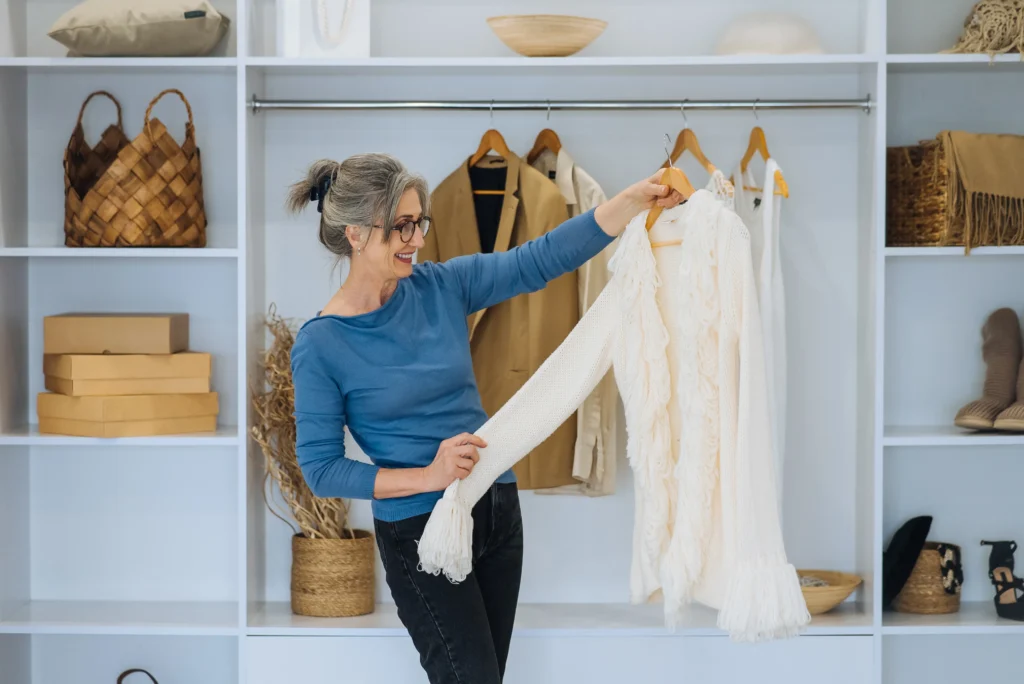
Creating a Capsule Wardrobe: A Minimalist Approach to an Eco-Friendly Closet
If you’ve ever felt overwhelmed by choices, a capsule wardrobe can be transformative.
Benefits of a Capsule Wardrobe
A capsule wardrobe helps you:
- Reduce decision fatigue
- Spend less on clothing long-term
- Develop a personal, cohesive style
- Focus on quality over quantity
How to Build One
Here’s a simple framework to guide you:
- Choose a base color palette (neutrals work well).
- Pick essential staples, like a go-to pair of jeans, a quality white shirt, comfortable knits, classic shoes.
- Add layers and accessories that help you transition between seasons.
- Review your capsule each season to adjust for your lifestyle.
A capsule wardrobe doesn’t have to be small. It just needs to be intentional.
Eco-Friendly Wardrobe on a Budget
Contrary to popular belief, sustainable fashion doesn’t need to be expensive.
Cost-Saving Tips
You can build an eco-friendly wardrobe affordably by:
- Shopping secondhand
- Joining clothing swaps
- Buying off-season
- Prioritizing multipurpose pieces
- Repairing before replacing
Thoughtful buying also reduces wasted money on items you never wear—something many people don’t realize until they audit their closets.
Common Myths About Sustainable Fashion
As you explore sustainable fashion, you’ll encounter a lot of misconceptions.
Myth 1: Eco-Friendly Fashion Is Always Expensive
Not true. Thrifting, swapping, repairing, and buying less already cut your costs dramatically.
Myth 2: You Have to Buy Organic Everything
You don’t. Sustainability isn’t all-or-nothing. Do what fits your budget and lifestyle.
Myth 3: Sustainable Fashion Isn’t Stylish
In reality, many independent designers and secondhand curators offer pieces far more unique than anything in fast-fashion stores.
Conclusion
Building an eco-friendly wardrobe isn’t about throwing everything out and starting fresh. It’s about slowing down, becoming more intentional, and choosing clothes that reflect who you are—not who a trend cycle wants you to be.
By auditing your closet, learning about fabrics, shopping mindfully, caring for your garments, and embracing secondhand options, you create a wardrobe that feels good to wear and good to live with.
Every step you take toward sustainable fashion, no matter how small, reduces your impact and supports a healthier planet.
And the best part? You get to enjoy clothes that tell a story—your story.
FAQs About Building an Eco-Friendly Wardrobe
What is the first step in creating an eco-friendly wardrobe?
Start with a closet audit. Understanding what you already own prevents unnecessary purchases.
Are sustainable fashion brands more expensive?
Some can be, but secondhand shopping, swaps, and buying less make sustainability accessible at any budget.
What fabrics should I look for when shopping sustainably?
Look for organic cotton, hemp, linen, Tencel, Lyocell, or recycled fibers.
How can I maintain an eco-friendly wardrobe long-term?
Wash gently, repair regularly, and focus on timeless pieces that last.
Do I need to replace all my clothes with sustainable options?
Not at all. Use what you have first—the most sustainable wardrobe is the one you already own.
Call to Action
If you’re ready to start your journey toward a more intentional, eco-friendly wardrobe, take the first step today: audit your closet, choose one item to repair or donate, and explore sustainable options the next time you shop. Small actions add up—and your wardrobe is the perfect place to begin.
Table of Contents
https://www.trendsfocus.com/healthy-eating-for-busy-people-quick-recipes/