
A powerful and destructive tornado recently tore through the city of Enid in Oklahoma, leaving behind a trail of devastation that has shocked residents and drawn national attention. The violent storm, part of a broader severe weather outbreak across the central United States, caused significant structural damage, disrupted daily life, and prompted urgent rescue and recovery efforts.
As communities begin to assess the aftermath, the scale of the disaster is becoming clearer. Entire neighborhoods have been altered in a matter of minutes, while emergency teams continue to work around the clock to assist survivors. At the same time, stories of courage and resilience are beginning to emerge, reminding the world that even in the face of overwhelming destruction, the human spirit endures.
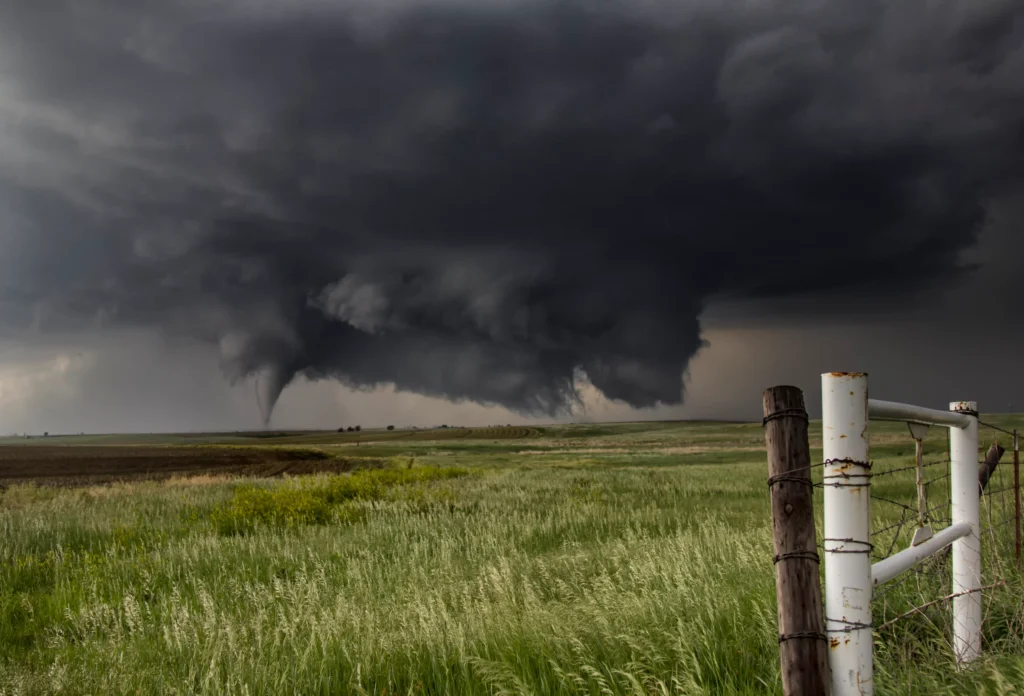
Devastation in Enid: A Community Shaken by Nature’s Fury
The Tornado’s Path of Destruction
The tornado struck Enid with little warning, rapidly intensifying as it moved across the region. Residents reported hearing a loud, continuous roar—often compared to a freight train—just moments before the storm made impact. Within minutes, homes were torn apart, roofs were ripped off buildings, and vehicles were flipped or crushed beneath falling debris.
The tornado carved a chaotic path through residential neighborhoods and commercial zones alike. Streets that once bustled with daily life were left covered in shattered glass, splintered wood, and scattered personal belongings. Trees were uprooted from the ground, power lines were knocked down, and entire blocks were rendered unrecognizable.
Meteorologists studying the event believe the tornado may rank high on the Enhanced Fujita (EF) scale, which measures tornado intensity based on damage. While official ratings are still being determined, the widespread destruction strongly suggests a powerful and long-lasting storm. Weather experts also noted that the conditions leading up to the tornado—warm, moist air colliding with cooler, dry air—created an environment highly favorable for severe storm development.
For many residents, the speed of the tornado left little time to react. Although warning systems were activated, the rapid intensification of the storm meant that some families had only minutes to seek shelter. Those who managed to reach basements or storm shelters often emerged to find their homes severely damaged or completely destroyed.
Emergency Response and Rescue Efforts
In the immediate aftermath of the tornado, emergency response teams sprang into action. Firefighters, police officers, paramedics, and search-and-rescue crews worked tirelessly to locate survivors trapped beneath collapsed structures. The situation was made more challenging by blocked roads, unstable debris, and ongoing safety risks such as downed power lines and gas leaks.
Local hospitals quickly became overwhelmed with injured residents, treating a range of conditions from minor cuts and bruises to more serious trauma. Medical personnel worked long hours to ensure that everyone received care, while additional support was brought in from neighboring areas.
Humanitarian organizations, including the American Red Cross, played a crucial role in the response effort. Temporary shelters were established to house displaced families, providing them with food, water, clothing, and basic necessities. Volunteers distributed emergency supplies and offered emotional support to those struggling to cope with the sudden loss of their homes and belongings.
Community members also stepped up in remarkable ways. Neighbors helped neighbors clear debris, check on one another, and provide assistance wherever it was needed. Churches, schools, and community centers opened their doors to offer shelter and support. In times of crisis, this sense of unity has proven to be one of the most powerful tools for recovery.
Authorities have urged residents to remain cautious as cleanup efforts continue. Structural instability, hazardous materials, and sharp debris pose ongoing risks, making it essential for recovery operations to proceed carefully and systematically.

Impact on Residents and Infrastructure
The tornado’s impact on Enid extends far beyond the visible destruction. Thousands of residents have been displaced, forced to seek temporary housing with relatives, friends, or in emergency shelters. For many families, the loss is not only financial but deeply personal, as irreplaceable items such as photographs, heirlooms, and memories have been swept away.
Critical infrastructure has also been severely affected. Power outages have left large portions of the city without electricity, while water systems and communication networks have experienced significant disruptions. Repair crews are working around the clock to restore essential services, but the scale of the damage means that full recovery may take time.
Schools and businesses have been forced to close, further disrupting daily life. Students face interruptions in their education, while business owners must contend with property damage, lost inventory, and uncertain reopening timelines. The economic impact of the tornado is expected to be substantial, affecting not only individual households but the broader local economy.
Local government officials have begun conducting detailed damage assessments to determine the extent of the destruction and the resources needed for recovery. These assessments will play a key role in securing state and federal assistance, which will be essential for rebuilding efforts.
Beyond the physical and economic challenges, the emotional toll of the disaster cannot be overlooked. Many residents are dealing with shock, grief, and anxiety in the aftermath of the storm. Mental health support services are being made available to help individuals and families cope with the psychological impact of the event.
Recovery, Resilience, and the Road Ahead
Despite the devastation, the people of Enid are already demonstrating remarkable resilience. Cleanup efforts are underway, with volunteers and local organizations working together to remove debris, salvage belongings, and begin the rebuilding process. Donation drives and fundraising campaigns have been launched to support those most affected, both locally and from across the country.
Local leaders have emphasized that recovery will be a long and challenging journey. Rebuilding homes, restoring infrastructure, and revitalizing the local economy will require time, resources, and sustained effort. However, there is a strong sense of determination within the community to move forward and rebuild stronger than before.
The disaster has also sparked renewed conversations about preparedness and resilience in the face of severe weather. Officials are encouraging residents to review emergency plans, invest in storm shelters, and stay informed about weather alerts. Lessons learned from this event may help reduce the impact of future disasters.
In the coming weeks and months, Enid will continue to rebuild and recover. The process will not be easy, but the strength and unity of the community offer hope for a brighter future. As the city begins to heal, it stands as a powerful example of how communities can come together in the face of adversity.
The tornado that struck Enid, Oklahoma, serves as a stark reminder of nature’s immense power and unpredictability. Yet, amid the destruction, it also highlights the resilience, compassion, and determination of those affected. While the road to recovery will be long, the spirit of Enid remains unbroken—and that may be the most powerful force of all.

Conclusion
The devastating tornado that struck Enid, Oklahoma, has left a lasting mark on the community, reshaping lives in a matter of moments. From the widespread destruction of homes and infrastructure to the emotional toll carried by residents, the disaster underscores just how fragile normal life can be in the face of extreme weather.
Yet, beyond the damage and disruption, this tragedy has also revealed something powerful—the resilience and unity of the people of Enid. Neighbors helping neighbors, volunteers stepping forward, and emergency teams working tirelessly all reflect a community determined not to be defined by this disaster, but by how it rises from it.
As recovery efforts continue, the road ahead will require patience, resources, and collective strength. Rebuilding will take time, but the foundations of hope, solidarity, and determination are already firmly in place. Enid’s story is no longer just one of destruction—it is becoming one of perseverance, renewal, and the unwavering spirit of a community that refuses to give up.
Table of Contents
Tornado barrels through northern Oklahoma, leveling homes but claiming no lives | AP News
Capital One $425 Million Settlement: What Users Need to Now – trendsfocus