
The Secret Service record threat level reported ahead of the White House Correspondents’ Dinner has placed renewed attention on the safety of American political leaders and major public events. The rescheduled dinner is due to take place on Friday, July 24, 2026, in Washington, D.C., only three months after an armed attack disrupted the original gathering at the Washington Hilton.
U.S. Secret Service Director Sean Curran has described the present security environment as the most severe he has encountered during his 24-year career. According to figures reported by Bloomberg, the agency has opened approximately 10,000 threat cases in 2026. Protective-intelligence investigations have reportedly increased by about 40 percent compared with the same period in 2025, while interventions involving mental-health concerns are said to be running at approximately ten times last year’s level.
These figures do not mean that every report represents a credible plan to carry out violence. Threat cases can include direct statements, suspicious behavior, concerning communications and other information requiring investigation. Nevertheless, the scale of the reported increase illustrates how difficult the agency’s protective mission has become.
The Secret Service must now secure a gathering attended by the president, senior administration officials, journalists and other prominent guests while avoiding the vulnerabilities exposed during the April attack. The challenge involves much more than checking invitations or placing metal detectors at an entrance. Agents must evaluate threats from individuals, organized groups, foreign actors, drones, cyber-enabled activity and people whose behavior may change rapidly.
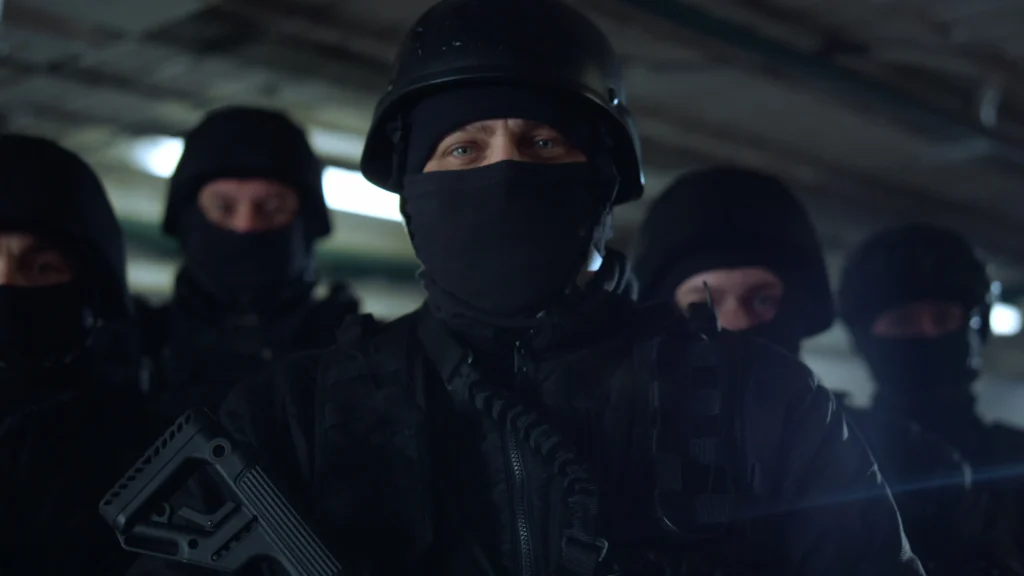
Secret Service Threat Investigations Reach an Unprecedented Level
The U.S. Secret Service is responsible for protecting the country’s highest elected leaders, visiting foreign heads of state and certain major national events. Its responsibilities also include investigating threats before they develop into physical attacks. This protective-intelligence work depends on identifying concerning behavior, evaluating credibility and coordinating with federal, state and local authorities.
According to the latest report, the agency’s leadership believes the present threat environment extends beyond President Donald Trump. Other protected officials, members of government and local political figures are also facing an increasingly volatile climate. The growth in threat investigations therefore reflects a broader problem involving political hostility, targeted harassment and the normalization of violent language.
The reported total of roughly 10,000 cases opened during 2026 is particularly significant because every case requires some level of evaluation. Investigators must determine whether a statement is protected political expression, an emotional outburst, a hoax, an indirect warning or evidence of genuine intent. They may need to examine a person’s history, access to weapons, communications, travel, financial activity and relationship to the possible target.
An increase in mental-health-related interventions adds another layer of complexity. A person does not need to belong to an extremist organization or have a long criminal record to present a serious risk. Some attackers act alone, conceal their intentions and display warning signs only to relatives, colleagues or people within small online communities. In those situations, prevention depends heavily on receiving information early and assessing it correctly.
The volume of cases also creates an operational challenge. Protective agencies have limited investigators, analysts and technical resources. When reports rise sharply, authorities must separate urgent threats from thousands of less immediate concerns without overlooking the individual who may be preparing to act.
This is why a record threat level should not be interpreted only as a larger number of hostile messages. It represents a growing intelligence burden. Each report must be reviewed, connected with other available information and placed within a broader risk assessment. A single missed warning could have national consequences, while treating every hostile statement as an imminent attack would consume enormous resources and potentially interfere with lawful expression.
April Attack Changed Security Planning for the Dinner
The decision to strengthen protection around the rescheduled White House Correspondents’ Dinner follows the violent incident at the original event on April 25, 2026. Authorities allege that Cole Tomas Allen, a 31-year-old California man, arrived at the Washington Hilton armed with a shotgun, a handgun and several knives.
According to accounts of the incident, Allen moved through the hotel and charged toward a security checkpoint positioned above the ballroom. Shots were fired during the confrontation, and a Secret Service officer was struck in the chest while protected by body armor. Allen was taken into custody before reaching the ballroom, where President Trump, Vice President JD Vance, senior officials and members of the press had gathered.
President Trump and other protected officials were evacuated safely. Federal prosecutors subsequently charged Allen with attempting to assassinate the president. He has pleaded not guilty, and the charges remain allegations that must be proven in court.
The attack produced two competing interpretations of the security response. Secret Service officials argued that the protective layers succeeded because the suspect was intercepted before reaching the president. Critics responded that an armed hotel guest was still able to get dangerously close to a ballroom containing the president, vice president, Cabinet officials, lawmakers and thousands of other attendees.
Both observations can be true. Agents successfully stopped the suspect, but the incident also exposed the difficulties of securing a large hotel that remains partly accessible to guests, staff and members of the public. The Secret Service’s responsibility centers on protecting designated individuals, while hotel security, event organizers and local police may control other parts of the property. Gaps can emerge where those areas of responsibility meet.
The Washington Hilton attack therefore became more than an isolated criminal case. It forced officials to reconsider the size of the protective perimeter, the timing of security screening, the management of hotel guests and the risks created when many senior government leaders attend the same event.
The presence of the president and vice president at one location also raised concerns about continuity of government. Several other officials in the presidential line of succession were reportedly present at the April dinner. Although such gatherings are traditional, concentrating many national leaders inside one venue can create an unusually attractive target.
New Venue Brings Stricter Screening and a Different Security Strategy
The rescheduled dinner will be held at the Waldorf Astoria in Washington rather than the Washington Hilton. The gathering is expected to be smaller and more tightly controlled, with reports indicating a capacity of approximately 1,000 guests instead of the much larger attendance associated with the original event.
Organizers have reportedly replaced printed credentials with digital tickets, strengthened identity verification and removed the large pre-dinner receptions that previously created crowded access areas. Attendees will also pass through screening procedures that include metal detectors operated by the Secret Service.
The venue change does not mean agents are simply repeating the April security plan inside a different building. Secret Service Deputy Director Matthew Quinn said officials are approaching the gathering as a presidential site attended by Cabinet members and other protected individuals rather than treating it as a second attempt at holding an interrupted social event.
That distinction matters. A presidential security plan begins well before guests arrive. Agents examine entrances, exits, stairways, elevators, kitchens, service corridors, rooftops, underground spaces and nearby buildings. They coordinate motorcade routes, emergency medical assistance, evacuation options and communications between multiple agencies.
Officials must also consider threats that may not involve a person attempting to pass through a conventional checkpoint. Drones have become a major concern because relatively inexpensive aircraft can carry cameras, interfere with protected airspace or potentially transport harmful materials. Quinn reportedly described unmanned aircraft as a leading priority and acknowledged that the agency has invested heavily in detection capabilities following earlier technical failures.
Foreign threats are another factor. Secret Service officials say they assess public statements from hostile governments alongside classified intelligence that cannot be released. This means the security plan must account for risks ranging from a lone domestic attacker to a coordinated operation supported from abroad.
The agency has declined to reveal the detailed protective measures planned for the dinner. That lack of disclosure is expected. Publishing exact checkpoint locations, technology, staffing levels or evacuation routes would provide useful information to anyone attempting to defeat the security system.
Guests may therefore notice only the most visible measures, such as ticket verification, restricted entrances and metal detectors. Behind those procedures will be intelligence analysts, tactical personnel, counter-surveillance teams, local police, emergency responders and specialists monitoring the surrounding environment.
Rising Political Threats Could Transform Major Public Events
The current threat environment raises a larger question about how democratic societies should protect leaders without completely separating them from the public. Presidents, candidates and other officials are expected to attend ceremonies, speak to journalists, visit communities and appear at large gatherings. Every public appearance, however, creates variables that security teams must control.
A system built around total physical isolation might reduce certain risks, but it would also weaken public access and make democratic leadership increasingly distant. At the other extreme, inadequate screening can expose officials, journalists, employees and ordinary attendees to preventable danger.
The White House Correspondents’ Dinner illustrates this tension. The event has existed for more than a century and is intended to recognize journalism, support scholarships and highlight the role of a free press. President Trump has confirmed that he intends to attend and speak at the rescheduled gathering.
Canceling the dinner permanently might remove one possible target, but it would not eliminate the wider threat. Political violence can shift to campaign rallies, government buildings, public ceremonies, religious gatherings or private venues. Security agencies must therefore focus on adaptable prevention rather than assuming that avoiding one event solves the underlying problem.
The reported increase in threat cases also demonstrates that law enforcement cannot address the issue alone. Families, employers, schools, social-media platforms and local authorities may notice warning signs before federal investigators do. Responsible reporting of credible threats can allow specialists to intervene before anger develops into violence.
At the same time, authorities must protect constitutional rights. Harsh criticism of a president, political party or government policy is not automatically a security threat. Investigators must distinguish protected speech from behavior indicating intent, preparation or movement toward an attack. That distinction is difficult but essential in a democratic society.
The July 24 dinner will consequently serve as both a major political-media event and a significant test of the Secret Service’s revised approach. Success will probably look uneventful: guests will arrive, pass through security, attend the program and leave without an incident. Such an outcome may appear routine, but it would depend on months of intelligence work, planning and coordination hidden from public view.
The record threat environment reported by Secret Service leadership should be treated as a warning rather than an invitation to panic. It demonstrates how quickly political hostility can create practical consequences for public institutions. More agents, stronger barriers and better detection technology may reduce immediate risks, but they cannot by themselves remove the conditions that encourage political violence.
The security surrounding the White House Correspondents’ Dinner is therefore about more than protecting one president or one evening in Washington. It reflects the broader challenge of maintaining open political institutions during a period of heightened anger, foreign threats and rapidly evolving technology. The Secret Service can strengthen the perimeter, but society must also decide whether political disagreement will remain a democratic process or continue moving toward intimidation and violence.
Table of Contents
Secret Service Sees Record Threats Before Correspondents Dinner – Bloomberg
Mamdani and Netanyahu: ICC Warrant Debate Explained – trendsfocus