
You don’t usually think of history as something that happens in a room. You picture marches, courtrooms, or televised speeches. But on February 21, 1965, history collapsed into a single indoor space—an auditorium where people came to listen, to learn, to feel less alone.
That’s the detail that makes this day so hard to shake: you can imagine yourself there. You can picture yourself scanning the crowd, settling into a seat, waiting for Malcolm X to speak. You can hear the low murmur of conversation—the familiar sound of a community gathering where something important is about to happen.
And then, instead of a message, there is violence.
Malcolm X was assassinated at the Audubon Ballroom in New York City while he was preparing to address supporters and community members. You may already know that sentence. What you might not know is how much you miss when you treat it as a headline rather than a turning point.
This piece isn’t here to repeat what you’ve heard in a dozen summaries. It’s here to help you understand:
- why Malcolm X was uniquely vulnerable in early 1965,
- what the Audubon Ballroom represented beyond “the place he died,”
- why the investigation remained controversial for decades,
- and how his ideas still press against the present when you read them seriously.
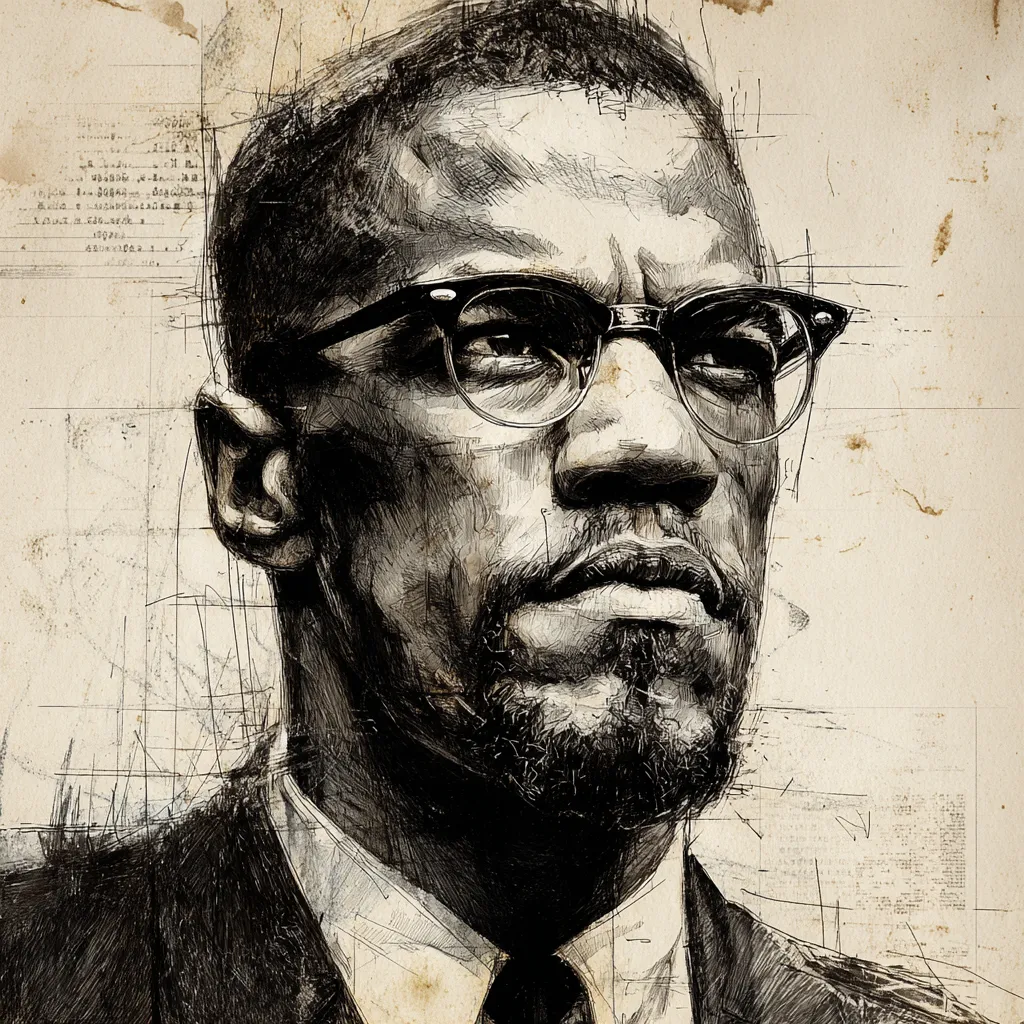
Malcolm X at the Audubon Ballroom: What Happened on February 21, 1965
When you read the assassination timeline, the attack can seem “instant.” But the room had a mood before it had chaos. That matters, because political violence rarely arrives from nowhere. It arrives into a climate—into tension, expectation, fear, and sometimes neglect.
The setting — an ordinary gathering with extraordinary stakes
The Audubon Ballroom was a public venue in Manhattan. On that Sunday afternoon, people gathered expecting Malcolm X’s voice—the kind of voice that didn’t politely “comment” on injustice but confronted it.
You should picture the audience as mixed in motive and emotion:
- People looking for direction
- People looking for reassurance
- People looking for controversy
- People simply wanting to witness him in person
And you should picture Malcolm X as a man in motion. By early 1965, he wasn’t simply replaying an old script. He was building new relationships, organizing in new ways, and speaking with a sharper global awareness than many people associated with him.
The assassination — a clear, digestible timeline
Accounts describe a disruption in the crowd that pulled attention away from the stage—an argument or commotion that created confusion. Then, in the disorder, attackers moved.
To make the sequence easier to hold in your mind, here’s a structured timeline (without unnecessary drama):
- A disturbance erupts in the audience, drawing focus away from Malcolm X and the front of the room.
- An attacker rushes forward and fires at close range.
- Additional gunfire follows, intensifying panic and confusion.
- Malcolm X is transported to the hospital and is pronounced dead later that afternoon.
Even if you’ve read the facts before, letting them sit in a numbered list changes how you absorb them. It stops being a mythic “moment in history” and becomes what it truly was: a coordinated act of public murder.
Quick facts (for readers who like anchors)
- Date: February 21, 1965
- Place: Audubon Ballroom, New York City
- What he was doing: preparing to speak at a public meeting
- Why it mattered: the assassination removed a leader during a period of reinvention—right when his influence was shifting
Who Was Malcolm X? (A Reader’s Version, Not a Poster Version)
You’ve probably seen Malcolm X reduced to a few repeating images: stern glasses, raised finger, hard-edged quote, a single posture frozen into legend. But if you want to understand why he mattered—and why his assassination sent shockwaves—you need a fuller view.
Malcolm X’s power wasn’t just what he said — it was how he made you think
What made Malcolm X different was his ability to change the mental weather in a room. He didn’t just deliver ideas. He reorganized your attention.
If you listen to him with your full focus, you notice a pattern:
- He takes what society treats as “normal” and shows you the violence inside it.
- He refuses euphemisms.
- He challenges you to measure freedom by lived reality, not by promises.
That’s why he became essential to many listeners. He spoke directly to the emotional truth of oppression—humiliation, fear, rage, exhaustion—without asking people to pretend those feelings weren’t there.
From Malcolm Little to Malcolm X to El-Hajj Malik El-Shabazz — why the evolution matters
A lazy narrative treats Malcolm X as one thing. A serious narrative understands him as a life with phases:
- Early hardship and instability
- Public prominence through a structured movement
- A break from that structure
- A widening worldview and renewed organizing push
That last phase is often underplayed online, but it’s critical. When someone is changing publicly—when they’re gaining independence and new alliances—they can become more dangerous to opponents and more threatening to former allies. That’s part of the context you can’t ignore.
Why Malcolm X Was Targeted: The Overlapping Pressures Most Articles Don’t Connect
If you’re looking for one neat “why,” you’ll miss the reality. The pressures around Malcolm X in 1965 weren’t single-source. They stacked.
1) Movement conflict after separation
After Malcolm X separated from previous organizational ties, relationships ruptured. Loyalty became contested territory. Reputation became a weapon. The situation wasn’t simply ideological—it was personal, political, and combustible.
If you’ve ever watched a modern movement fracture, you’ve seen how quickly people move from debate to demonization. Now imagine that dynamic in a time when violence was a more common tool in public life, and security for Black leaders was painfully uncertain.
2) A volatile national climate
The mid-1960s were a pressure cooker. Civil rights battles were reshaping law, society, and public identity. The country was tense about “order,” “radicalism,” and “change.”
In that environment, Malcolm X stood as a figure many people didn’t know how to categorize:
- too popular to dismiss,
- too blunt to domesticate,
- too evolving to predict.
3) The danger of being a bridge
One overlooked factor: Malcolm X was moving toward broader political organizing that could connect different groups and audiences. A “bridge” figure is often seen as more threatening than a figure confined to one lane.
You can think of it like this: when someone speaks only to one audience, opponents can isolate them. When that person begins to reach across lines—religious, political, geographic—opponents lose control of the narrative.
Investigation and Convictions: What the Legal Story Said — and Why It Didn’t Stay Stable
Here’s where your article can stand out in search: many posts stop at “three men convicted.” That’s outdated framing, and it leaves readers with a false sense of certainty.
The original convictions
In the 1960s, three men were convicted for the assassination. For decades, this became the “finished” version of the story for many casual readers.
But history isn’t only what courts decide in one decade. History is also what later evidence, later review, and later accountability reveal.
The turning point decades later
In 2021, two of the men convicted in the case were exonerated after their convictions were vacated. (One of them had already died by then.) This is a major part of why the Malcolm X assassination remains a living topic—not just an old tragedy.
If you care about justice beyond symbolism, sit with what that means:
- decades of life shaped by a conviction,
- decades of public memory shaped by an incomplete record,
- decades of “closure” that turned out to be fragile.
What you can learn from the case without turning it into cynicism
It’s tempting to read this and conclude, “Nothing is reliable.” But the better takeaway is more practical:
- You should treat historical “certainty” as something earned through evidence, not repetition.
- You should expect major events to have contested layers—especially when the stakes are political.
- You should value responsible writing that distinguishes documented facts from speculation.
That’s how you become a stronger reader—and how your blog becomes a more trusted destination.
The Audubon Ballroom Today: How a Place Carries Memory
If you’re a passionate reader, you don’t only want facts. You want place. Place gives facts weight.
The Audubon Ballroom site is associated with a memorial and educational center honoring Malcolm X and Dr. Betty Shabazz. Whether you ever visit in person or not, understanding that the site became a place of learning matters. It shifts the story from “death location” to “memory work.”
How to engage the site respectfully (even from afar)
If you want the history to feel real without turning it into spectacle, you can:
- Look for reputable archival photos and timelines
- Read visitor resources from educational institutions
- Pair the place with primary sources (speeches/interviews) so it doesn’t become a hollow symbol
Malcolm X’s Legacy: What Still Moves When You Read Him Carefully
A lot of writing about Malcolm X falls into one of two traps:
- worship without thought, or
- criticism without context.
Neither helps you understand why his influence persists.
Ideas that outlived the assassination
If you want the most useful legacy map (the one that connects past to present), focus on these themes:
- Self-determination: You can’t outsource dignity.
- Political education: You can’t fight what you can’t name.
- Psychological liberation: Oppression isn’t only external; it reshapes how you see yourself.
- Global perspective: Civil rights can be framed as human rights, not only domestic politics.
Why his evolution is part of the legacy
One of the most valuable lessons for you, personally, is that Malcolm X changed publicly. In an era where people are punished for revising their views, his life offers a different model: growth as strength, not weakness.
Misunderstood Malcolm X: 6 Mistakes That Flatten the Story
This section is here because it makes your article more “unique” in search — and it helps readers feel like they gained something they won’t get from a basic summary.
- Treating him as one fixed ideology instead of a life with phases
- Skipping his organizing work and focusing only on rhetoric
- Reducing the assassination to “mystery drama” rather than a political event with consequences
- Ignoring the later legal developments that changed public understanding
- Using quotes without sources (a huge online problem)
- Separating the man from the era, as if violence wasn’t part of the political climate
If you avoid those mistakes, your content automatically becomes more valuable.
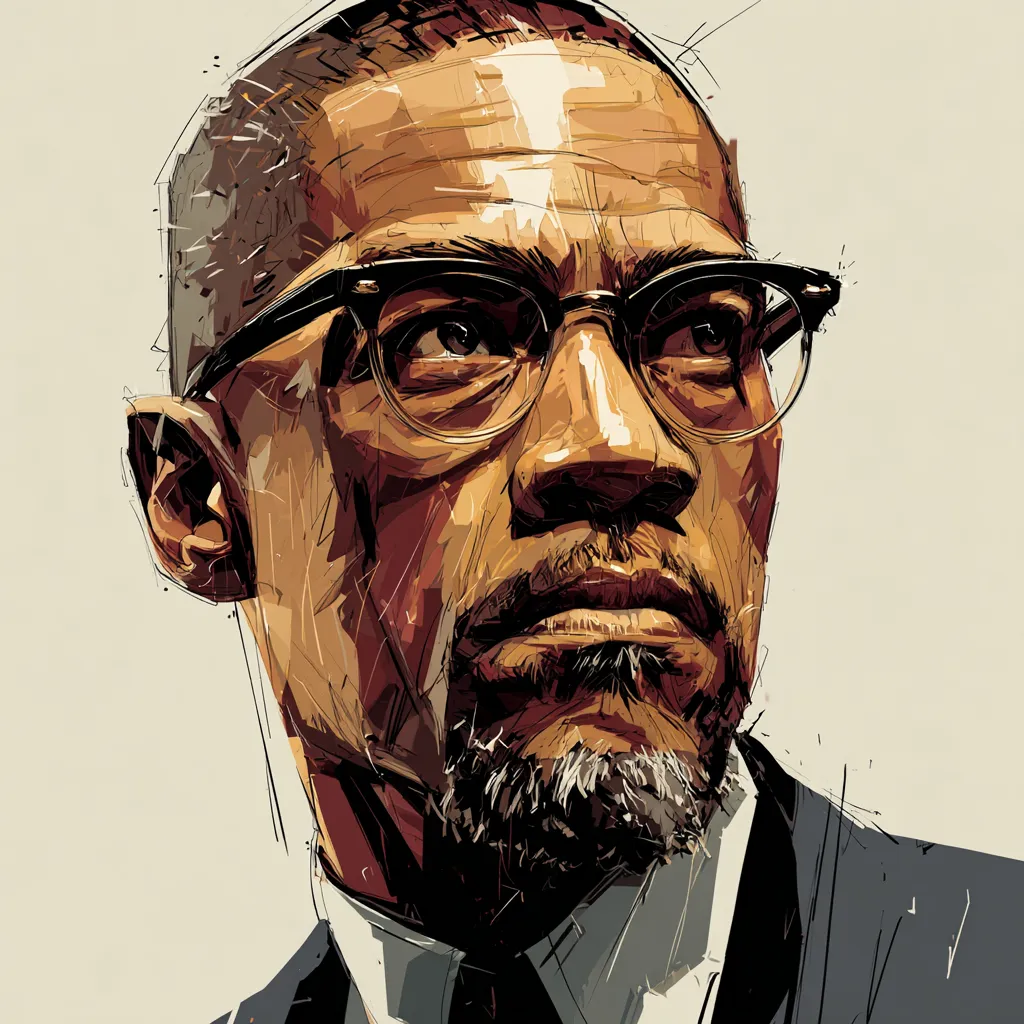
Conclusion: What Malcolm X’s Assassination Still Asks of You
When you return to the fact that Malcolm X was assassinated on February 21, 1965, you’re not only remembering a death. You’re confronting a set of questions that never really stopped being relevant:
- What does it cost to speak plainly in public?
- How do movements survive internal conflict without self-destruction?
- What does justice look like when the record changes decades later?
- How do you remember a leader without turning him into a slogan?
If you’re reading this because you care, you’re already doing something important: you’re resisting the shallow version of history. You’re choosing the version that demands attention, nuance, and emotional honesty.
Call to action (strong + engagement-focused)
Now make this history active:
- Comment with one detail you didn’t know before reading—something specific.
- Share this article with context, not just a link: tell people what you think gets misunderstood about Malcolm X.
- Pick one primary source (a speech or interview) this week and write a short reflection: What challenged you? What surprised you?
If you want, tell me your blog’s focus (civil rights history, Black studies, NYC history, leadership psychology, or education), and I’ll tailor:
- a keyword cluster,
- a “People Also Ask” FAQ expansion,
- and internal-link suggestions for a mini Malcolm X content hub that helps your site rank faster.
FAQ (SEO-friendly; includes “Malcolm X” in each question)
Where was Malcolm X assassinated on February 21, 1965?
You’ll find in historical accounts that Malcolm X was assassinated at the Audubon Ballroom in New York City while preparing to speak at a public gathering.
Why was Malcolm X important to the civil rights movement?
You can understand his importance through his emphasis on Black empowerment, self-determination, political education, and dignity, alongside his ability to challenge dominant narratives with unusual clarity.
What happened after Malcolm X was assassinated?
In the aftermath, investigations and convictions followed, but the case remained debated for decades, especially as later developments reshaped public understanding.
What is the Audubon Ballroom site today connected to?
The site is associated with a memorial and educational effort tied to Malcolm X and Dr. Betty Shabazz, reflecting how public history is preserved and taught.
How can you learn about Malcolm X without relying on internet myths?
You’ll get the most reliable understanding by pairing primary sources (speeches/interviews) with reputable biographies and institutional history resources—and by treating unsourced quote collections with skepticism.
Table of Contents
The March on Washington: Dr. King’s Dream and Its Legacy – trendsfocus