
When you think of communism, you might envision state-controlled economies, centralized planning, and the suppression of individual freedoms. But when you look at China’s communism, things aren’t as clear-cut. On one hand, you have a powerful Communist Party overseeing nearly every aspect of life, from politics to society. On the other, the country has embraced a market-driven economy, rapidly becoming one of the largest economic powers in the world. How does this work? Is China’s communism truly what we’ve come to understand, or has it evolved into something more complex, even contradictory?
In this article, we’ll explore the dual nature of China’s Communism, how it was shaped by history, and what it means for the country’s future. Whether you’re interested in global politics, economics, or social systems, this deep dive into China’s unique blend of communism and capitalism will give you a more comprehensive understanding of how this system works and why it’s so significant on the world stage.
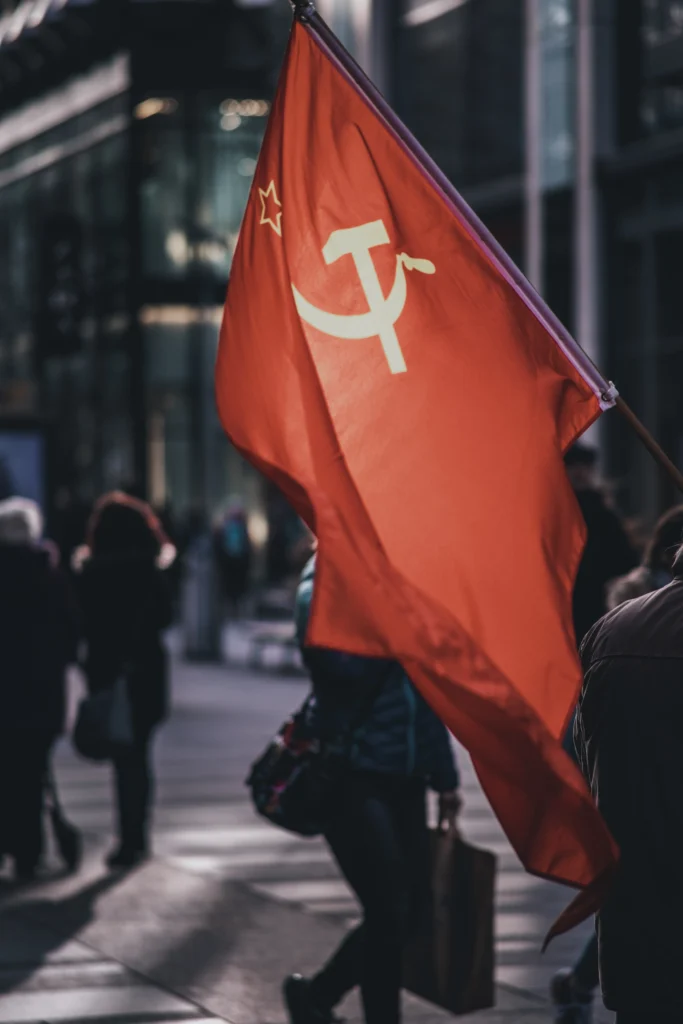
The Origins of China’s Communist Ideology
China’s version of communism didn’t emerge overnight. It has roots that go deep into the 20th century, influenced by Marxist-Leninist principles, but adapted to the unique conditions of China.
Mao Zedong and the Rise of Communism
When the Communist Party of China (CPC) took power in 1949 under Mao Zedong, the country was in tatters. After decades of war, both civil and external, China was ready for a radical transformation. Mao’s vision was centered on Marxist-Leninist theory, emphasizing the role of the working class, collective ownership, and class struggle.
Under Mao, China implemented sweeping changes. Land reforms redistributed land from wealthy landowners to peasants, and the Great Leap Forward sought to collectivize agriculture and industrialize at an unprecedented pace. These policies were ambitious but often disastrous, leading to widespread famine and economic collapse.
The Legacy of Maoism
Despite the economic hardships, Mao’s legacy of communist ideology has never truly disappeared from the fabric of China’s political culture. While Mao’s policies were widely discredited after his death in 1976, his revolutionary ideals still shape China’s political identity today.
Key Takeaways:
- Mao Zedong’s interpretation of communism prioritized agrarian reform and the empowerment of peasants, centralizing power under the Communist Party.
- Mao’s programs, including the Great Leap Forward and Cultural Revolution, had devastating effects on the country’s economy and society, but they were crucial in shaping the nation’s socialist foundations.
The Economic Transformation Under Deng Xiaoping
If Mao Zedong laid the ideological foundation of China’s communism, then Deng Xiaoping would redefine what that ideology could achieve, particularly in the economic sphere. When Deng came to power in the late 1970s, China was still reeling from the economic failures of the previous decades. It was clear that something had to change.
Opening Up to Market Reforms
Deng’s revolutionary approach was one of pragmatism rather than ideological purity. In 1978, Deng introduced his Reform and Opening-Up policies, which began to introduce capitalist practices into the communist system. His famous saying, “It doesn’t matter whether a cat is black or white, as long as it catches mice,” reflected his willingness to embrace market-driven economic policies to drive growth, even if they contradicted traditional Marxist theory.
Key reforms included:
- The creation of Special Economic Zones (SEZs) where foreign investment could thrive.
- The privatization of agriculture, allowing farmers to sell their produce on the open market.
- Opening up trade and inviting multinational companies into China’s industrial sector.
These changes were a delicate balancing act: embracing capitalism to fuel economic growth, while keeping the Communist Party firmly in control.
A New Era of Growth
The results were dramatic. Over the following decades, China’s economy transformed from a largely agrarian society into an industrial powerhouse. By the 1990s, China had emerged as the “world’s factory,” with manufacturing driving its explosive economic growth.
Key Takeaways:
- Deng Xiaoping’s reforms allowed for greater economic freedom without compromising the Communist Party’s grip on power.
- The policies implemented under Deng laid the foundation for China’s meteoric rise as an economic superpower.
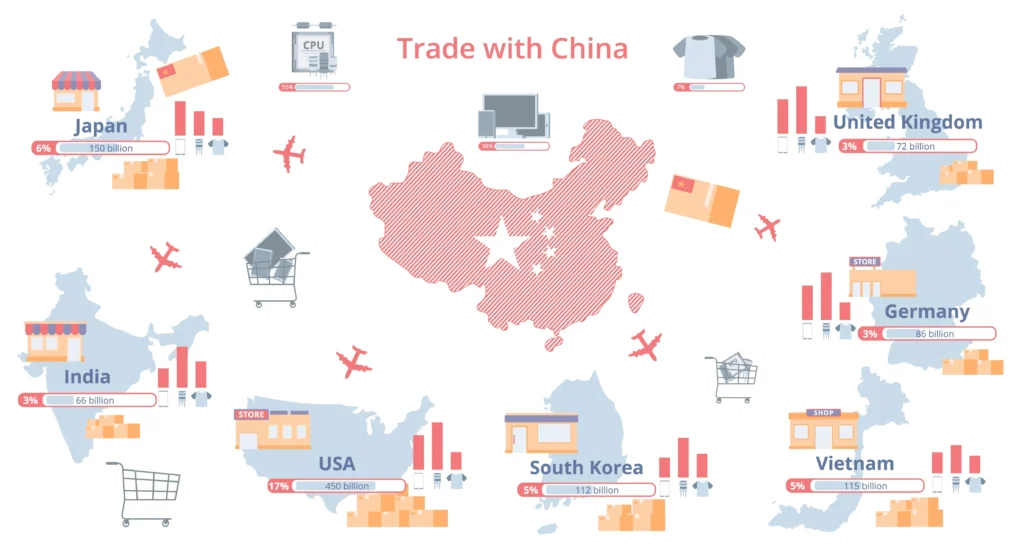
The Political System: Centralized Power and Authoritarian Rule
Despite these significant economic changes, China’s political system remains staunchly authoritarian. The Communist Party of China (CPC) controls every facet of governance, ensuring that political power remains centralized.
The Communist Party’s Absolute Control
China is unique in that it’s one of the few nations where a single party holds absolute control. The CPC not only governs the country but is the backbone of Chinese society. The Communist Party dictates policies, determines leaders, and controls media and expression. Elections are not free in the Western sense, and political opposition is not tolerated.
- Xi Jinping has further consolidated power, positioning himself as the most influential Chinese leader since Mao, with his ideological framework, Xi Jinping Thought, enshrined in the Chinese Constitution.
- The Politburo, a small group of elite leaders, has final say on national policy.
Authoritarianism vs. Communism
You might wonder: How does this align with Marxist ideals of collective governance and equality? The truth is, China’s communism has evolved in a way that prioritizes stability, centralization, and control over the core tenets of egalitarianism. While the Communist Party claims to represent the working class, it is led by an elite cadre, creating a hierarchy that doesn’t match traditional Marxist visions of a stateless society.
Key Takeaways:
- The Communist Party controls every aspect of governance, with no room for political opposition.
- China’s authoritarian political system prioritizes stability and control over the egalitarian ideals of traditional communism.
The Social Impact: Achieving Prosperity, but at What Cost?
One of the most striking contradictions in China’s Communism is its ability to achieve economic success while also creating significant social disparities. On one hand, the country has pulled millions out of poverty and built a burgeoning middle class. On the other, income inequality and social stratification have reached troubling levels.
Economic Growth vs. Social Inequality
China has made tremendous strides in lifting its citizens out of poverty. Over 850 million people have been lifted out of extreme poverty since 1981, and the country has become the world’s second-largest economy.
However, this growth hasn’t been equally distributed:
- There is a stark divide between rural and urban areas, with coastal cities like Shanghai and Beijing booming, while inland provinces lag behind.
- The rise of income inequality and the creation of a wealthy elite contrasts sharply with the government’s narrative of equality.
The Cost of Growth
The government has prioritized economic growth over social welfare. Although China’s GDP has skyrocketed, the quality of life for many remains stagnant. Rising housing costs and education expenses have left a large portion of the population struggling to keep up.
Key Takeaways:
- While China has successfully reduced poverty, income inequality and social stratification are growing problems.
- The government has prioritized growth over addressing these social issues, leading to disparities between urban and rural populations.
The Global Impact: China’s Role on the World Stage
China is no longer just an economic powerhouse. It has become a global player, using its unique political and economic system to shape global events. But how does China’s communism influence its international relations?
The Belt and Road Initiative (BRI)
One of the most ambitious global projects spearheaded by China is the Belt and Road Initiative (BRI), which aims to build infrastructure and trade routes connecting China to Asia, Europe, and Africa. This project has made China a central player in global trade and diplomacy.
China’s Technological Prowess
China is also emerging as a leader in technology. From 5G networks to artificial intelligence, China is challenging Western dominance in the tech world. This technological rise is not just an economic strategy but also a way for the Communist Party to cement its power both domestically and abroad.
Key Takeaways:
- China’s global influence is growing, thanks in part to its state-driven capitalism and authoritarian policies.
- The Belt and Road Initiative and technological advancements are reshaping global trade and diplomacy.
The Future of China’s Communism: Evolution or Stagnation?
As China continues to grow, the question on many minds is: Can China’s communism continue to evolve, or will it hit a wall? The future of China’s unique brand of communism is uncertain, especially as new generations demand more freedom and transparency.
Techno-Authoritarianism: A New Paradigm?
The future of China’s communism may lie in techno-authoritarianism. With advancements in surveillance technology, AI, and social credit systems, China is creating a new form of governance that blends control with innovation. But will these innovations continue to provide stability, or will they provoke backlash?
Key Takeaways:
- China’s future may involve the expansion of tech-driven governance, where the Communist Party uses technology to maintain control.
- Whether these innovations will lead to greater openness or more control remains to be seen.
Conclusion: Understanding China’s Dual Nature
China’s brand of communism is anything but simple. It’s a delicate balance between economic liberalization and political control, between traditional Marxist ideology and market-driven growth. While this dual nature has propelled China to global prominence, it raises critical questions about the future of its system.
Understanding China’s dual nature of communism is crucial for anyone trying to make sense of its place in the world. It’s not just about ideology—it’s about pragmatism, innovation, and survival in an increasingly complex world. As China continues to grow, its approach to governance, economy, and society will remain a key point of fascination for analysts, policymakers, and anyone interested in global affairs.
Call to Action:
Are you interested in learning more about China’s role in the global landscape? Dive deeper into the political and economic transformations that are shaping the future by subscribing to our newsletter, or check out our other articles on China’s complex relationship with capitalism and communism.
FAQs about China’s Communism
- What is China’s version of communism?
China practices “Socialism with Chinese Characteristics,” blending Marxist-Leninist principles with capitalist reforms to drive economic growth while maintaining the Communist Party’s tight control over politics. - How did China’s communism evolve?
China’s communism evolved from strict Marxist ideologies under Mao to more market-driven policies under Deng Xiaoping, who introduced economic reforms that allowed for capitalist practices while retaining the Communist Party’s political control. - Is China’s economy socialist or capitalist?
China’s economy is a unique blend of socialism and capitalism, where state control and private enterprise coexist. The government plays a dominant role in key industries, while market reforms have spurred private business and foreign investment. - What impact has China’s communism had on global trade?
China’s economic rise has made it a central player in global trade, especially through initiatives like the Belt and Road Initiative. Its market-driven economy and authoritarian politics are influencing how global trade operates. - Will China’s communism continue to evolve?
As technology advances and global pressures mount, China’s approach to communism is likely to continue evolving, especially in areas like surveillance, artificial intelligence, and global diplomacy.
Table of Contents
Prince Andrew’s Downfall: What Awaits Him Now? – trendsfocus