
President Donald Trump’s health has once again become a subject of public debate after Dr. Jonathan Reiner, a cardiologist who treated former Vice President Dick Cheney for nearly three decades, said the president “has not looked well” and argued that the White House should provide more detailed information about his medical condition.
Reiner, a professor of medicine and surgery at George Washington University and a longtime cardiovascular specialist, has pointed to several visible issues involving Trump, including bruising on his hands, swelling in his legs and occasions when the president has appeared tired or struggled to stay alert during public events.
His comments have attracted attention because of both his medical background and his experience caring for Cheney, who had a long and complicated history of cardiovascular disease. But Reiner has also been careful to make an important distinction: he is not Trump’s physician, he has not examined the president and he does not have access to his complete medical records.
That means his comments should not be interpreted as a diagnosis.
Instead, Reiner says the visible signs and limited medical information released by the administration raise legitimate questions about presidential health and transparency.
The White House has rejected those concerns, maintaining that Trump remains healthy, energetic and capable of carrying out his duties as president. Trump’s medical team has also released information indicating that some of the visible symptoms have explanations that are not considered life-threatening.
The disagreement therefore centers less on a confirmed illness and more on a broader issue: how much should Americans know about the health of the person occupying the most powerful political office in the country?
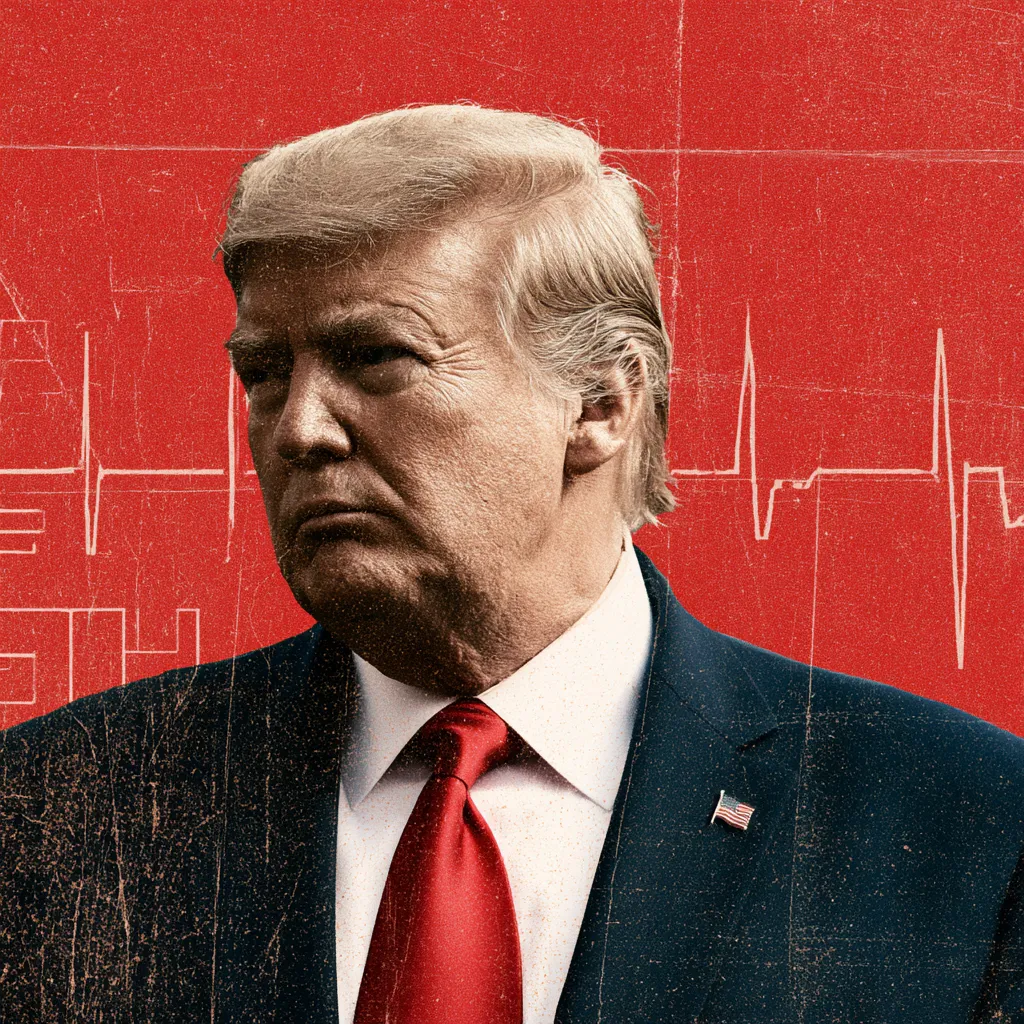
Why Dr. Jonathan Reiner Says Trump’s Appearance Deserves More Attention
Reiner’s concerns are based primarily on observations that have already been visible in photographs, video footage and public appearances.
One issue that has repeatedly attracted attention is bruising on Trump’s hands. Images showing discoloration have circulated widely, sometimes prompting speculation about possible health problems.
Bruising can result from many causes, including minor injuries, medications, skin changes associated with aging or medical treatments. Without a clinical examination, it is impossible to determine the cause simply by looking at photographs.
Nevertheless, Reiner argues that when physical signs appear repeatedly on a sitting president, the public should receive a clear medical explanation rather than be left to speculate.
He has raised similar questions about swelling in Trump’s lower legs.
The White House previously disclosed that Trump had been diagnosed with chronic venous insufficiency. The condition occurs when veins in the legs have difficulty efficiently returning blood toward the heart.
It is relatively common, particularly among older adults, and can lead to symptoms including swelling, discomfort and visible changes in the legs.
According to information previously released by Trump’s physician, medical testing did not show evidence of deep-vein thrombosis or arterial disease.
Those findings are significant because blood clots and certain vascular problems can potentially represent more serious medical concerns.
Reiner, however, has questioned the timeline surrounding the swelling. He noted that earlier health reports apparently did not document the same problem, leading him to ask when the condition developed and what additional evaluation may have been performed.
His argument is not necessarily that chronic venous insufficiency represents a severe or incapacitating illness. Rather, he has suggested that presidential medical disclosures should provide enough context for the public to understand changes in the president’s health.
That distinction matters.
There is a considerable difference between identifying an observable symptom and claiming that it proves the existence of a serious disease. Reiner has largely framed his comments around the first issue: visible signs exist, and he believes Americans deserve a fuller explanation.
Questions About Trump’s Fatigue and Daytime Sleepiness
Another issue highlighted by Reiner involves occasions when Trump has appeared unusually tired or has seemed to struggle to remain awake during public events.
Images or videos of any president appearing sleepy can quickly generate political controversy, particularly in an era when short clips can spread across social media without context.
Reiner has nevertheless argued that repeated daytime sleepiness can sometimes be medically relevant and should not automatically be dismissed.
There are numerous potential reasons why someone might appear tired during the day.
Poor sleep, demanding schedules, sleep apnea, medication effects, age-related changes and many other medical or non-medical factors can contribute to fatigue.
None of these possibilities can be confirmed simply from public appearances.
Reiner has explicitly acknowledged that limitation.
His concern is instead whether Trump’s physicians have investigated the issue and whether the public has received enough information about the results.
For presidents, questions about alertness inevitably carry political significance because the job involves major decisions, international crises, military responsibilities and unpredictable schedules.
Presidents frequently work irregular hours, travel extensively and participate in long meetings and ceremonies. Appearing tired on a particular occasion therefore does not necessarily demonstrate a medical problem.
The debate becomes more complicated when similar observations occur repeatedly.
Reiner’s position appears to be that repeated visible symptoms justify questions, even if they do not justify a diagnosis.
This is also where discussions about presidential health can easily become politically distorted.
Supporters may dismiss legitimate questions as partisan attacks, while opponents may interpret minor symptoms as evidence of severe illness.
Neither conclusion is medically sound without adequate evidence.
A responsible approach requires acknowledging what is known, what has been officially disclosed and what remains uncertain.
At present, there is no publicly confirmed evidence demonstrating that Trump’s apparent fatigue is caused by a serious undisclosed medical condition.
That point is essential because speculation about health can quickly turn into misinformation.
Still, Reiner believes greater transparency could reduce that speculation by replacing unanswered questions with verifiable medical information.
The White House Pushes Back Against “Armchair Diagnosis”
The Trump administration has strongly rejected suggestions that the president’s appearance indicates a serious health problem.
White House officials have described Trump as highly energetic and fully capable of performing the responsibilities of the presidency.
They have also criticized medical commentators who publicly discuss his health without personally examining him.
This criticism touches on a longstanding ethical debate within medicine and politics.
Doctors generally avoid diagnosing individuals whom they have not clinically evaluated. Public figures complicate the situation because aspects of their health may be visible to millions of people while their detailed medical information remains private.
Reiner has responded to criticism by emphasizing that he is asking questions rather than issuing a diagnosis.
That difference is significant.
Saying that a person “looks unwell” is an observation. Declaring that the person has a particular disease would be a medical conclusion requiring evidence.
Reiner has argued that his comments belong primarily to the first category.
The White House, meanwhile, has released medical explanations for at least some of the issues attracting attention.
Trump’s diagnosis of chronic venous insufficiency offers one explanation for leg swelling, for example.
Officials have also repeatedly insisted that the president is in excellent health.
The political disagreement therefore involves competing interpretations of how much information is sufficient.
From the administration’s perspective, the president has undergone medical examinations, his physician has released findings and there is no evidence that he cannot perform his duties.
From Reiner’s perspective, some visible symptoms and reported medical tests have not been explained in enough detail.
Both arguments highlight the tension between medical privacy and public accountability.
Even presidents do not automatically surrender every aspect of their personal medical information when they enter office.
At the same time, presidents possess extraordinary authority, including access to nuclear command systems and responsibility for decisions that can affect millions of people.
That creates a legitimate public interest in knowing whether they are medically capable of carrying out their responsibilities.
The difficult question is determining where the boundary should be drawn.
Presidential Health Transparency Is the Larger Issue
The controversy surrounding Reiner’s comments goes beyond Donald Trump.
American presidents have historically released varying amounts of medical information, and there is no universally applied standard requiring complete public disclosure of their health records.
Some administrations provide detailed physical examination summaries. Others disclose considerably less.
That inconsistency can create suspicion whenever visible symptoms appear to contradict optimistic official statements.
Presidential health has also been politically sensitive throughout American history.
Franklin D. Roosevelt’s serious health problems were not always fully communicated to the public. John F. Kennedy had multiple medical conditions that were largely hidden during his presidency. More recent presidents have faced intense media scrutiny over physical fitness, age, cognitive health and routine medical procedures.
The modern media environment makes secrecy more difficult.
High-resolution photographs, continuous television coverage and social media mean that bruises, physical movements, moments of fatigue and changes in appearance can be analyzed almost immediately.
That scrutiny can sometimes produce legitimate questions.
It can also produce irresponsible speculation.
More detailed and standardized medical disclosures could potentially reduce both problems.
One possible approach would involve requiring presidents to release a standardized annual medical report containing clearly defined information about cardiovascular health, neurological function, medications, significant diagnoses and any conditions that could materially affect their ability to perform official duties.
Another possibility would be an independent medical assessment conducted by physicians who are not directly employed by the White House.
Such proposals would undoubtedly raise privacy and constitutional questions.
A president remains an individual with personal medical rights, and not every condition is relevant to public service.
For example, a minor dermatological condition or routine age-related issue may have no meaningful impact on presidential performance.
The challenge is identifying which health information genuinely affects the public interest.
In Trump’s case, the current controversy does not establish that he has a serious undisclosed illness.
That conclusion would go beyond the available evidence.
What the controversy does demonstrate is how quickly unanswered medical questions involving a president can become politically significant.
Reiner’s comments have helped focus attention on visible signs including bruising, leg swelling and apparent fatigue. The White House has responded by emphasizing Trump’s stamina and pointing to medical evaluations that it says show he remains capable of serving.
The disagreement is likely to continue because the underlying issue has no simple solution.
Americans understandably want reassurance that their president is physically and mentally capable of fulfilling the enormous demands of the office. Presidents and their physicians, meanwhile, have legitimate reasons to protect medical privacy and avoid releasing information that is irrelevant or easily misinterpreted.
Greater transparency could narrow that gap.
For now, however, the most important distinction remains between questions and conclusions.
Jonathan Reiner has raised questions about Trump’s health based on observations and publicly available information. He has not examined Trump and has not diagnosed him with a serious illness.
The White House maintains that Trump is healthy and capable of carrying out his responsibilities.
Until additional verified medical evidence becomes available, claims going substantially beyond those facts should be treated cautiously.
The broader debate, however, is unlikely to disappear. With an aging political leadership and increasing public scrutiny of elected officials, presidential health transparency is becoming an increasingly important political issue.
Ultimately, the question may not be whether the public deserves access to every medical detail about a president.
It is whether Americans receive enough reliable, independently credible information to have confidence that the person entrusted with the powers of the presidency remains medically capable of exercising them.
Table of Contents
Opinion | I Was Dick Cheney’s Cardiologist. I Have Questions About Trump’s Health. – The New York Times
John Fetterman and Dave McCormick: A 2030 Senate Alliance – trendsfocus