
Winter travel sounds simple in theory. You book your ticket, pack a warm coat, and assume delays are just part of the season. But when you’re standing at the airport, staring at a departure board filled with red “CANCELED” notices, the reality hits fast.
Canceled flights in the U.S. during winter storms don’t just ruin plans. They drain your wallet, eat your time, and leave you guessing what you’re actually entitled to. Airlines often give vague answers. Gate agents are overwhelmed. Online advice is confusing—or flat-out wrong.
This article clears the fog. By the end, you’ll know exactly what your rights are, what airlines must do, what they don’t have to do, and how you can protect yourself before the next winter storm shuts down the runway.
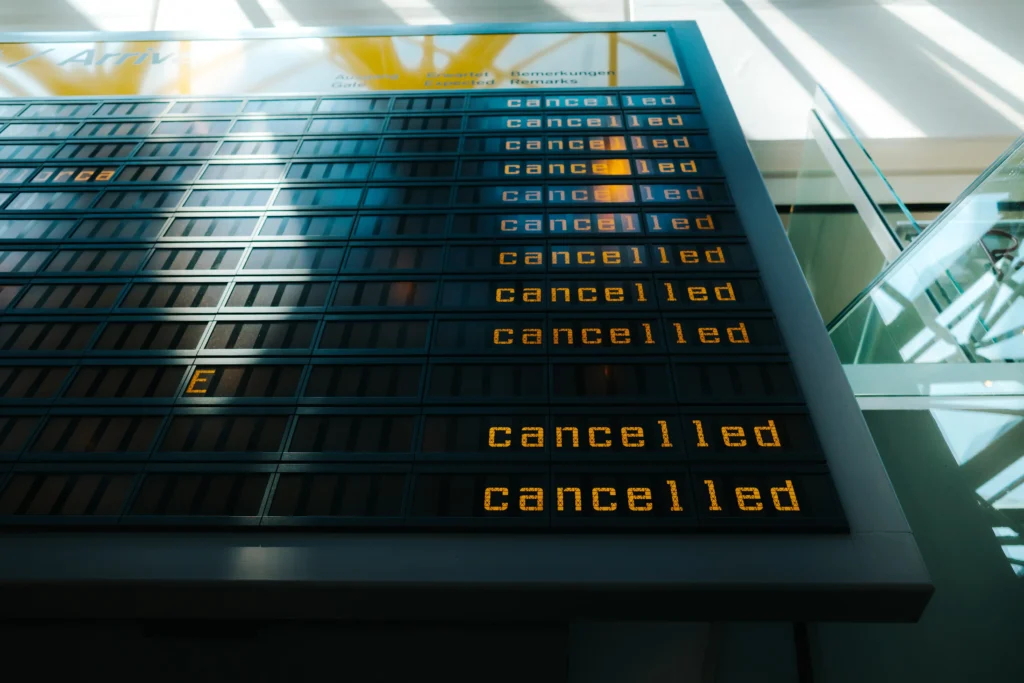
Why Flights Get Canceled in the U.S. During Winter Storms
When flights are canceled in the U.S., airlines usually blame “weather.” That explanation sounds final—but it hides important details.
Weather vs. Airline Responsibility
Winter storms cause cancellations for several reasons:
- Snow and ice make runways unsafe
- Freezing rain prevents proper de-icing
- High winds reduce visibility and landing safety
- FAA ground stops halt traffic across entire regions
Airlines are legally required to follow Federal Aviation Administration safety rules. If conditions aren’t safe, flights cannot operate—even if the aircraft itself is ready.
However, not every cancellation during winter is purely weather-related. Crew shortages, scheduling breakdowns, or aircraft positioning problems often follow storms. Airlines still label these as “weather disruptions,” even when operational issues play a role.
That distinction matters—because your rights don’t depend on the storm alone, but on what the airline does next.
Canceled Flights in the U.S.: Do You Actually Have Passenger Rights?
This is where most travelers get misled.
Unlike Europe, the United States does not have a universal passenger compensation law for delays or cancellations caused by weather. That doesn’t mean you have no rights—but it does mean those rights are more limited.
What the Law Really Says
Under U.S. Department of Transportation (DOT) rules:
- You are entitled to a refund if your flight is canceled and you choose not to travel
- This applies even if the cancellation is weather-related
- Refunds must cover the unused portion of your ticket
That refund rule is federal law. Airlines cannot override it with internal policies.
What the law does not require:
- Cash compensation for inconvenience
- Hotel accommodations
- Meal vouchers
- Alternative transportation coverage
Those extras depend entirely on airline policy.

What Airlines Must Do When Flights Are Canceled
When canceled flights in the U.S. disrupt your plans, airlines have a few clear obligations—and many optional ones.
What You Are Always Entitled To
No matter the airline, no matter the storm:
- A full refund if you decline rebooking
- Rebooking on the same airline at no extra cost
- Refund to original payment method, not forced credits
If an airline tells you that weather cancellations mean “no refund,” that statement is incorrect.
What Airlines May Offer (But Don’t Have To)
These benefits are discretionary:
- Hotel vouchers
- Meal vouchers
- Ground transportation
- Rebooking on partner airlines
Some airlines are generous during large storms. Others offer almost nothing. This variation is why knowing airline-specific policies matters.

Refunds vs. Rebooking: Which Option Works Better for You?
When your flight is canceled, you’ll usually be pushed toward rebooking. That isn’t always the smartest move.
When a Refund Is the Better Choice
You should strongly consider a refund if:
- The next available flight is days away
- You can find cheaper alternatives on another airline
- The trip’s purpose is no longer valid (events, holidays, meetings)
Once you accept rebooking, refund options may become harder to request later.
When Rebooking Makes Sense
Rebooking works better if:
- Flights are resuming within hours
- You’re traveling internationally
- Prices have surged due to high demand
Ask gate agents whether partner airlines have availability. Sometimes the best option isn’t automatically offered—you have to request it.
Extra Costs from Canceled Flights in the U.S.: Who Pays?
This is where travelers lose the most money.
Hotels, Food, and Transportation
For weather-related cancellations:
- Airlines usually do not cover hotels
- Meals are rarely reimbursed
- Taxis, rental cars, and trains are your responsibility
Airlines frame this as “outside our control.” Legally, they’re allowed to do so.
How Travel Insurance Protects You
Travel insurance often covers:
- Hotel stays after cancellations
- Meal expenses
- Alternative transportation
- Missed connections
Some premium credit cards include these protections automatically. If you paid with one, check your benefits before paying out-of-pocket.
How to Protect Yourself Before a Winter Storm Hits
Preparation makes a bigger difference than arguing at the gate.
Smart Booking Strategies
You reduce risk when you:
- Book early-morning flights
- Avoid tight connections
- Choose hubs with frequent departures
- Fly airlines known for flexible rebooking
Nonstop flights are especially valuable during winter.
What to Ask Airline Staff Immediately
When cancellations happen, ask clearly:
- “Can I be rebooked today?”
- “Are partner airlines available?”
- “If I decline rebooking, how do I request a refund?”
Calm, specific questions work better than frustration.
Common Myths About Canceled Flights in the U.S.
Misinformation spreads quickly during disruptions.
Myth vs. Reality
- Myth: Weather cancellations mean you lose your money
Reality: You’re entitled to a refund if you don’t fly - Myth: Airlines must provide hotels
Reality: Not required under U.S. law - Myth: Credits are mandatory
Reality: You can request a cash refund
Understanding these differences prevents costly mistakes.
FAQ: Canceled Flights in the U.S.
Can you get a refund for canceled flights in the U.S. due to snow?
Yes. If the airline cancels your flight and you choose not to travel, federal rules require a refund—even for weather-related cancellations.
Do airlines have to provide hotels for canceled flights in the U.S.?
No. Hotels are optional unless the airline’s own policies say otherwise.
What happens if your connecting flight is canceled due to a winter storm?
You can request rebooking for the entire itinerary or a refund for unused segments.
How long do airlines have to process refunds?
Most refunds must be issued within 7–20 business days, depending on payment method.
Conclusion: Know Your Rights Before the Next Storm
Winter storms may be unavoidable, but confusion doesn’t have to be. When you understand how canceled flights in the U.S. actually work, you stop relying on guesswork and start making informed decisions.
The next time snow shuts down the runway, you’ll know when to rebook, when to request a refund, and when to walk away and choose a better option. Knowledge doesn’t stop cancellations—but it does protect your time, money, and peace of mind.
Call to Action
If you found this guide helpful, save it before your next trip and share it with anyone flying this winter.
And if you want airline-specific rights broken down clearly, leave a comment or reach out—your next trip could depend on it.
Table of Contents
Holiday travelers face major flight chaos as winter storms hit US
Virtual Travel Revolution: Discover the World Without Leaving Your House – trendsfocus