
You don’t have to scroll far on your phone to see it: videos of students occupying university hallways, young climate workers standing in the rain with handmade signs, or first-time voters urging their friends to show up on Election Day. There is a noticeable urgency in the air, and it doesn’t belong to a single hashtag or moment. It belongs to millions of people under thirty, many of them like you, who are tired of feeling like decisions about their futures are being made without them.
In 2025, the activism of young Americans is no longer a fringe activity reserved for protestors or policy wonks. It has become a familiar language—a way to speak about the world, defend identities, and challenge power. When you see someone your age leading a protest or interviewing a local official on TikTok Live, it isn’t shocking anymore. It is the new norm. And it raises an important question: What exactly is driving this wave of political activism?
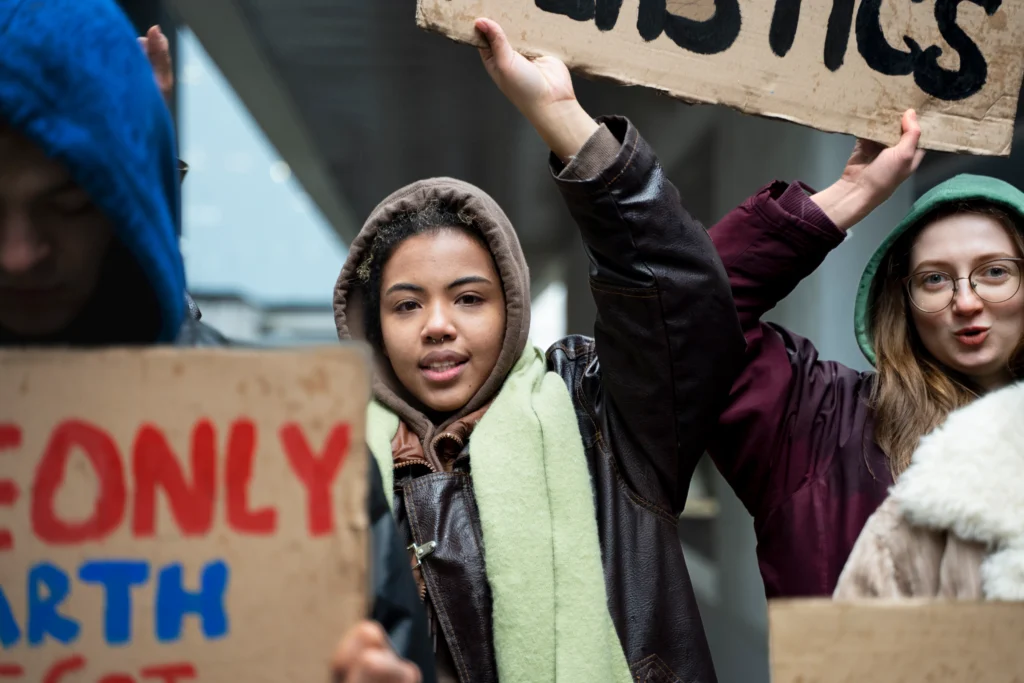
The New Era of Youth Political Participation
Activism has existed for generations, but the pace and shape of youth engagement today are unprecedented. Unlike past movements, young Americans in 2025 don’t confine their activism to election years or major crises. You watch them campaign, organize, fact-check political claims, and lobby representatives year-round.
A Shift From Passive to Active Citizenship
If you’re between 18 and 30, you probably grew up with constant turbulence: the 2008 recession, climate disasters, school shootings, social media pressure, polarized elections. Each crisis planted seeds of dissatisfaction. Those seeds grew into an enduring belief that political engagement is not optional. It’s survival.
The past three election cycles revealed something many dismissed: young voters show up, especially when they believe the stakes affect them personally. Voter registration drives led by students, youth-run PACs, and viral digital campaigns have reshaped turnout trends. When you read polling data now, youth groups are not “emerging voices”—they’re a political force.
Why Young Americans Are Turning Toward Activism
When you examine the activism of young Americans closely, you see a tapestry woven from lived experience. Behind every protest sign is a bill you can’t afford, an identity someone tried to erase, or a future threatened by extreme storms and fires.
Economic Pressures and Inequality
You don’t need a statistics chart to know that the cost of living is suffocating. Rent absorbs half your paycheck, degree programs lead to debt, and wages remain stagnant even as inflation climbs. A generation raised on the promise of “work hard and you’ll be rewarded” now questions the entire economic framework.
Young Americans are not demanding luxury—they are asking for basic stability:
- Affordable housing in urban and suburban areas
- Relief from student loan burdens
- Access to healthcare without financial ruin
- Fair wages that reflect the cost of living
Movements for workers’ rights, unionization, and debt forgiveness have surged. Instead of waiting for institutions to fix themselves, youth activists are forcing their hands. You see student assistants unionizing, baristas striking, interns forming collective bargaining councils. These aren’t symbolic actions—they’re strategic pressure campaigns designed to tip power away from corporations and toward the workers who sustain them.
Climate Change as a Catalyst
If you’ve ever watched wildfire smoke blanket your city or experienced heat waves that sent power grids into emergency shutdown, climate change is no longer an abstract topic. It is personal. Environmental activism became one of the most powerful starting points for young political participation in the early 2020s, and by 2025 it transformed into something far bigger.
Youth climate groups no longer settle for symbolic awareness campaigns. They demand:
- Binding emissions targets
- Investment in renewable infrastructure
- Accountability for corporations
- Disaster relief that prioritizes vulnerable communities
Their activism is not rooted in ideals—it’s rooted in lived reality. Climate anxiety, once dismissed as exaggeration, is now a credible emotional response to the world around you. And activism provides a way to reclaim agency.
Social Justice and Identity Movements
You may follow creators who talk about gender identity, disability rights, LGBTQ+ protections, reproductive rights, or systemic racism. These identities are not “political topics” to debate—they are the daily existence of millions of young Americans.
Social media allowed people to see each other and understand how oppression intersects:
- Race and poverty
- Gender and safety
- Disability and healthcare access
- Sexuality and employment discrimination
Intersectional activism is not simply a trend—it is a language for explaining how problems overlap. When youth activists demand inclusive policy, they’re not asking for special treatment; they’re trying to fix systems built with outdated assumptions about who matters.

Digital Platforms: The New Battleground of Political Activism
If you grew up online, you know digital spaces have their own rules. In activism, those rules become tools. Social media platforms are not just entertainment hubs; they are strategic assets for organizing movements.
TikTok and YouTube as Political Engines
You can find political influencers who explain complex legislative bills in 90 seconds, debunk disinformation, or livestream protests. Their videos often reach millions faster than traditional news outlets. That velocity changes everything.
Instead of relying on experts to interpret policy, young activists interpret it for one another:
- They translate legal jargon into everyday language.
- They document real experiences.
- They hold elected officials accountable publicly and immediately.
No speech in Congress can compete with a 30-second clip shared across your feed that exposes hypocrisy or injustice.
Hashtags Into Movements
Some people still underestimate online organizing. They see a hashtag and assume it will fade. But in 2025, youth activists use digital tools as launchpads—not substitutes for action.
A viral campaign might begin as:
- A student sharing a video of an unfair campus policy
- A group of workers revealing their wage conditions
- Survivors of discrimination exposing systemic failures
Within hours, local attention becomes national. Within days, journalists report on it. Within months, boards revise policies or city councils draft ordinances. The digital world accelerates the path from outrage to reform.
Algorithm Bias and Digital Suppression
Of course, activism does not flourish online without friction. Platforms moderate content, restrict political messaging, and sometimes deprioritize certain topics. When that happens, youth activists don’t retreat—they adapt. They migrate to alternative platforms, encrypt communications, or create offline organizing circles. This fluidity is why political movements today are harder to shut down.

Campus-Based Movements in 2025
Universities have always been microcosms of society, but in 2025, they feel like test labs for the future of activism. You can walk through a campus and see flyers about union meetings, sit-ins, pro-Palestine protests, or reproductive health forums. Students don’t just study history—they make it.
Universities as Political Incubators
Young activists often start in dorm lounges or cafeteria tables. Inside those informal spaces, ideas sharpen:
- Tuition reform
- Institutional transparency
- Mental health investments
- Sustainable campus infrastructure
Administrations respond unevenly. Some negotiate with student leaders. Others deploy police or threaten disciplinary action. Instead of discouraging activism, these conflicts often escalate it.
Student Journalism as Fuel
If you read campus newspapers, you know they cover issues mainstream outlets ignore. Student journalists report firsthand accounts, publish leaked emails, and provide context no national reporter could produce. Their work spreads across social platforms, turning local administrative failures into national debates.
Mobilization Strategies
Unlike older movements driven by hierarchical leadership, today’s campus organizing is decentralized:
- Walkouts coordinated by Telegram groups
- Petitions circulated through QR codes
- Sit-ins livestreamed on Instagram
- Student unions partnering with local city councils
This style isn’t chaotic—it’s resilient. When one leader is silenced, no movement collapses because dozens more step forward.
The Impact of Youth Activism on U.S. Elections
Every few years, analysts predict that youth movements will fizzle out. Every election cycle proves them wrong. If you look beneath headlines, you’ll see that young Americans are not simply demonstrating—they are influencing outcomes.
From Protest to Ballot Box
Activism becomes real power when it affects ballots. Campaigns built entirely on youth outreach have secured school board seats, city council positions, and even state-level offices. Door-to-door canvassing no longer relies on retirees; it now involves college volunteers who bring energy and persuasive storytelling.
Youth Candidates Running for Office
You may have seen candidates in their early twenties speaking fluently about policy, not because they studied it in a textbook, but because they experienced its consequences:
- Rent laws unfair to students
- Health insurance gaps
- Debt traps
- Climate infrastructure failures
Their authenticity isn’t a marketing trick—it’s why voters trust them. They speak in a language their generation understands: urgency, clarity, and hope.
Policy Wins Driven by Youth Activists
Every major reform begins small. A single campus rule change becomes a regional model, then statewide law. Youth activists helped advance:
- Climate adaptation budgets
- Police transparency standards
- Student debt relief efforts
- Voting access reforms
Politicians once dismissed young progressives as “idealistic.” Now they court them.
Obstacles and Criticisms Facing Young Activists
No movement is immune to criticism. The activism of young Americans is often painted as emotional, uninformed, or impulsive. But when you peel away media narratives, the real barriers become clear.
Psychological Strain and Burnout
Activism is empowering, but it can be exhausting. When you’re constantly consuming tragic headlines or witnessing injustice firsthand, burnout becomes unavoidable. Young activists report anxiety, sleep loss, and emotional detachment. They often feel like they’re carrying the world on their shoulders.
Institutional Pushback
Authorities respond to activism in predictable ways:
- Protest restrictions
- Surveillance
- Academic penalties
- Public messaging campaigns
These tactics aim not to debate activists but to discourage them. But youth movements, shaped by digital communities, can rebuild faster than institutions can shut them down.
Internal Divisions
Every movement wrestles with disagreement. Should tactics be radical or incremental? Should identity or class be prioritized? Young activists don’t pretend to be unified. They hash out disagreements publicly, and while it may look messy, it is a form of democratic practice.
Where Youth Activism Is Headed Next
If you imagine youth activism as emotional outbursts, you will be surprised by what’s coming next. The most successful movements are strategic, tech-savvy, and increasingly international.
Decentralized and Leaderless Networks
Young Americans prefer horizontal networks over charismatic leaders. Decision-making becomes collective, transparent, and resistant to co-optation. These networks make it difficult for institutions to negotiate with “one representative”—because there isn’t one.
Cross-Movement Alliances
Activists aren’t siloed:
- Climate groups work with labor unions.
- Queer-rights coalitions partner with immigrant advocates.
- Disability activists join housing reform campaigns.
The old model—fight one issue at a time—is obsolete. Young Americans understand that injustice is systemic, so their solutions are intersectional.
Global Solidarity
TikTok feeds don’t respect borders. A protest in Buenos Aires influences university rallies in Philadelphia. Youth activists treat international movements as blueprints. Their organizing vocabulary—mutual aid, community defense, collective action—echoes across continents.
Practical Ways You Can Support the Activism of Young Americans
You don’t need to be the loudest voice in the room. Support can take many forms.
- Donate to youth-led nonprofits and grassroots organizers.
- Amplify credible information instead of misinformation.
- Volunteer at voter registration drives or campaign events.
- Mentor young organizers if you have experience or resources.
- Advocate inside your workplace, school, or community.
Every action helps. Even one conversation can shift someone’s perspective.
Frequently Asked Questions About the Activism of Young Americans
Why is youth activism growing so fast in 2025?
Because young Americans are living through economic instability, racial tension, climate disasters, and political polarization. They aren’t resisting abstract ideas—they’re reacting to real conditions.
What issues do young activists care about most?
Climate change, reproductive rights, student debt, LGBTQ+ protections, racial equity, worker rights, and affordable housing.
Are young activists actually influencing politics?
Yes. Their efforts affect local elections, party agendas, community budgets, and state policies. Their influence is tangible, not symbolic.
How is digital activism different from traditional movements?
It scales faster, crosses communities effortlessly, and uses narrative power to mobilize people who would never attend a physical meeting.
Conclusion — A Generation Refusing to Wait
The activism of young Americans is not a trend. It is a response to a world in crisis. When you see a young person speak with conviction, you aren’t witnessing recklessness—you’re witnessing an entire generation that refuses to wait until it’s too late. They are organizing because they must, and whether you agree with their methods or not, they are reshaping the political landscape in real time.
If you want to be part of this change, start where you are. Share what you know. Listen to differing voices. Join your local movements. Support young candidates. Vote. Your participation doesn’t have to be loud—it just has to be real.
Table of Contents
https://www.trendsfocus.com/understanding-political-violence-in-the-usa/