
Imagine living in a world where your neighborhood is constantly at risk of being overrun by foreign invaders, with no one to protect you. You, as a nation, have just fought for your independence, and now you are trying to establish your own place on the global stage. This was the reality for the United States in the early 1800s, with the Western Hemisphere under threat from European colonial powers. In 1823, President James Monroe stepped in with a bold declaration that would shape the future of U.S. foreign policy — the Monroe Doctrine. This doctrine has influenced the way the U.S. interacts with the rest of the world, particularly in the Americas. But what does it really mean, and why is it still relevant today? Let’s dive in and explore this pivotal moment in history.
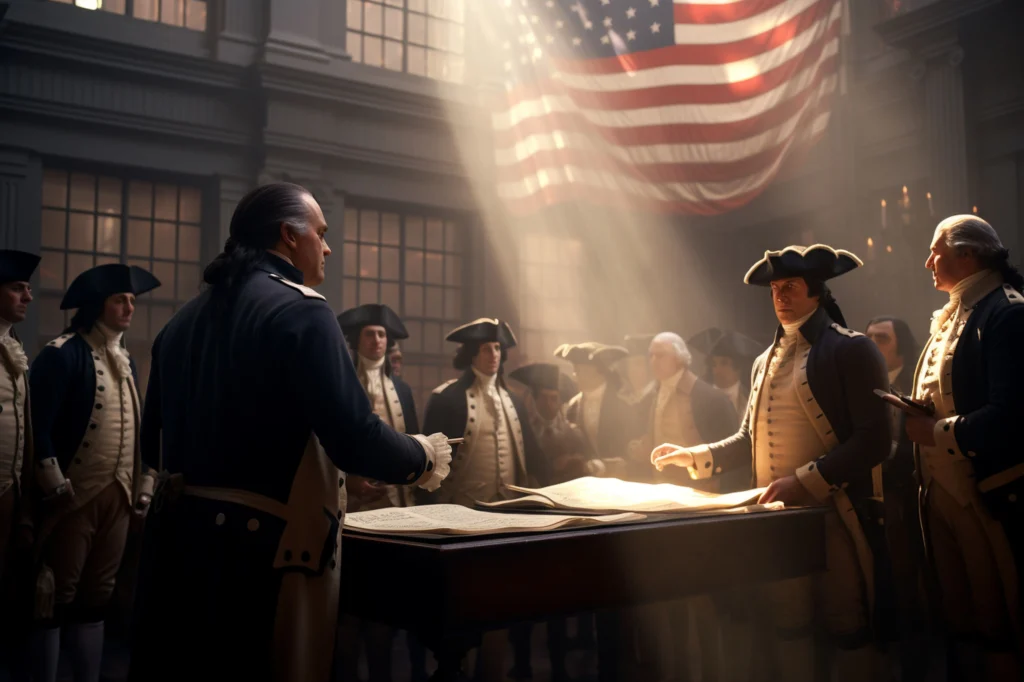
What is the Monroe Doctrine?
The Monroe Doctrine is one of the most important foreign policy statements in U.S. history. It was introduced by President James Monroe in his annual message to Congress on December 2, 1823. The Doctrine had two main points:
- Opposition to European Colonization: Monroe declared that the Western Hemisphere was no longer open to European colonization. This meant that any attempts by European powers to establish colonies or interfere with independent nations in the Americas would be viewed as acts of aggression.
- Non-Interference in European Affairs: While the U.S. would protect the Americas from European interference, Monroe also stated that the U.S. would not involve itself in European conflicts or interfere with existing European colonies.
At its core, the Monroe Doctrine was a bold statement that positioned the United States as the dominant power in the Western Hemisphere. This set the stage for the U.S. to exert its influence over the Americas, while also distancing itself from European power struggles.
The Historical Context of the Monroe Doctrine
To truly understand the significance of the Monroe Doctrine, you need to consider the political climate of the time. The early 19th century was marked by the fallout from the Napoleonic Wars, which had left European powers weakened and focused on their own recovery. Meanwhile, in the Americas, countries like Mexico, Argentina, and Chile were in the midst of fighting for independence from European colonial rulers, primarily Spain.
European Powers and Their Influence in the Americas
Before the Monroe Doctrine was issued, European nations, particularly Spain and Portugal, had long held colonies in the Americas. Even after the Napoleonic Wars, some European countries had ambitions to reassert their control over their former colonies or to establish new colonies in the Western Hemisphere. This was a time when European powers still saw the Americas as fertile ground for expansion.
Meanwhile, the newly-formed United States, having recently secured its own independence from Great Britain, was particularly sensitive to any threats of colonization close to home. Monroe, along with his advisors, recognized that the U.S. could not afford to allow European nations to reassert their influence in the Americas. It could undermine the newly formed republics in Latin America and, potentially, pose a threat to U.S. security.
Latin American Independence Movements
At the same time, countries in Latin America were fighting for their own independence from Spain. These nations were struggling to throw off the yoke of colonial rule, and many in the U.S. saw these movements as a natural extension of their own revolutionary struggle. Monroe understood that the success of these independence movements was crucial to maintaining stability in the region. In this context, the Monroe Doctrine was not only a defensive strategy for the U.S. but also a way of protecting the hard-won independence of nations in the Americas.

The Monroe Doctrine’s Impact on U.S. Foreign Policy
The Monroe Doctrine didn’t just shape U.S. foreign policy for the moment; it set the tone for how the United States would approach international relations in the Western Hemisphere for generations to come. Over the course of the 19th and early 20th centuries, the U.S. used the Doctrine to justify a number of interventions in Latin America and the Caribbean.
The Roosevelt Corollary (1904)
While the Monroe Doctrine was effective in asserting U.S. dominance in the Western Hemisphere, it was not always clear how far the U.S. would go to enforce it. In the early 20th century, President Theodore Roosevelt expanded on the Monroe Doctrine with what became known as the Roosevelt Corollary. Roosevelt declared that the U.S. would intervene in Latin American countries if European powers attempted to assert influence in the region, particularly in situations where nations were unstable or unable to pay their debts.
This corollary was seen as a way to protect the Americas from European influence while also maintaining the stability of the region through U.S. intervention. While this was intended to protect the region, it often led to U.S. involvement in Latin American politics and military affairs. It wasn’t long before the U.S. was using the Roosevelt Corollary as a justification for interventions in countries like Cuba, Panama, and Nicaragua.
The Good Neighbor Policy (1933)
By the time Franklin D. Roosevelt became president in 1933, U.S. foreign policy was beginning to shift. Roosevelt introduced the Good Neighbor Policy, which sought to improve relations with Latin American countries by emphasizing mutual respect, non-intervention, and non-interference in the internal affairs of sovereign nations. This policy marked a departure from earlier interventionist approaches, but it still adhered to the principles of the Monroe Doctrine, positioning the U.S. as the protector of the region.
Modern U.S. Foreign Policy
The Monroe Doctrine continued to play a role in shaping U.S. foreign policy throughout the 20th and into the 21st centuries. Even as the global landscape shifted and the U.S. became involved in international conflicts far beyond the Americas, the Doctrine’s principles still influenced U.S. actions in the Western Hemisphere. From the Cuban Missile Crisis in 1962 to the U.S.’s war on drugs in the late 20th century, the idea of protecting the Americas from external threats remained a central theme in U.S. foreign policy.
Today, the Monroe Doctrine’s legacy can still be seen in U.S. relations with Latin American countries, particularly in the context of economic cooperation, military presence, and trade agreements. While the world has changed, the Monroe Doctrine’s foundational belief that the Americas should remain free from European interference continues to shape U.S. foreign policy.

Criticisms and Controversies Surrounding the Monroe Doctrine
The Monroe Doctrine has faced significant criticism, particularly from those who argue that it justified U.S. imperialism in the region. Critics claim that the U.S. often used the Doctrine as a pretext to interfere in the domestic affairs of Latin American countries, undermining their sovereignty and furthering U.S. interests at their expense.
Imperialism and Intervention
Many argue that the U.S., through the Monroe Doctrine, became a hegemonic power in the Americas, using the guise of protecting the region to justify military and economic interventions. For instance, the U.S. intervened in Panama to construct the Panama Canal, an action that, while beneficial to global trade, was also seen as an assertion of U.S. dominance over a small nation. Similarly, U.S. interventions in countries like Nicaragua and Cuba in the 20th century raised concerns about imperialism.
Sovereignty Issues
Latin American countries have long criticized the Monroe Doctrine for undermining their sovereignty. The U.S. was often seen as making decisions about their futures without their consent. Many of these nations felt that their ability to make independent choices was severely limited by the Doctrine’s assertion that the U.S. had the right to intervene when it saw fit.
The Monroe Doctrine in the 21st Century: Relevance and Legacy
Though it has evolved over the years, the Monroe Doctrine still carries weight in today’s geopolitical environment. The emergence of new global players, particularly China, has introduced new challenges to U.S. dominance in the Americas. China’s growing economic influence in Latin America is seen by some as a challenge to the principles laid out in the Monroe Doctrine. The U.S. has responded to this by increasing its diplomatic and economic efforts in the region to maintain its influence.
China’s Growing Influence in Latin America
In recent years, China has invested heavily in Latin America, offering loans, trade agreements, and infrastructure development. This has raised concerns in the U.S. about China’s long-term intentions in the region and its potential to challenge U.S. dominance. While the Monroe Doctrine has largely been relegated to history, its core principle of U.S. control over the Americas is still being tested by the rise of China as a global economic power.
Conclusion: The Enduring Legacy of the Monroe Doctrine
The Monroe Doctrine was a pivotal moment in U.S. foreign policy, one that established the United States as the dominant power in the Western Hemisphere. From its initial goal of preventing European interference in the Americas to its later use as a justification for U.S. interventionism, the Doctrine has shaped the trajectory of U.S. foreign policy for nearly two centuries. While it has been criticized for its imperialistic overtones, it has also provided stability in a region that has often faced external threats. Even in the 21st century, the Monroe Doctrine’s influence continues to shape U.S. actions and interactions with Latin American nations. As global dynamics continue to shift, it will be fascinating to see how this historical principle evolves in the face of new geopolitical challenges.
What are your thoughts on the Monroe Doctrine and its impact on U.S. foreign policy today? How do you think it continues to shape U.S. relations with Latin America? Share your insights below!
Table of Contents
Venezuelan Oil: A Strategic Asset for the United States – trendsfocus