
If you’ve ever watched the Army vs Navy game, you already know it feels different. The uniforms, the pageantry, the silence before kickoff, the weight behind every snap—this isn’t just another college football matchup. It’s a game that carries history, pride, and identity. When you tune in, you’re not only watching athletes compete; you’re witnessing two institutions, two ways of life, and generations of tradition collide on the same field.
This Army vs Navy Preview isn’t about flashy rankings or playoff implications. It’s about understanding why this rivalry is almost always decided by inches, discipline, and late-game execution—and which side may have the edge this year. If you want more than surface-level predictions, you’re in the right place.

The History Behind the Army vs Navy Rivalry
A Rivalry Rooted in Tradition, Not Trends
The Army–Navy rivalry stands apart because it has never chased trends. While college football evolved toward spread offenses and explosive scoring, these two programs stayed committed to discipline, structure, and fundamentals. That’s why you often see outcomes that defy modern expectations.
When you look back across decades, one pattern becomes clear: this rivalry refuses to produce blowouts consistently. Records rarely matter. Rankings rarely matter. Momentum often disappears the moment the ball is kicked.
You’re watching a game where preparation, respect, and emotional control carry as much weight as raw talent.
Why History Still Shapes Today’s Matchups
Even if you’re focused on the current season, the past still matters here. Players grow up knowing this game defines their careers. Coaches plan years ahead for it. That shared understanding keeps margins tight and pressure high.
Key historical themes include:
- Games decided by one possession
- Long stretches of defensive dominance
- Low scoring compared to national averages
- Late fourth-quarter momentum swings
History doesn’t predict the winner—but it explains why the game stays close.
Why the Army vs Navy Game Is Always So Close
Similar Styles Cancel Each Other Out
One of the biggest reasons this rivalry stays tight is simple: both teams want the same thing. They aim to control the clock, limit mistakes, and force the opponent to execute perfectly.
You rarely see:
- High passing volume
- Quick scoring drives
- Wide-open offensive chaos
Instead, you see methodical drives, limited possessions, and constant pressure on execution.
Discipline Over Star Power
In this matchup, discipline replaces star power. You don’t win by improvising—you win by doing your job better than the other side for four quarters.
Games often hinge on:
- Turnover margin
- Field position
- Penalties
- Red-zone efficiency
When possessions are limited, one mistake can decide everything. That’s why even a slight edge matters so much.
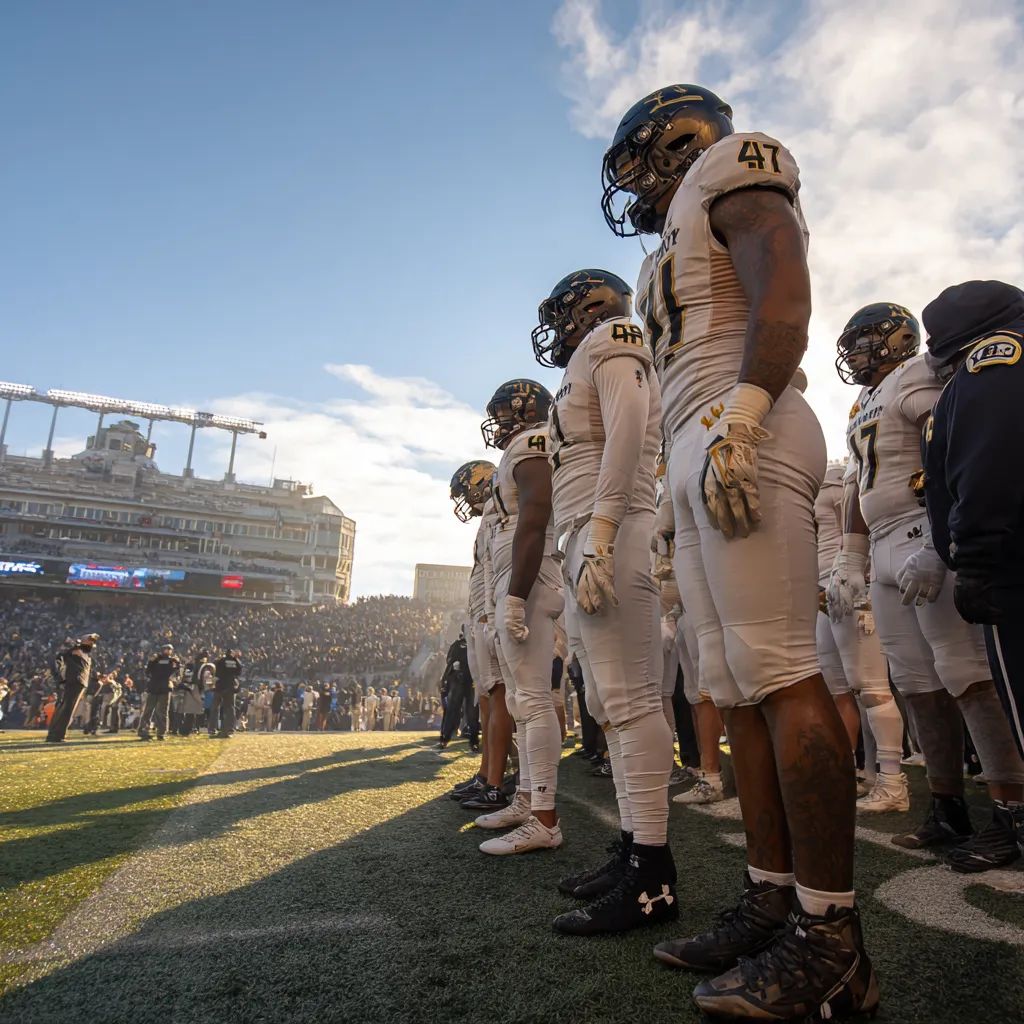
Army Team Breakdown – Strengths and Challenges
Army’s Offensive Identity
When you watch Army on offense, you’re watching patience in motion. Their approach isn’t designed to overwhelm you quickly. It’s designed to test your focus over time.
You’ll notice:
- Heavy reliance on the run
- Long, time-consuming drives
- Minimal wasted movement
Army wants you to defend every inch of the field, snap after snap. If you lose discipline for even a moment, they exploit it.
Where Army Can Struggle
Army’s biggest challenge appears when they fall behind early. Their system works best when they dictate pace. Playing catch-up compresses their margin for error.
Key concerns include:
- Limited explosive scoring
- Pressure when forced into obvious passing situations
- Reduced flexibility late if trailing
If Army controls the tempo, they’re dangerous. If they don’t, the margin narrows quickly.
Navy Team Breakdown – Strengths and Challenges
Navy’s Offensive Versatility
Navy brings a slightly different look. While still grounded in structure, they often show more variation. You’ll see shifts in tempo, misdirection, and moments of controlled aggression.
Their strengths include:
- Ability to change pace
- Strong situational execution
- Comfort in close, late-game scenarios
This versatility can be crucial in a rivalry where adjustments matter as much as preparation.
Defensive Keys for Navy
Defensively, Navy focuses on disruption rather than domination. They aim to force difficult decisions, create uncomfortable angles, and capitalize on mistakes.
You should watch for:
- Early down pressure
- Forcing long-yardage situations
- Special teams influence on field position
If Navy disrupts Army’s rhythm early, they gain a meaningful edge.
Key Matchups That Will Decide the Army vs Navy Game
Army Rushing vs Navy Run Defense
This is the heartbeat of the game. If Army controls the ground early, they control the clock—and the tone.
Navy Playmaking vs Army Discipline
Navy’s ability to generate occasional explosive moments tests Army’s defensive patience. One lapse can flip momentum.
Coaching Decisions Under Pressure
This rivalry magnifies coaching choices. Fourth-down calls, timeouts, and substitutions matter more here than in most games.
Key deciding factors include:
- First-quarter execution
- Turnover avoidance
- Red-zone efficiency
- Fourth-quarter clock management

Who Has the Edge This Year?
Momentum and Form
When evaluating who holds the edge, you must look beyond records. Confidence, recent execution, and adaptability all matter.
This year, Navy appears slightly more flexible in how they attack. That flexibility can become decisive when adjustments are needed mid-game.
The Intangibles That Matter Most
Rivalry games punish emotional mistakes. The team that stays calm, patient, and precise usually survives.
Key intangibles include:
- Response to early adversity
- Experience in close finishes
- Mental resilience late in the game
That’s where Navy may hold a narrow advantage.
Army vs Navy Preview – Final Prediction
This Army vs Navy Preview points toward a familiar script: a physical, low-scoring contest decided in the final quarter. You should expect long drives, limited possessions, and constant tension.
The edge leans slightly toward Navy due to:
- Greater offensive adaptability
- Strong situational execution
- Comfort adjusting late
However, the margin remains razor-thin. One turnover or penalty could flip everything.
Why the Army vs Navy Game Still Matters in Modern College Football
In a sport increasingly driven by speed and spectacle, this game reminds you why football began in the first place. It’s about execution, trust, and collective effort.
You don’t watch this game for fireworks. You watch it for meaning.
And that’s why it still matters.
FAQs – Army vs Navy Preview
Why is the Army vs Navy game always close?
Because both teams prioritize discipline, clock control, and mistake-free football, which naturally limits scoring and possessions.
Who usually wins the Army vs Navy game?
The rivalry shifts in cycles. Long-term trends matter less than execution on the day.
Does ranking matter in the Army vs Navy rivalry?
No. History shows rankings rarely influence outcomes in this matchup.
What should you watch for in this Army vs Navy preview?
Turnovers, time of possession, red-zone efficiency, and late-game decision-making.
Conclusion – One Game, Endless Meaning
When you watch Army vs Navy, you’re not just watching football—you’re watching commitment, tradition, and discipline collide under pressure. This rivalry refuses to be predictable, and that’s exactly why it endures.
If you value games decided by preparation and heart rather than hype, this is the matchup for you.
What’s your prediction?
Share your thoughts, debate the edge, and stay connected—because games like this deserve conversation long after the final whistle.
Table of Contents
T.J. Watt Hospitalized: What Happened? – trendsfocus
Army vs. Navy Game 2025 prediction, pick, odds, spread, where to watch live – CBS Sports