
A Cosmic Surprise You Never Knew You Needed
Have you ever stepped outside on a quiet night and stared at the Moon, wondering what else might be circling our planet? It’s a calming, almost ancient feeling — one that connects you to every human who’s ever looked up at that same glowing disc. But what if you learned that Earth doesn’t just have one moon right now?
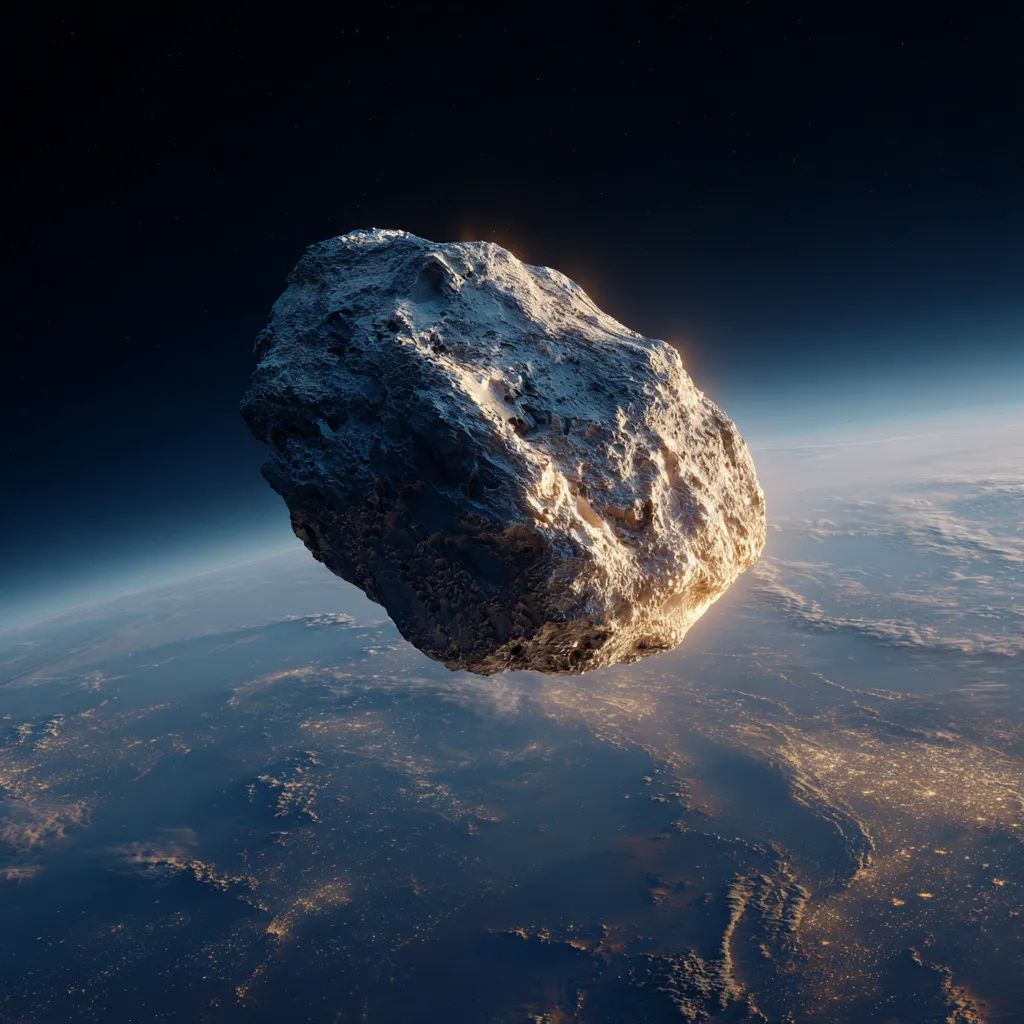
That’s right. Somewhere far beyond the clouds, a small asteroid called Asteroid 2025 PN7 has been quietly sharing Earth’s orbit around the Sun. It isn’t a second Moon in the traditional sense — it doesn’t orbit Earth directly — but its movement keeps it close enough to earn that nickname. And here’s the fascinating part: scientists predict it’ll remain near us until the year 2083.
So, for the rest of your lifetime (and possibly your children’s), Earth technically has two moons. Intriguing, right? Let’s explore how this tiny space rock managed to become our planet’s silent companion.
What Exactly Is Asteroid 2025 PN7?
You might picture an asteroid as a jagged chunk of rock drifting randomly through space. But Asteroid 2025 PN7 isn’t just wandering. It’s what astronomers call a “quasi-satellite.”
That means it orbits the Sun on a path that almost mirrors Earth’s. From our point of view, it seems to hover near us — looping slightly ahead and then slightly behind, like a dance partner who never quite leaves your side.
Here’s what makes it even more fascinating:
- It’s around 18 to 36 meters wide — roughly the size of a small building.
- It stays millions of kilometers away, far beyond the Moon’s orbit.
- It completes one loop around the Sun in about the same time as Earth — one year.
- And according to NASA’s tracking, it’s been tagging along for decades without anyone realizing.
You can’t see it with the naked eye, but telescopes can pick it up — a faint, fast-moving speck of reflected sunlight.
The Science Behind Its Orbit: How Does a Quasi-Moon Work?
To understand how 2025 PN7 pulls off this cosmic balancing act, imagine Earth and the Sun as dancers on a massive cosmic stage. Gravity is the invisible rhythm that keeps them moving in harmony.
Most asteroids zip past us, caught in their own orbits. But a few — like 2025 PN7 — slip into a delicate balance where Earth’s gravity and the Sun’s pull almost cancel out. That balance traps the asteroid in a loop that keeps it near our planet’s orbit.
Scientists call this special motion a quasi-orbit, because it’s not truly around Earth, but it looks that way from our viewpoint. The asteroid appears to swirl slowly around our planet, though it’s really orbiting the Sun.
Why It’ll Stay Until 2083
Researchers have simulated the asteroid’s path decades into the future. Their models show that unless some external force — say, another asteroid’s gravitational nudge — interferes, 2025 PN7 will remain in its cozy orbit until roughly 2083.
After that, small shifts in the gravitational field will likely send it drifting away. So, for about sixty more years, this little rock will stay near Earth — a quiet neighbor you didn’t know existed.
Why Asteroid 2025 PN7 Matters to Science
You might wonder: why should you care about a rock millions of kilometers away?
Well, this discovery does more than add a fun fact to your trivia list. It gives astronomers a rare chance to study near-Earth objects up close without leaving our own neighborhood.
1. It Helps Scientists Understand Near-Earth Objects (NEOs)
Near-Earth asteroids are important because they help experts predict future asteroid behavior. By studying 2025 PN7’s orbit, researchers can refine their models for how gravity, sunlight, and space dust affect smaller objects over time.
Understanding these patterns is key to tracking potential hazards — the ones that could, someday, head directly toward Earth.
2. It Offers a Potential Future Mission Target
Because 2025 PN7 travels so close to our planet, it could serve as a future exploration target for robotic missions. Scientists could test mining technology, sampling tools, or orbital mechanics there before venturing deeper into space.
3. It Strengthens Planetary Defense Efforts
Learning how a quasi-moon like this moves helps improve our planetary defense systems. The better we can predict how asteroids behave, the faster we can react to any real threats in the future.
So, in a way, this little rock contributes directly to keeping Earth safe.
Myths, Media Buzz, and the Real Story Behind “Earth’s Second Moon”
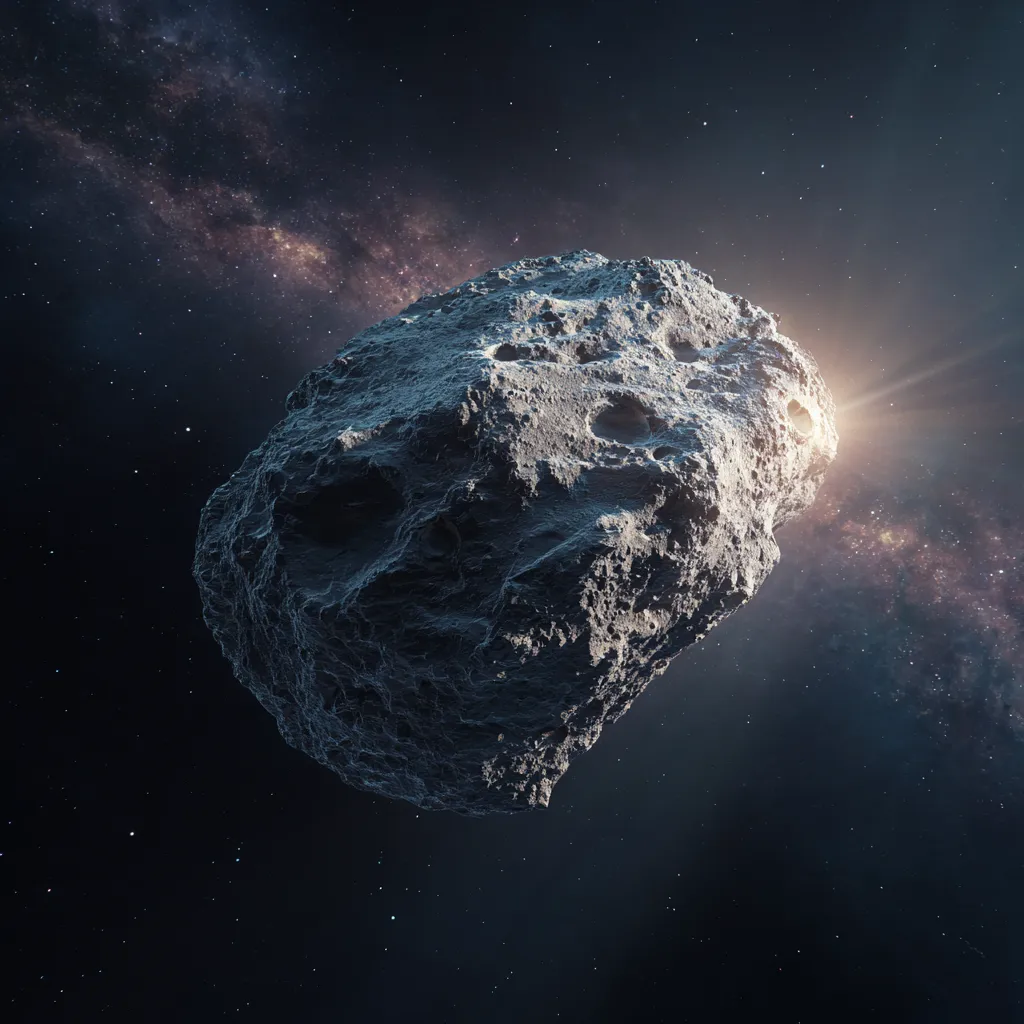
When news about Asteroid 2025 PN7 first broke, the internet went wild with claims that “Earth now has two moons.” While that headline isn’t entirely wrong, it’s a bit misleading. Let’s clear up a few misunderstandings.
Myth 1: It Orbits Earth Like the Moon Does
Nope. The asteroid doesn’t orbit Earth directly — it orbits the Sun alongside us. From a telescope’s perspective, it seems to loop around Earth, but it’s actually maintaining a separate solar orbit.
Myth 2: It’s Dangerous or Could Collide with Earth
Definitely not. The asteroid’s path has been carefully analyzed, and it stays safely distant — millions of kilometers away. There’s zero collision risk for the foreseeable future.
Myth 3: It’s a Permanent Moon
The “second moon” title is temporary. Once gravitational shifts break its delicate balance, 2025 PN7 will drift off. That’s why scientists estimate it’ll remain only until 2083.
The Emotional Side of the Discovery
Think about this for a second: humanity has mapped the oceans, climbed the highest mountains, and sent machines to Mars. Yet here, right beside us, was a companion we didn’t even notice until recently.
That’s the beauty of discovery. It reminds you that space isn’t empty — it’s full of mysteries waiting to surprise you.
Asteroid 2025 PN7 teaches a humble lesson: even after centuries of exploration, the universe still has ways of making us wonder. And perhaps that’s what keeps astronomy alive — the constant sense that something extraordinary might be hiding in plain sight.
Key Facts About Asteroid 2025 PN7
| Feature | Detail |
|---|---|
| Official Name | Asteroid 2025 PN7 |
| Type | Quasi-satellite / Near-Earth Object |
| Estimated Size | 18–36 meters |
| Distance from Earth | Several million kilometers |
| Orbital Period | About 1 year (Sun-centric) |
| Discovery Year | 2025 |
| Expected Departure | Around 2083 |
| Threat Level | None |
| Visibility | Only by telescope |
| Scientific Interest | High — valuable for NEO and orbital studies |
Frequently Asked Questions About Asteroid 2025 PN7
1. Is Asteroid 2025 PN7 really Earth’s second moon?
Yes — in a temporary sense. It doesn’t orbit Earth directly, but it moves in sync with our planet’s orbit around the Sun. So from our perspective, it behaves like a distant companion.
2. Can you see it with the naked eye?
Unfortunately not. It’s far too small and dim. You’d need a powerful telescope to spot it, even on a clear night.
3. Will it ever come closer to Earth?
No. Its path is stable and keeps it safely distant. It’s what scientists call a non-threatening near-Earth object.
4. Why does it stay only until 2083?
Over decades, gravitational tugs from the Sun and other planets slightly alter its orbit. Those shifts will eventually pull it out of alignment with Earth’s path.
5. Why do scientists find Asteroid 2025 PN7 so valuable?
Because it acts like a natural lab — allowing scientists to study orbital mechanics, solar influences, and NEO behavior without launching a deep-space mission.
How This Discovery Impacts You (Even If You’re Not an Astronomer)
You don’t have to be a scientist to feel connected to this event. It’s a reminder that the sky above you isn’t static — it’s alive, dynamic, and full of motion.
When you learn about discoveries like this, you’re participating in a shared moment of wonder — a bridge between human curiosity and cosmic reality. Knowing that a small rock is silently following us through the void gives everyday life a subtle sense of awe.
Maybe the next time you look at the Moon, you’ll remember there’s another traveler nearby — unseen, yet part of our planet’s story for the next sixty years.
Conclusion — A Universe That Still Surprises You
Asteroid 2025 PN7 may not be large or bright, but it represents something profound: your world is never as ordinary as it seems. While you go about your days, this tiny rock drifts alongside Earth, quietly keeping us company until 2083.
It’s a gentle cosmic reminder that exploration isn’t finished — there are always new discoveries waiting, even in familiar skies.
So the next time you look up at night, think of Asteroid 2025 PN7 — your planet’s temporary second moon — and remember how much wonder still surrounds you.
Call to Action
If you enjoyed discovering Earth’s secret companion, share this story with your friends or followers. Encourage them to step outside tonight, look up at the Moon, and imagine the hidden traveler moving with us through space.
Stay curious, keep watching the stars, and let the universe surprise you — because somewhere out there, another discovery like Asteroid 2025 PN7 is already waiting for you to notice.
Table of Contents
https://www.yahoo.com/news/articles/nasa-confirms-earth-now-two-213956357.html
https://www.trendsfocus.com/from-viking-2-major-mars-exploits-since11-3-76/