
When you stand before the White House, you’re not just looking at a mansion — you’re witnessing the living heart of American history. Behind its neoclassical façade lies a story of endurance, reinvention, and quiet innovation. Every marble column, hidden passage, and restored room reveals an untold chapter in a structure that has mirrored your nation’s triumphs and trials for more than two centuries.
In this journey through architectural secrets and historical transformations, you’ll uncover how The White House evolved from a burned shell to a high-security symbol of democracy — and how it continues to adapt in the twenty-first century.
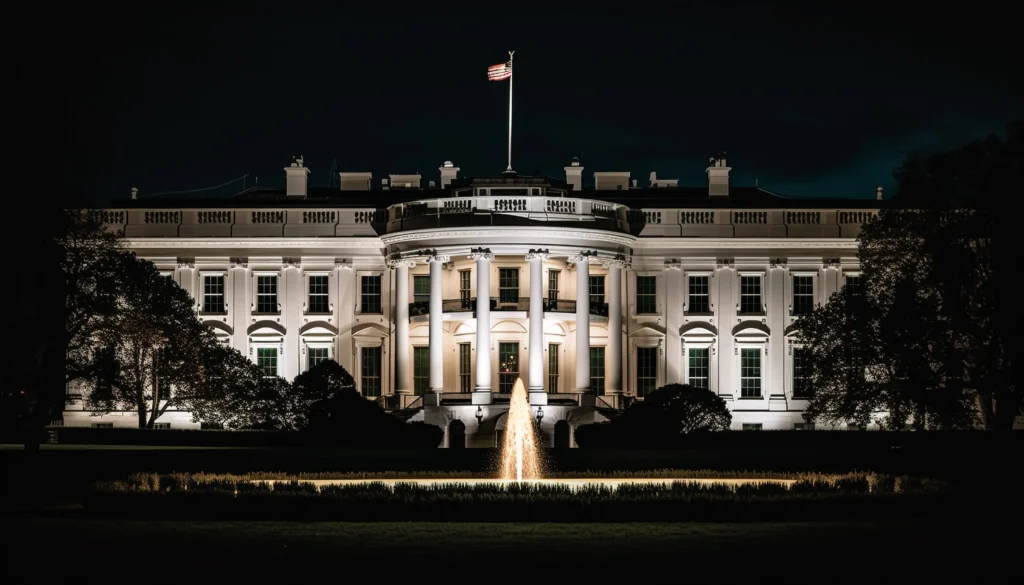
The Foundation of a Nation — The Birth of The White House
Imagine the 1790s — a new nation finding its footing, determined to project strength and unity. That vision guided George Washington when he approved the creation of the President’s House. You might find it surprising that Washington never lived there himself, yet his vision shaped everything about it.
James Hoban’s Design and Early Construction
The architect, James Hoban, an Irish immigrant, won a national design competition in 1792. His concept drew inspiration from Dublin’s Leinster House, wrapped in neoclassical symmetry — an architectural language of power and restraint. Construction began soon after, using materials sourced from local quarries and enslaved craftsmen whose skill shaped its sandstone exterior.
By 1800, when President John Adams moved in, the mansion was both majestic and unfinished. The interiors were sparse, the grounds unkempt, yet it stood as the most ambitious home in the new republic.
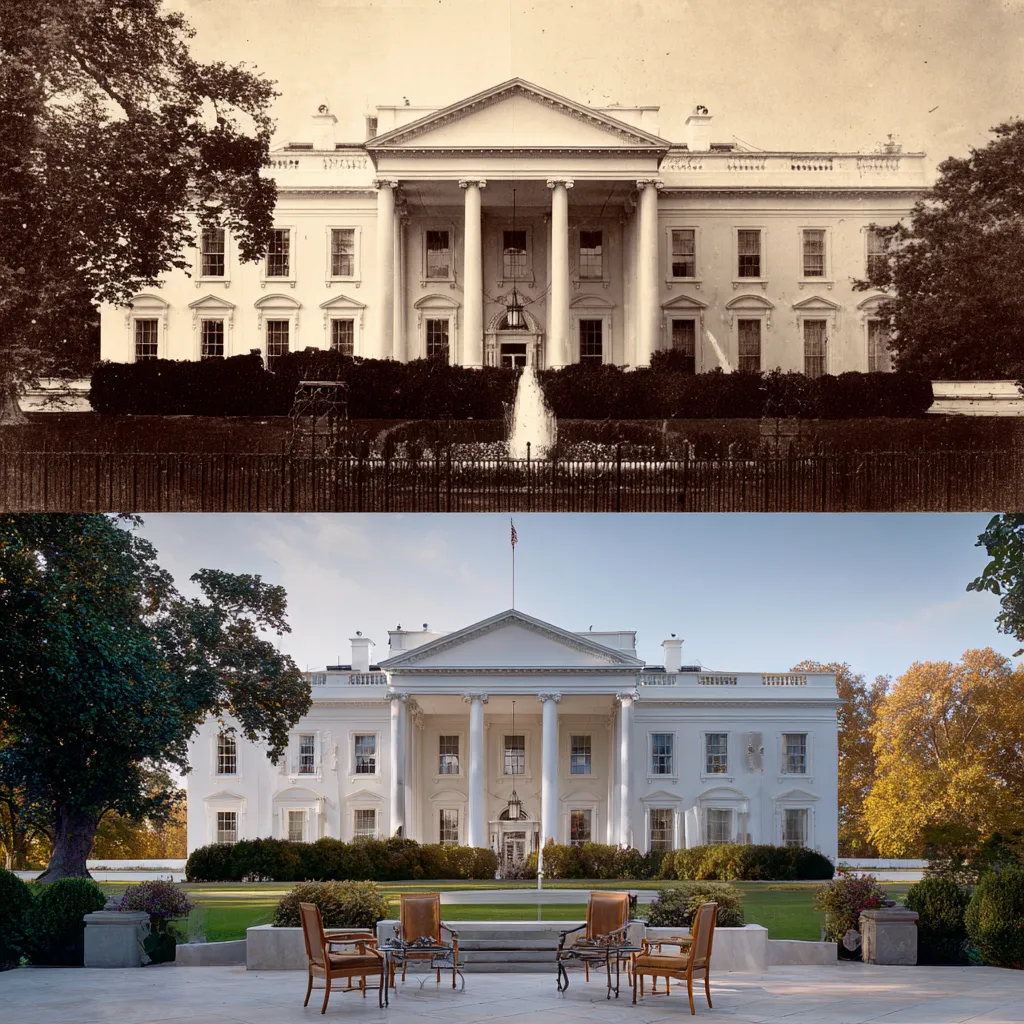
Fires, Wars, and Rebirth — The White House Through Turbulent Times
The Fire of 1814: Destruction and Determination
In 1814, British troops set fire to the White House during the War of 1812. Flames devoured the interiors, leaving only the exterior walls standing. As you walk through today’s corridors, you might still sense echoes of that night — the smell of smoke, the frantic efforts of First Lady Dolley Madison rescuing George Washington’s portrait from the blaze.
When the war ended, Hoban was called back to rebuild. The reconstruction maintained the original design but introduced subtle refinements — sturdier materials, stronger walls, and a renewed determination that reflected the country’s resilience.
The Truman Renovation: Reinventing from Within
Fast-forward to the late 1940s. You’re standing in a structure that’s literally falling apart. The floors creak dangerously, and chandeliers sway under their own weight. Engineers declared the interior unsafe. President Harry Truman faced a painful truth — the White House had to be gutted and rebuilt from the inside out.
Between 1948 and 1952, workers preserved the historic exterior while constructing a steel-frame interior, giving the mansion modern structural integrity. You might say Truman’s White House was reborn — the same skin, but a new skeleton beneath.
For preservationists today, this project remains a benchmark: a flawless balance of history and modernization.
Hidden Rooms and Secret Passages — Inside the White House Mysteries
Every visitor sees the public elegance — the chandeliers, the portraits, the grand staircases. But if you could peel back the layers, you’d find a network of secret rooms and tunnels that tell a different story.
Subterranean Secrets and Escape Routes
Beneath the East Wing lies a complex of secure corridors and bunkers, expanded during World War II and fortified during the Cold War. These spaces are not open to the public — their purpose is continuity of government and national safety. Some connect to external escape routes and security hubs designed for emergencies.
For national security reasons, details are classified, but you can imagine the sophistication — high-tech monitoring systems embedded beneath centuries-old architecture.
Rooms Few Have Seen
Among the mansion’s lesser-known areas are rooms that hold both historical and strategic importance:
- The Situation Room, a nerve center for crisis management.
- The Map Room, once used by Roosevelt to follow war movements.
- The Chocolate Shop, a private kitchen-turned-office tucked away behind ceremonial halls.
Then there’s the Lincoln Bedroom, once an office, now a symbolic space preserved in Victorian splendor — a time capsule within a modern presidency.
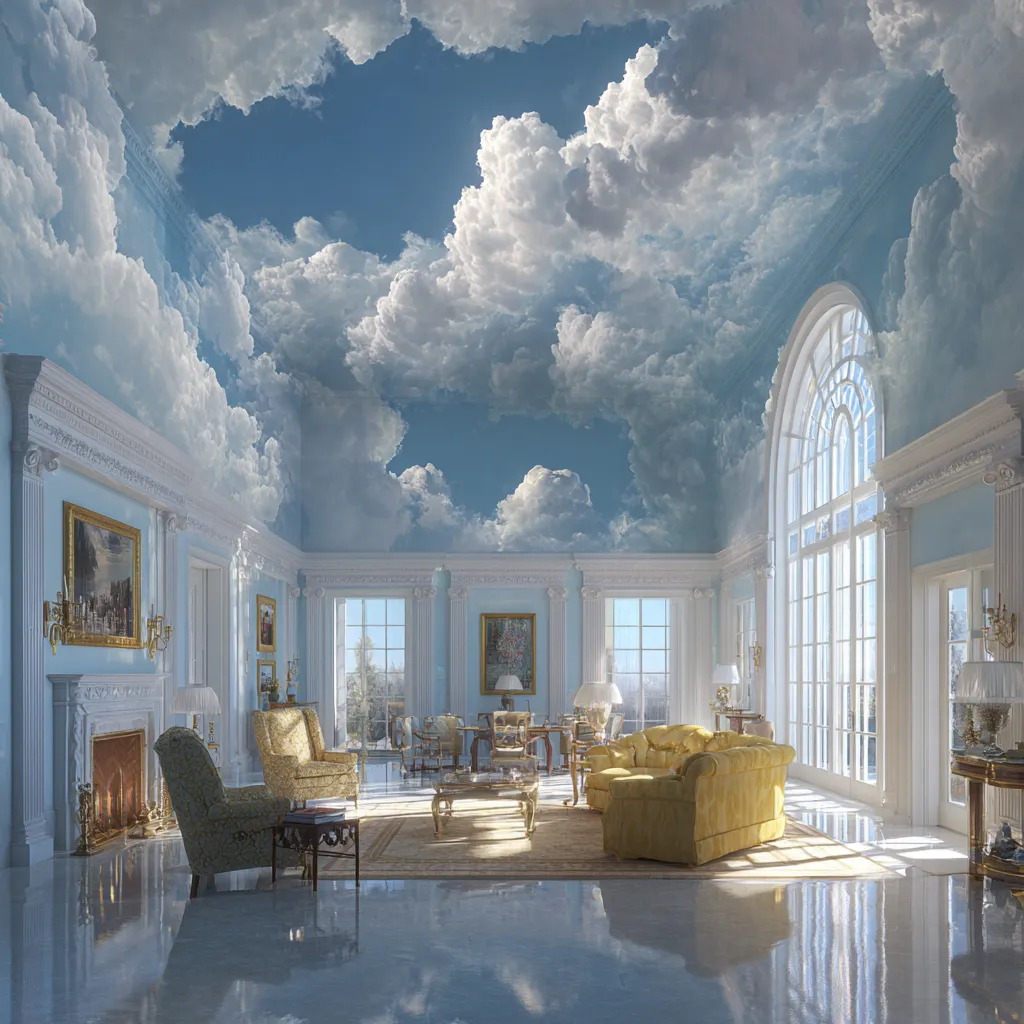
Modern Transformations — The White House in the 21st Century
You might think that modernization would clash with tradition, but the White House’s latest transformations show otherwise. Behind the historical exterior lies a highly sophisticated network of sustainability, technology, and security innovation.
Sustainability and Smart Systems
Over the past decade, the White House has adopted eco-conscious upgrades:
- Energy-efficient heating and cooling systems that minimize environmental impact.
- LED lighting throughout the residence, subtly replacing historic fixtures without altering their appearance.
- Solar panels discreetly installed on the roof — invisible from the street but crucial for energy independence.
These changes ensure that the “People’s House” continues to serve not only as a symbol of leadership but also as an example of responsible stewardship.
First Families and Interior Redesigns
Every president leaves a mark, and you can trace those imprints through décor. Jackie Kennedy’s 1961 restoration reintroduced historical authenticity, filling rooms with American art and antiques. Michelle Obama’s updates brought a modern elegance — clean lines, bold colors, and inclusive American art.
Each administration’s interior designer faces the same challenge you might face in your own home: preserving meaning while adapting to change.
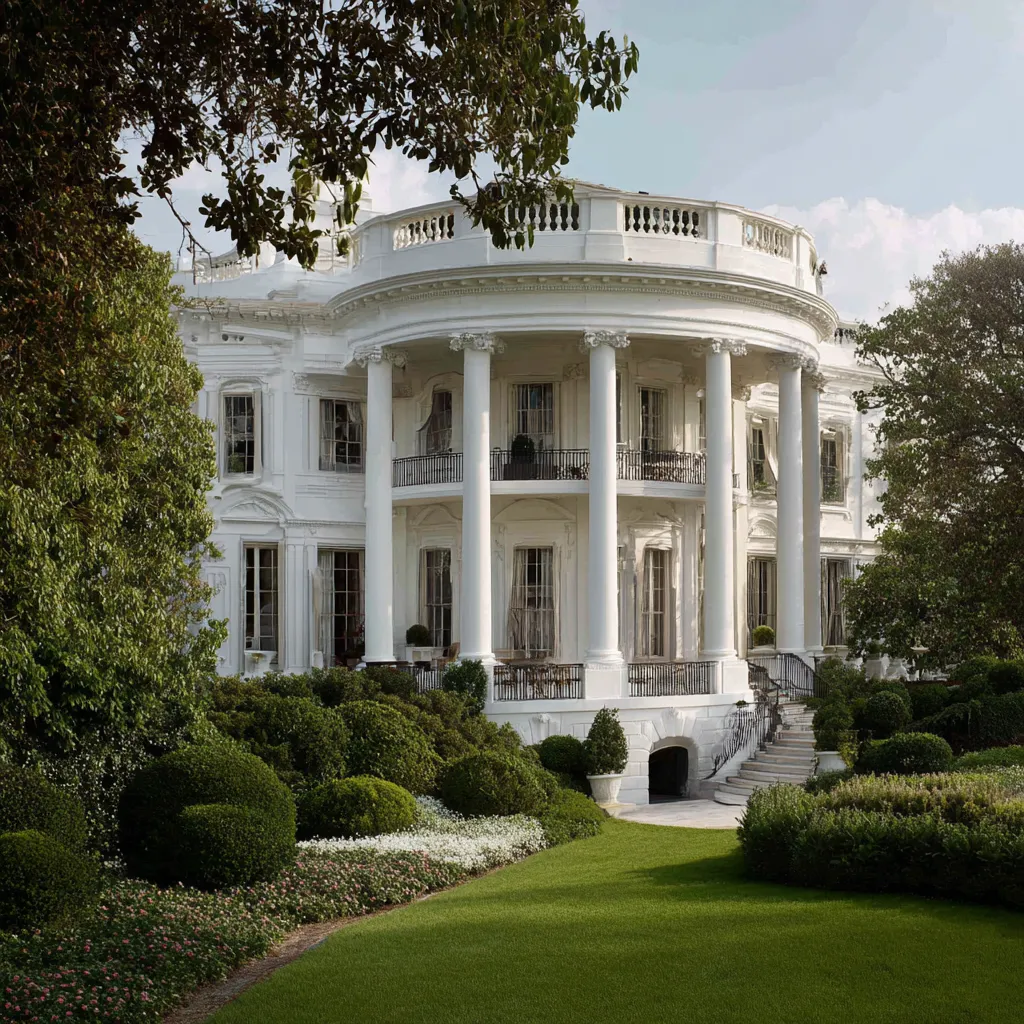
Symbolism in Structure — The Architectural Language of Power
The architecture of the White House is more than aesthetic — it’s symbolic communication. The grandeur you see isn’t merely decorative; it’s a carefully designed message to the world.
Neoclassical Grandeur and Democratic Ideals
When you study the White House exterior — the columns, the pediments, the balance — you’re seeing a dialogue between ancient Rome and the American republic. Neoclassicism, with its symmetry and restraint, conveys stability and moral virtue.
It’s why the White House looks timeless — because it was built to embody principles rather than trends.
Hidden Symbolism in Layout and Design
Inside, the floor plan reflects ceremony and order. The East Wing serves the First Lady’s offices and public events, while the West Wing houses the President’s staff and the Oval Office — the operational heart of executive power.
Even the orientation matters: the north façade for formal state entries, the south for private leisure. Every element aligns with purpose — a physical representation of balance between accessibility and authority.
The White House Beyond Its Walls — Cultural and Global Influence
When you think of the White House, you’re not just thinking of an address — you’re picturing a global icon. Its architecture has inspired countless buildings worldwide, from replicas in Europe to presidential palaces in Africa and Asia.
In cinema, literature, and art, it stands as shorthand for American leadership — featured in thousands of films, from political dramas to historical documentaries.
Even architects abroad have mirrored its neoclassical design as a tribute to democratic ideals. In that way, the White House transcends architecture — it becomes a cultural export.
Frequently Asked Questions About The White House’s Architecture
How many times has The White House been renovated?
The White House has undergone six major renovations, the most significant being the Truman Reconstruction (1948–1952), which replaced the failing interior with a steel framework.
Are there really secret tunnels under The White House?
Yes, though their full details remain classified. Several secure corridors exist for emergency evacuation and national security operations.
Who was the original architect of The White House?
James Hoban, an Irish-born designer, created the neoclassical plan that still defines the building’s core identity.
What architectural style is The White House?
The White House blends neoclassical, Georgian, and Palladian styles — a deliberate fusion representing European refinement and American ideals.
The White House Today — Ongoing Preservation and Modernization (2024–2025)
If you could walk through the White House today, you’d notice subtle changes — not in grandeur, but in maintenance precision. The White House Historical Association and the National Park Service have continued a careful program of restoration to preserve the mansion for future generations.
Recent Updates and Restoration Efforts
- Exterior Preservation (2024): Masonry and sandstone surfaces underwent cleaning and repair to counter weather erosion.
- HVAC Modernization (2025): A state-of-the-art climate control system was installed to improve efficiency and protect artworks and documents.
- Security Upgrades: New surveillance systems and reinforced glass have been added discreetly to enhance safety while maintaining historical authenticity.
- Grounds Renewal: Landscape architects have refreshed the Rose Garden and South Lawn irrigation systems for sustainability.
These efforts prove that even as politics shift and administrations change, the structure itself remains a constant — resilient, evolving, and dignified.
Conclusion — A Living Monument of Transformation
When you look at the White House today, you’re seeing more than history. You’re seeing resilience — the architecture of endurance. From fires and wars to digital-age renovations, this building reflects the story of a nation that continually rebuilds itself while holding fast to its ideals.
You can sense it in the marble floors that survived reconstruction, in the quiet hum of modern technology beneath antique ceilings, and in the contrast between what’s seen and what’s hidden.
The White House isn’t just a symbol of leadership. It’s proof that a nation’s soul can live within walls — and still change with the times.
Table of Contents
https://www.whitehousehistory.org/
A Republic Against Kings: The Legacy of 1776 in American Politics – trendsfocus