
Imagine an animal so tiny that you could barely see it without a microscope, yet capable of surviving conditions that would kill almost every other living creature. It can endure extreme cold, intense heat, radiation, dehydration, and even exposure to the vacuum of space under certain conditions.
This remarkable creature is the tardigrade, commonly known as the water bear. Despite measuring less than a millimeter in most cases, tardigrades have developed extraordinary biological mechanisms that allow them to survive some of the harshest environments on Earth.
Their survival secrets have fascinated scientists for decades. Researchers study these microscopic animals to understand how living organisms protect their cells, preserve their DNA, and recover after extreme environmental stress.
But what makes tardigrades so resilient? Their abilities are not the result of a single superpower. Instead, they rely on several interconnected biological strategies, including cryptobiosis, protective proteins, cellular repair mechanisms, and remarkable adaptations to environmental changes.
In this article, you’ll discover the science behind the survival secrets of tardigrades and why these tiny animals have become some of the most fascinating subjects in modern biology.
What Are Tardigrades? Meet the Microscopic Water Bears
Tardigrades are microscopic invertebrate animals belonging to a group called Tardigrada. They are commonly nicknamed water bears because their rounded bodies and slow, crawling movements resemble those of tiny bears.
Although they are extremely small, tardigrades have a surprisingly complex body structure.
Most species measure between approximately 0.1 and 1 millimeter long. Their bodies typically feature:
- Four pairs of short legs.
- Small claws or gripping structures.
- A flexible body divided into segments.
- A mouth equipped with specialized structures for feeding.
- A digestive system adapted to their food sources.
Tardigrades live in many environments, including freshwater, marine habitats, damp soil, mosses, and lichens. Some species prefer relatively stable aquatic conditions, while others can tolerate environments that regularly become dry.
Where Can You Find Tardigrades?
You don’t need to travel to an exotic location to find these animals. Tardigrades exist in habitats around the world.
You may find them in:
- Moss growing on rocks and trees.
- Lichens attached to walls and stones.
- Moist soil in gardens and forests.
- Freshwater sediments.
- Marine environments.
- Damp leaf litter.
Their widespread distribution reflects their ability to adapt to different ecological conditions.
Why Are They So Interesting to Scientists?
Tardigrades are particularly interesting because some species can survive environmental conditions that are normally incompatible with active life.
However, there is an important distinction: they are not permanently immune to extreme conditions. Their survival depends on the species, environmental circumstances, exposure duration, and physiological state.
Their most impressive abilities appear when they enter a special survival condition known as cryptobiosis.
Cryptobiosis: The Survival Strategy That Changes Everything
One of the most important survival secrets of tardigrades is cryptobiosis.
Cryptobiosis is a reversible state in which an organism’s metabolic activity becomes extremely low, sometimes approaching undetectable levels with available measurement techniques.
Instead of continuing normal biological activity, a tardigrade enters a protected state that helps it withstand environmental conditions that would otherwise be fatal.
What Happens When a Tardigrade Enters Cryptobiosis?
When its environment becomes unsuitable, particularly when water becomes scarce, a tardigrade can gradually lose water from its body.
Its body contracts, and its legs and head retract. It eventually forms a compact structure known as a tun.
This transformation is essential because it reduces the amount of water remaining inside the animal and helps limit damage to its cells.
The process involves several biological changes:
- The tardigrade responds to environmental stress.
- It loses a significant amount of its body water.
- Its body contracts into a compact tun shape.
- Its metabolism becomes extremely suppressed.
- Protective cellular mechanisms help preserve important biological structures.
When favorable conditions return, some tardigrades can absorb water and gradually resume normal activity.
Anhydrobiosis: Surviving Without Water
Anhydrobiosis is a form of cryptobiosis associated with extreme dehydration.
Water is essential for nearly every biological process. It supports chemical reactions, helps maintain cell structures, and allows molecules to move inside living organisms.
Without sufficient water, cells can suffer serious damage.
Tardigrades that enter anhydrobiosis use specialized mechanisms to reduce the consequences of dehydration.
Their ability to survive this condition is one of the most remarkable examples of biological adaptation.
However, not every tardigrade species has the same dehydration tolerance. Some species are much better adapted to drying than others.
Why Does the Tun Matter?
The tun is not simply a curled-up version of the animal.
It represents a specialized survival state in which the tardigrade’s body becomes more resistant to certain environmental stresses.
By reducing its water content and metabolic activity, the animal can remain inactive until conditions improve.
This strategy allows certain tardigrades to survive periods when their habitats become temporarily dry.
Protective Proteins: How Tardigrades Protect Their Cells
Another major part of tardigrade survival involves specialized proteins that help protect cellular structures.
When an organism loses water or experiences extreme environmental stress, its proteins, membranes, and other cellular components can become damaged.
Tardigrades have developed biological systems that help limit this damage.
Intrinsically Disordered Proteins
Some tardigrades produce proteins known as intrinsically disordered proteins, or IDPs.
Unlike many conventional proteins, IDPs do not maintain one rigid three-dimensional structure under all conditions.
Certain tardigrade-specific IDPs are believed to help protect cells during dehydration.
Researchers have investigated how these proteins may form protective, glass-like materials that help stabilize important cellular components when water becomes scarce.
This mechanism could reduce the risk of damage to proteins and other biological structures.
The Role of Dsup Protein
One of the best-known discoveries in tardigrade research involves a protein called Dsup, short for damage suppressor.
Scientists identified Dsup in the species Ramazzottius varieornatus.
Laboratory research has suggested that this protein can interact with DNA and help reduce damage caused by certain forms of radiation.
In experiments involving human cells, introducing Dsup was associated with reduced DNA damage under particular conditions.
This discovery attracted considerable scientific interest because it raised questions about whether similar protective mechanisms could eventually help researchers develop new approaches to cellular protection.
However, Dsup is not a universal shield. Not all tardigrades have the same protective proteins, and its effects depend on the experimental conditions.
Antioxidants and Cellular Protection
Tardigrades also rely on cellular defense systems that help manage oxidative stress.
Oxidative stress occurs when reactive molecules damage important components of cells, including proteins, lipids, and DNA.
Antioxidant systems help control these reactions and limit their harmful effects.
Together, these protective mechanisms contribute to the remarkable resilience of certain tardigrade species.
Extreme Temperatures: Surviving Freezing Cold and Heat
Temperature is one of the most important environmental factors affecting living organisms.
Most animals can survive only within a relatively limited temperature range. Extreme cold can damage cell membranes, while excessive heat can disrupt proteins and essential biological processes.
Some tardigrades, however, can tolerate temperatures far outside the conditions in which most animals remain active.
How Do Tardigrades Survive Freezing Conditions?
Extreme cold creates several challenges for living cells.
Ice formation can damage cellular structures, while changes in water distribution can create additional stress.
Certain tardigrades can survive freezing when they enter protective dormant states.
Their survival depends on several factors, including:
- The species involved.
- The rate at which temperature decreases.
- The animal’s physiological condition.
- The duration of exposure.
- Whether protective mechanisms have been activated.
These factors explain why it is inaccurate to assume that every tardigrade can survive every freezing condition.
Can Tardigrades Survive Extreme Heat?
Some tardigrades can tolerate short periods of high temperatures, particularly when they are in a dormant state.
However, heat resistance is highly dependent on exposure time and environmental conditions.
A temperature that a dormant tardigrade can tolerate briefly may become fatal if maintained for a longer period.
Scientists continue to investigate the relationship between temperature, hydration, and survival because understanding these mechanisms could reveal new information about cellular stress resistance.
Radiation Resistance: How Tardigrades Protect Their DNA
Radiation can damage DNA and interfere with normal cellular functions.
For most organisms, high levels of radiation can cause serious biological consequences.
Certain tardigrade species demonstrate an unusual ability to withstand radiation exposure compared with many other animals.
DNA Protection Mechanisms
Researchers believe that tardigrades use several mechanisms to reduce radiation-related damage.
These include:
- Protective proteins that interact with DNA.
- Antioxidant systems that help control oxidative stress.
- Cellular mechanisms that repair damaged DNA.
- Protective responses associated with dormancy.
The Dsup protein is particularly interesting because laboratory studies have shown that it can reduce certain forms of DNA damage.
However, radiation resistance is not unlimited. Tardigrades can still be harmed or killed by sufficiently intense exposure.
Why Is DNA Repair So Important?
DNA contains the instructions necessary for an organism’s development, functioning, and reproduction.
When DNA becomes damaged, cells must either repair the damage or face potentially serious consequences.
Studying how tardigrades manage DNA damage could help researchers better understand the relationship between cellular protection and biological survival.
These findings may eventually contribute to research involving radiation biology, medicine, and biotechnology.
Tardigrades in Space: A Remarkable Scientific Experiment
One of the most fascinating chapters in tardigrade research involves experiments conducted outside Earth’s atmosphere.
In 2007, tardigrades became part of the European Space Agency’s FOTON-M3 mission.
The experiment, known as TARDIS, investigated whether certain tardigrades could survive exposure to the harsh conditions of space.
What Happened During the Experiment?
Researchers exposed selected tardigrades to different combinations of space-related environmental conditions.
These included exposure to the vacuum of space and, in some experimental groups, solar radiation.
The results were remarkable.
Some tardigrades survived exposure to the vacuum, particularly when they were in a dehydrated state.
However, survival rates varied depending on the exposure conditions. Exposure to solar radiation was especially damaging in some groups.
This distinction is important: the experiment did not demonstrate that tardigrades can live indefinitely in space.
Instead, it showed that certain species can tolerate specific forms of extreme exposure under controlled experimental conditions.
What Does This Tell Us About Life Beyond Earth?
Tardigrade experiments have contributed to scientific discussions about the limits of biological survival.
They help researchers investigate how living organisms might respond to extreme environmental conditions beyond Earth.
Nevertheless, tardigrades are not evidence that life can easily survive space travel or colonize other planets.
Their survival depends on specialized adaptations and does not remove the many challenges associated with living in space.
What Scientists Hope to Learn From Tardigrade Survival Secrets
Tardigrades are more than unusual microscopic animals. They provide researchers with valuable opportunities to study biological resilience.
By understanding how these organisms protect their cells, scientists may discover new approaches to preserving biological materials and reducing cellular damage.
Potential Applications in Medicine
Research into tardigrade proteins could eventually contribute to medical and biotechnology applications.
Scientists are particularly interested in understanding how certain proteins stabilize cellular structures during dehydration.
Such research may help inform future approaches to preserving biological materials.
However, these possibilities remain areas of investigation rather than established medical treatments.
Improving Biological Preservation
One promising research direction involves understanding how organisms protect proteins and other cellular components when water is removed.
If scientists can reproduce some of these protective effects, they may be able to develop improved methods for storing sensitive biological materials.
Potential areas of interest include:
- Stabilizing proteins.
- Preserving biological samples.
- Improving the storage of certain sensitive materials.
- Understanding how cells respond to dehydration.
Understanding the Limits of Life
Tardigrades also help scientists investigate a fundamental question: how much environmental stress can living organisms tolerate?
Their survival strategies demonstrate that life can adapt to conditions that once seemed impossible.
Yet their abilities have limits. They cannot survive every temperature, radiation level, chemical exposure, or environmental condition.
That balance between extraordinary resilience and biological vulnerability makes them particularly valuable research subjects.
Conclusion: What Makes Tardigrades Such Remarkable Survivors?
Tardigrades are among the most fascinating examples of biological adaptation.
Their remarkable survival secrets come from a combination of specialized mechanisms rather than one extraordinary ability.
Cryptobiosis allows certain species to enter a state of extremely reduced metabolic activity. Anhydrobiosis helps them withstand severe dehydration. Protective proteins support cellular stability, while antioxidant systems and DNA repair mechanisms help limit damage.
Experiments conducted during the FOTON-M3 mission also demonstrated that some tardigrades can survive particular forms of exposure to the space environment.
But their resilience should not be confused with invincibility. Different species have different abilities, and survival depends on exposure conditions and duration.
The next time you see moss growing on a rock or tree, remember that it may contain microscopic organisms with extraordinary biological adaptations.
Tardigrades remind us that some of the most impressive survival strategies in nature can be found in creatures too small to see with the naked eye.
Frequently Asked Questions About Tardigrade Survival Secrets
1. What makes tardigrades so difficult to kill?
Certain tardigrades can enter cryptobiosis, a state of extremely reduced metabolic activity that helps them tolerate environmental stresses such as dehydration, freezing, and radiation exposure.
2. Can tardigrades survive without water?
Some species can survive severe dehydration by entering anhydrobiosis. They contract into a compact tun state and can resume activity when water becomes available again.
3. Can tardigrades survive in outer space?
Experiments conducted during the European Space Agency’s FOTON-M3 mission in 2007 showed that some tardigrades could survive specific exposures to the space environment, particularly when dehydrated.
4. Do tardigrades have special DNA protection?
Some tardigrades produce a protein called Dsup, which has been associated with reduced DNA damage under certain experimental conditions. Other cellular protection and repair mechanisms also contribute to their resilience.
5. Can tardigrades survive boiling water?
Tardigrades are not invincible. Although some species can tolerate short periods of extreme heat under particular conditions, prolonged exposure to high temperatures can kill them.
6. How long can tardigrades remain dormant?
The duration varies depending on the species and environmental conditions. Some tardigrades have survived prolonged periods in dormant states, but there is no single maximum duration that applies to every species.
7. Where do tardigrades live?
Tardigrades can be found in mosses, lichens, freshwater, marine environments, and moist soil. They occur in habitats across the world.
8. Why do scientists study tardigrades?
Scientists study tardigrades to understand cellular protection, dehydration resistance, DNA repair, and biological survival under extreme environmental stress. Their adaptations may eventually inspire applications in biotechnology and biological preservation.
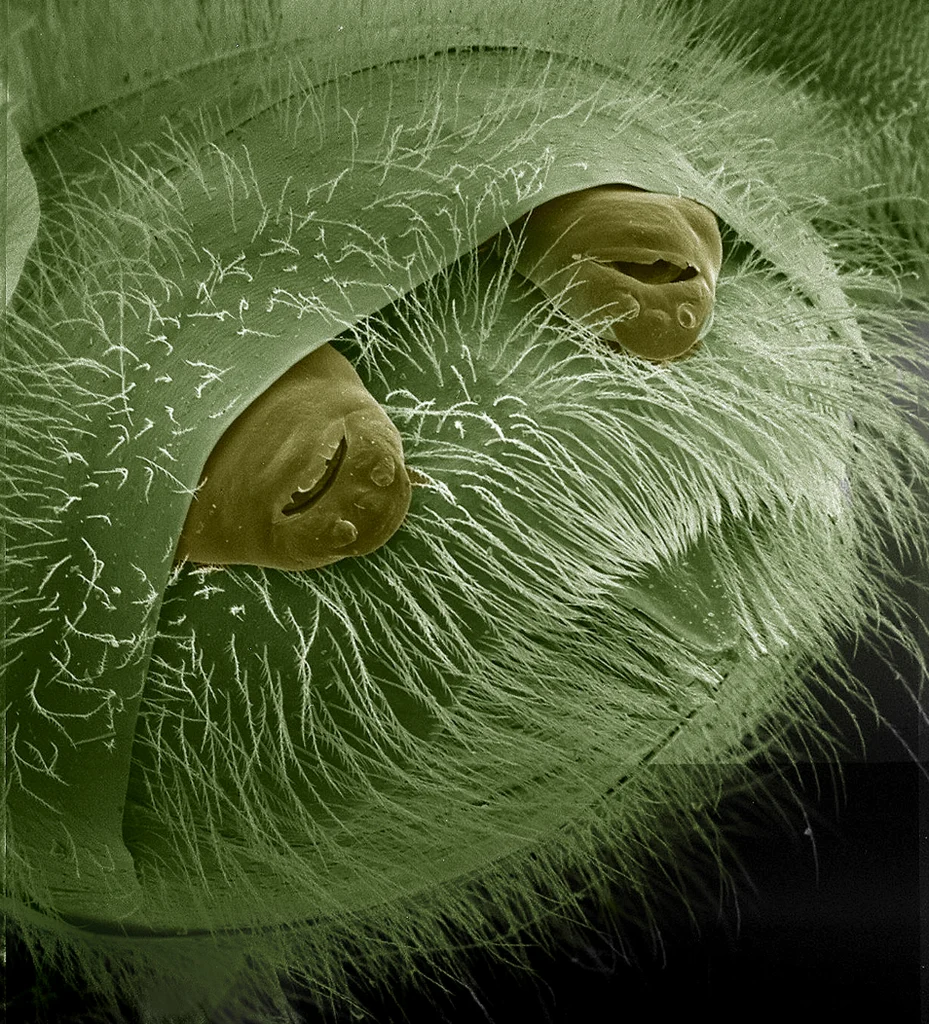
Table of Contents
2026 Harvest Moon Rises With Saturn Shining Nearby – trendsfocus