
The U.S. military is preparing for a historic execution more than 17 years after the deadly Fort Hood shooting in Texas. Former Army Major Nidal Malik Hasan, who was convicted of killing 13 people and attempting to kill 32 others during the November 2009 attack, has been approved for execution by a U.S. Army firing squad.
President Donald Trump approved the execution following a recommendation from Defense Secretary Pete Hegseth, according to the Pentagon. The Secretary of the Army will determine the date and location of the execution.
If carried out, the execution would mark the first U.S. military execution since 1961. It would also represent the first time the U.S. Army has carried out a firing-squad execution since World War II, making the case historically significant beyond the Fort Hood shooting itself.
The decision brings renewed attention to one of the deadliest attacks ever carried out on a U.S. military installation, as well as to the unusual and lengthy process surrounding military death-penalty cases.
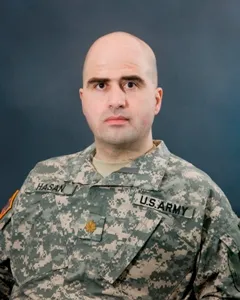
What Happened During the 2009 Fort Hood Shooting?
On November 5, 2009, Nidal Hasan was an Army psychiatrist and major stationed at Fort Hood, Texas, now known as Fort Cavazos. That afternoon, Hasan entered a Soldier Readiness Processing Center, where service members were undergoing medical processing and preparing for deployments.
He opened fire inside the facility, killing 13 people and wounding 32 others. The victims included 12 active-duty soldiers and one retired service member who was working at the facility.
The shooting immediately became a major national security and military story. Fort Hood was one of the largest U.S. Army installations, and the attack occurred inside a facility where American service members were preparing for military assignments.
Hasan was confronted by law enforcement officers during the attack and was shot and seriously wounded. He survived and was taken into custody.
Investigators subsequently examined Hasan’s background, communications and motives. The case became particularly controversial because Hasan had been an Army psychiatrist who had interacted with soldiers returning from combat and had himself become increasingly opposed to U.S. military operations.
The attack also raised difficult questions about warning signs, military security and how authorities had handled concerns surrounding Hasan before the shooting.
At his military trial, Hasan represented himself. In 2013, a military jury convicted him of 13 counts of premeditated murder and 32 counts of attempted premeditated murder and sentenced him to death.
The death sentence meant Hasan would enter a very small group of prisoners on U.S. military death row.
Why Hasan’s Execution Would Be Historic for the U.S. Military
The most unusual aspect of the latest development is not simply the death sentence. It is the method of execution.
President Trump has approved Hasan’s execution by U.S. Army firing squad. If the execution proceeds, it would be the first military execution in the United States in more than six decades.
The last person executed by the U.S. military was Army Pvt. John A. Bennett, who was hanged at Fort Leavenworth, Kansas, in 1961. Bennett had been convicted of rape and attempted murder.
The Army’s last known firing-squad execution dates back even further.
In January 1945, Army Pvt. Eddie Slovik was executed by firing squad in France after being convicted of desertion during World War II. His case remains one of the most well-known military executions in American history.
That makes the Hasan case particularly notable. If the Army carries out the approved sentence using a firing squad, it would revive a method that has not been used by the U.S. military in more than 80 years.
Firing squads are extremely uncommon in the United States today. A small number of states allow the method under specific circumstances, and the issue has received renewed national attention as officials have faced difficulties obtaining and administering lethal-injection drugs.
The federal government has also expanded the range of execution methods that can be used in certain circumstances. Reuters reported that the Trump administration recently added firing squads, electrocution and gas asphyxiation to permissible federal execution methods.
However, Hasan’s case falls under the military justice system rather than an ordinary civilian state or federal prosecution.
What Happens Next in the Nidal Hasan Case?
Although President Trump has approved the execution, the announcement does not mean Hasan will necessarily be executed immediately.
The Secretary of the Army is responsible for setting the time and place of the execution. As of October 6, 2026, no specific execution date or location had been publicly announced.
Military death-penalty cases can take many years because of the extensive appeals and legal reviews involved.
Hasan has spent years challenging his conviction and sentence through the military appellate system. The U.S. Supreme Court declined to review his case in 2025, leaving his death sentence intact.
Even with presidential approval, questions remain about whether further legal challenges could delay the execution.
That distinction is important: a death sentence, presidential authorization and the actual execution are separate stages in the military justice process.
Hasan remains imprisoned at the U.S. Disciplinary Barracks at Fort Leavenworth, Kansas, where he has been held on military death row.
There is also historical precedent for an approved military execution being delayed. In 2008, President George W. Bush approved the execution of Army Pvt. Ronald Gray, who had been convicted of murders and rapes committed while stationed at Fort Bragg, North Carolina. A federal judge later halted that execution, and Gray remains on military death row.
That history illustrates why the latest announcement should be understood as a major procedural step rather than an immediate execution date.
For now, the Army must determine the next steps, including the timing and location of the execution and any remaining legal issues.
The Legacy of the Fort Hood Attack
The latest decision also brings the Fort Hood shooting back into national attention more than a decade and a half after the attack.
The 2009 shooting had a lasting impact on the Army and the military community. Thirteen people were killed and 32 were wounded, leaving families and survivors to deal with the consequences for years.
For the victims’ families, the case has been an unusually long legal journey. Hasan was sentenced to death in 2013, but the military justice system’s appeals process meant that more than a decade passed between the sentence and the latest presidential action.
The Fort Hood attack also became part of a broader national discussion about violence against members of the U.S. military, security at military installations and the government’s responsibility to identify potential threats before they become deadly.
The case was especially complicated because Hasan was an active-duty Army officer and psychiatrist at the time of the attack. His position gave him access to military personnel and facilities and placed the shooting within the broader context of the wars in Iraq and Afghanistan.
During his court-martial, Hasan acknowledged carrying out the attack and attempted to frame his actions around his opposition to U.S. military operations. The military jury nevertheless convicted him on all of the murder and attempted-murder charges that led to the death sentence.
Now, the case has entered another historic chapter.
If Hasan’s execution proceeds as approved, it will become the first U.S. military execution since 1961 and the first Army firing-squad execution since 1945. The development therefore represents both the culmination of a lengthy legal case and a significant moment in the history of military justice.
The exact date remains unknown, and further legal proceedings could still affect the timeline.
For now, the Army is responsible for determining when and where the execution will take place.
The Hasan case is likely to remain closely watched as the United States confronts renewed debate over capital punishment, execution methods and the role of the death penalty within the military justice system.
Table of Contents
Nidal Malik Hasan, who killed 13 in Fort Hood shooting, to be executed by firing squad
Carlie Irsay-Gordon Faces New Scrutiny Over Colts Sideline Role – trendsfocus