
Airspace restrictions are a routine part of protecting high-profile events and government officials in the United States, but they occasionally become the center of national attention when military aircraft are forced to intervene. That is exactly what happened over New Jersey, where NORAD F-16 fighter jets intercepted multiple civilian aircraft after they entered temporarily restricted airspace above Bedminster and East Rutherford.
The incident unfolded during one of the busiest weekends for security operations in the region, with thousands of visitors, international dignitaries, and extensive law enforcement resources focused on protecting sensitive locations. Although the interceptions ended safely and no injuries were reported, the event served as a reminder of the importance of respecting temporary flight restrictions (TFRs) and understanding the procedures pilots must follow.
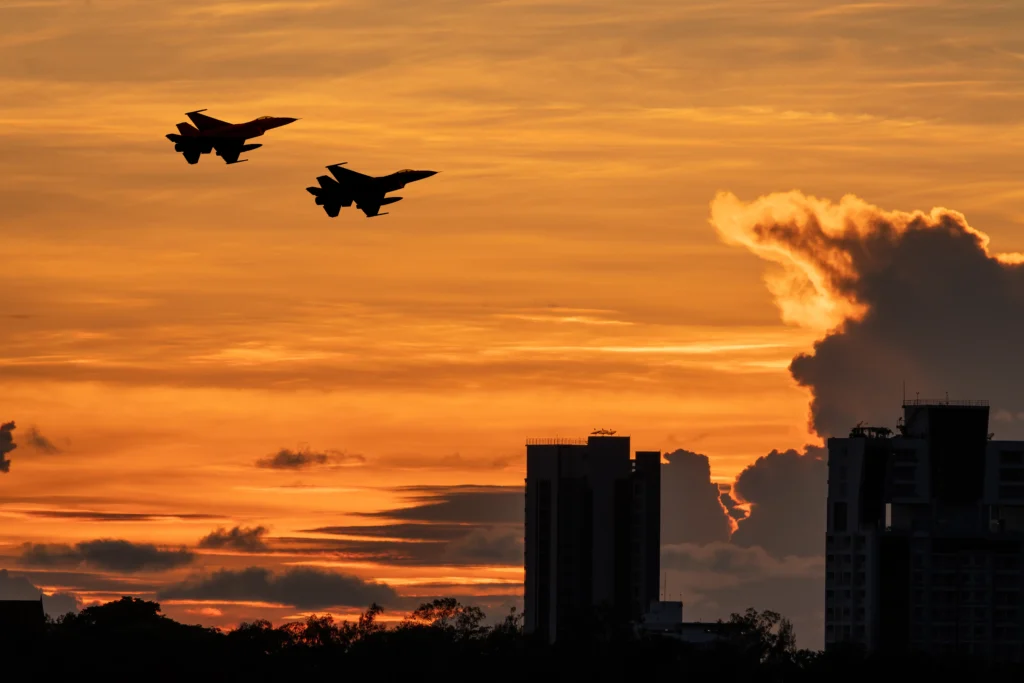
Why F-16 Fighter Jets Were Deployed Over New Jersey
Residents across parts of New Jersey were surprised to hear the unmistakable roar of fighter aircraft overhead as NORAD (North American Aerospace Defense Command) launched F-16 fighter jets to respond to unauthorized aircraft entering restricted airspace.
Officials confirmed that more than ten general aviation aircraft violated Temporary Flight Restrictions (TFRs) established over Bedminster and East Rutherford. While most pilots left the restricted zone after receiving instructions from air traffic controllers, three aircraft required direct military interception.
The temporary restrictions were in effect because of heightened security surrounding major events and protected locations in northern New Jersey. East Rutherford was hosting one of the world’s largest sporting events, attracting tens of thousands of spectators and numerous government officials, while Bedminster remained under enhanced security due to its importance as a location frequently visited by senior government leaders.
Military officials stressed that these restrictions are carefully planned to ensure the safety of everyone involved, including the public, event participants, and aircraft operating in the area.
Although airspace restrictions are common during high-security events, violations continue to occur every year, often because private pilots fail to review updated flight information before departure.
How NORAD Conducted the Interceptions
NORAD follows strict procedures whenever an unidentified or unauthorized aircraft enters restricted airspace.
Rather than immediately treating every aircraft as a hostile threat, military personnel first work with the Federal Aviation Administration (FAA) to determine whether radio communication can resolve the situation.
If pilots fail to respond—or continue flying inside the restricted area—fighter aircraft may be launched to establish visual contact.
During Sunday’s operation, F-16s intercepted three aircraft directly. Two of those encounters involved the deployment of signal flares.
These flares are frequently misunderstood by the public.
Unlike military weapons, interception flares are designed to capture a pilot’s attention. They produce a bright flash of light and quickly burn out, serving as a universally recognized warning that the intercepted aircraft must immediately follow the fighter jet’s instructions.
Military officials emphasized that:
- The flares are defensive communication tools.
- They pose no danger to people on the ground.
- They are only used when necessary to ensure pilots recognize they are being intercepted.
Once contact is established, intercepted pilots are expected to:
- Change course immediately.
- Follow the escorting fighter aircraft.
- Monitor emergency radio frequencies.
- Exit restricted airspace safely.
According to officials, all intercepted aircraft complied after military contact was established.
Temporary Flight Restrictions: What Pilots Need to Know
Temporary Flight Restrictions, commonly known as TFRs, are issued by the FAA whenever extra protection is needed for specific airspace.
They may be established for a variety of reasons, including:
- Presidential travel
- National security operations
- Disaster response
- Major sporting events
- Space launches
- Large public gatherings
- Emergency incidents
These restrictions can vary in size and duration depending on the event.
Pilots are responsible for checking FAA Notices to Air Missions (NOTAMs) before every flight. These notices contain updated information regarding restricted airspace, runway closures, navigation hazards, and other operational changes.
Failure to review current NOTAMs is one of the leading causes of accidental TFR violations.
Even experienced pilots can make mistakes if flight plans are not updated before departure.
When an aircraft enters restricted airspace, authorities first attempt communication through air traffic control. If those efforts fail, military interception becomes the final step to restore security while minimizing disruption to surrounding air traffic.
Although most violations are determined to be accidental, every incident must be treated seriously until military officials confirm there is no threat.
This cautious approach helps protect both national security and civilian aviation.
Security Lessons From the New Jersey Airspace Incident
The New Jersey interceptions highlight how modern air defense relies on close coordination between multiple agencies.
NORAD, the FAA, local air traffic controllers, law enforcement, and homeland security officials all work together to monitor U.S. airspace continuously.
The successful response demonstrated several important points.
First, the military can rapidly identify and intercept unauthorized aircraft without causing unnecessary panic or disruption.
Second, established interception procedures allow pilots to receive clear instructions using internationally recognized signals.
Third, strong communication between civilian aviation authorities and military personnel remains essential during major public events.
The incident also underscores the growing complexity of securing large international gatherings.
Modern sporting events attract not only thousands of spectators but also government officials, foreign dignitaries, media organizations, and extensive security resources. Protecting such events extends beyond stadium security and includes surrounding roads, communications systems, and nearby airspace.
Officials have reiterated that pilots should never assume familiar routes remain open during high-profile events.
Checking current FAA notices before every flight is one of the simplest yet most effective ways to prevent dangerous misunderstandings.
As air traffic continues to increase across the United States, aviation experts expect greater emphasis on pilot education regarding temporary flight restrictions and enhanced awareness campaigns before major events.
To Conclude
The interception of multiple civilian aircraft by NORAD F-16 fighter jets over Bedminster and East Rutherford, New Jersey, demonstrates how quickly U.S. air defense systems respond when temporary flight restrictions are breached. While the aircraft involved were ultimately escorted safely away from restricted airspace, the event serves as an important reminder that even unintentional violations can trigger a significant military response.
Fortunately, no injuries, damage, or security threats resulted from the incident. Instead, it showcased the effectiveness of established coordination between NORAD, the FAA, and local air traffic controllers in maintaining public safety during periods of heightened security.
For private pilots, the lesson is clear: always review current FAA Notices to Air Missions (NOTAMs) and temporary flight restrictions before takeoff. A few minutes of preparation can prevent costly mistakes, military interception, and unnecessary risks.
As the United States continues hosting major international events and protecting sensitive locations, strict enforcement of restricted airspace will remain a critical component of national security, ensuring both aviation safety and the protection of millions of people on the ground.
Table of Contents
NORAD F-16s intercept multiple general aviation aircraft over New Jersey | Fox News
Andrew & Tristan Tate Arrested in Miami for UK Case – trendsfocus